Blacks for Political and Social Action Dane County (BPSADC) held its annual Parents Summit on Oct. 24, bringing community members together to discuss efforts to close the academic achievement gap between Black students and their white peers.
The summit, held at Madison College’s Goodman South Campus, 2429 Perry St., provided an update on the state of education for Black students in Dane County and progress toward addressing disparities. Wisconsin consistently ranks among the worst states in the nation for the achievement gap between Black and white students.
The annual event also highlights ways parents can become more involved in their children’s education and help advance efforts to close the gap.
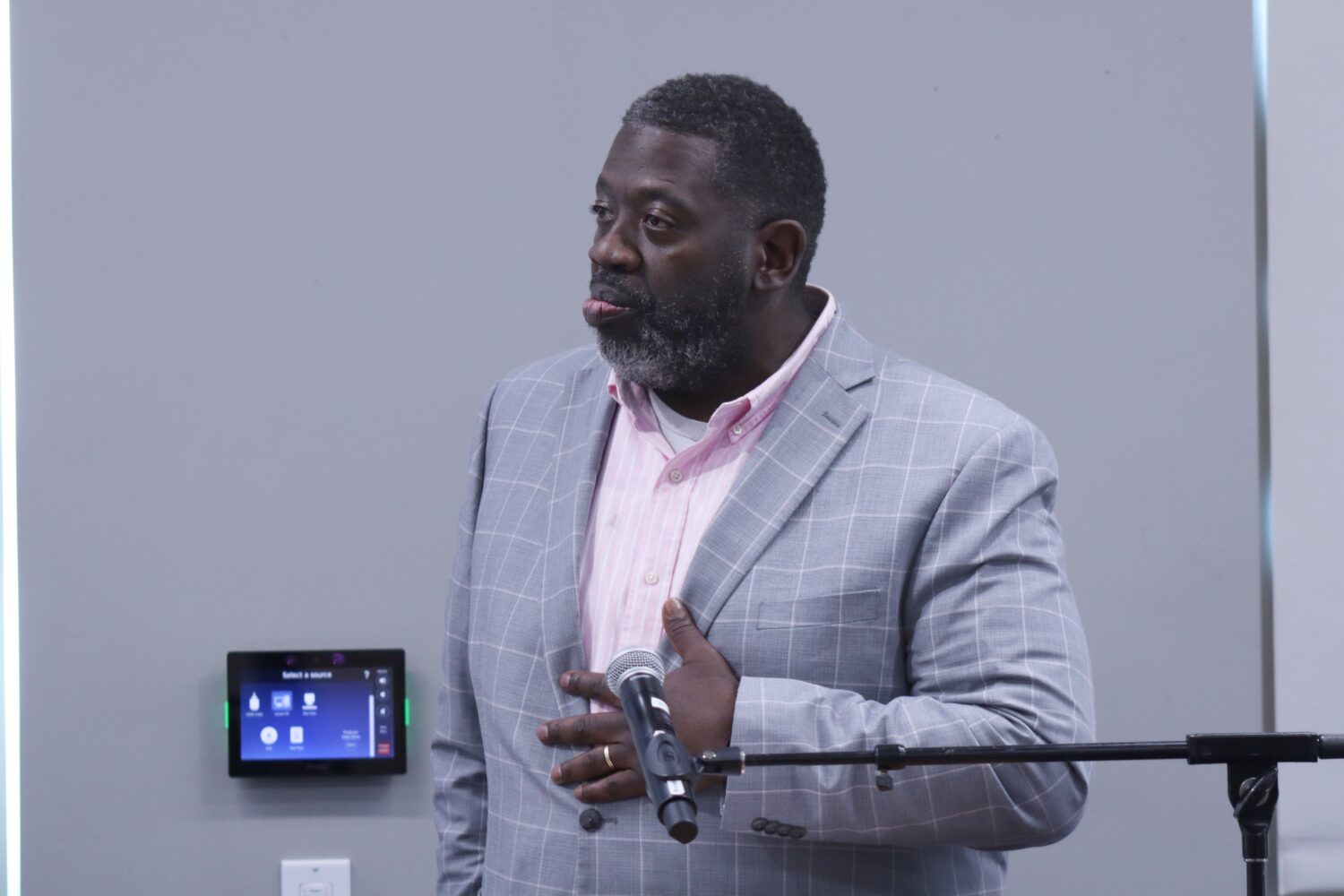
“We’re here, of course, because we all believe in one universal truth, and that is, first of all, that our children’s future is non-negotiable, and that we all should be pushing toward their future together,” said Rev. David Hart, president of BPSADC. “We have to deal with those things, and have to make sure that all of our children’s markers and benchmarks are together with the world. But we also have to deal with terms like social, emotional well-being.”
This year’s summit featured a different format in response to community feedback. In previous years, the event emphasized year-over-year achievement data, a panel of education leaders from across Dane County and breakout sessions where parents could voice concerns about elementary, middle and high school education. This year, organizers shifted the focus to give attendees more time to speak directly with experts in education and education policy.
This year, organizers placed less emphasis on data and panel discussions, instead offering breakout sessions led by experts in specific areas, including literacy and education policy. The sessions gave parents more time to ask questions and engage directly with experts.
(Photo by Omar Waheed)
Act 20 in schools
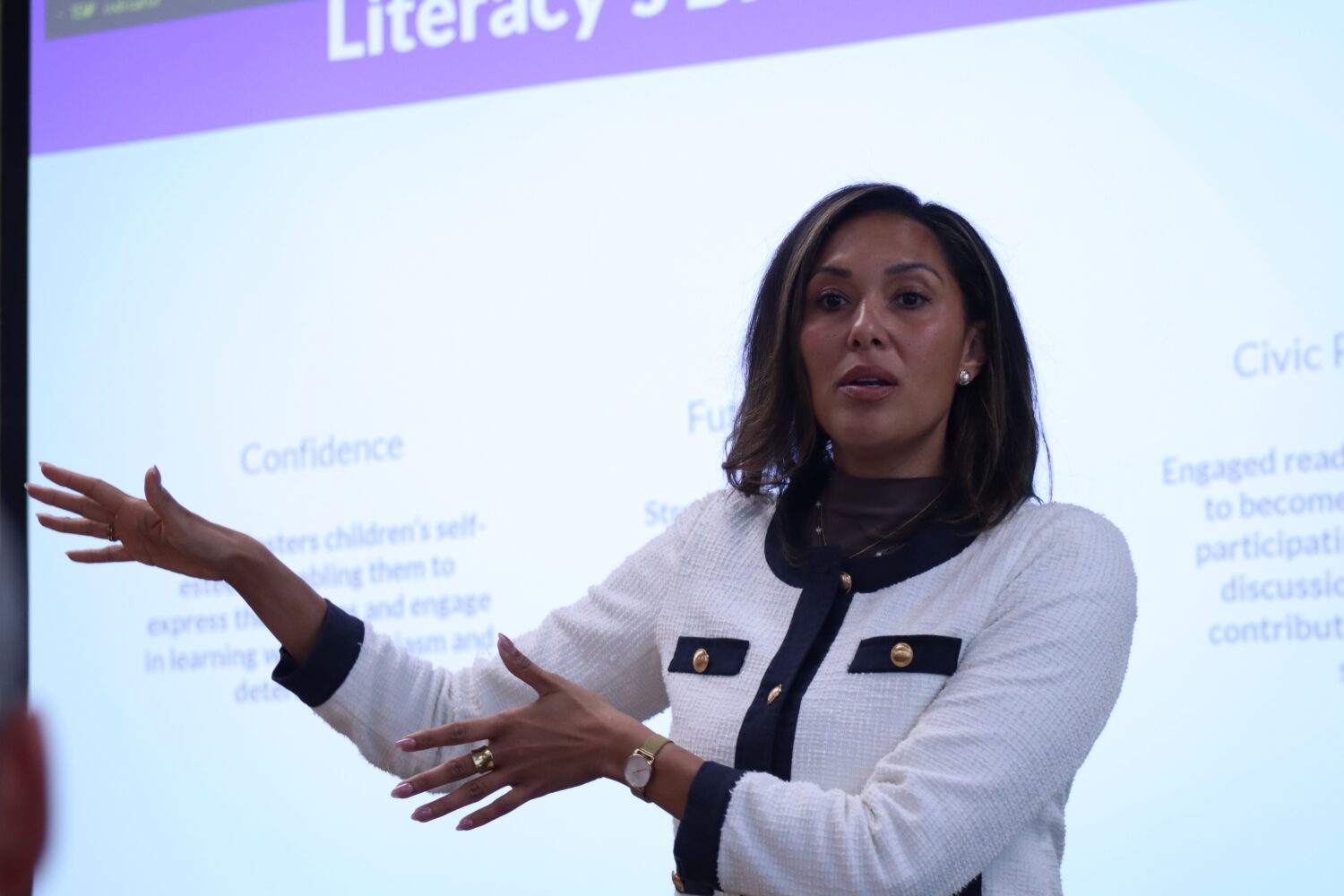
A session on Act 20 led by the Department of Public Administration’s (DPI) director of Literacy Kaylee Jackson gave insight into how the policy has been shaping up.
“I don’t think I need to convince anyone that literacy is important,” Jackson said. “Act 20 is a statute that was put into law to say this is how we need to teach our children in grades K-3 how to read. Before, we were doing something that’s widely known as a balanced literacy approach. The research has told us that’s not working for most students.”
Jackson explained what’s being done to help students that struggle with literacy, but also its shortfalls. Teachers have been trained, but there are not enough people to ensure that Act 20 and phonics-based curriculum is implemented, she said.
In attendance at the session was Dr. Gloria Ladson-Billings. While she was not the expert presenting information on Act 20, she was able to answer questions from her decades of experience as an expert in education.
“The state has more acts than you can stick a stick at. How many people know what Act 31 is? Anybody? Act 31 has been on the books forever. It requires you to know every tribe, band, federation of American Indians and all the treaties,” Dr. Ladson-Billings said. “While I think that Act 20 is probably the right thing, my question is always going to be about, ‘Where’s the accountability?’”
Jackson also pointed out that there are no current real means of accountability right now; there are not enough teachers or staff at DPI. The Office of Literacy with DPI’s current priority is to get a statewide literacy plan to organize support for Act 20, Jackson said.
“It’s that, and then it’s making sure right now that all of our districts understand Act 20,” Jackson said.
Dr. Ladson-Billings noted that the state may be moving towards a better curriculum that’s rooted in research and evidence, but is simultaneously hindering children’s interest in books.
“They are banning the very books that the children would want to read. So there’s a mismatch between, ‘You want to teach me to read, but you don’t want me to read what I want to read. I can’t read about myself. I can’t read about people who look like me, because those are on the banned list.,’” Dr. Lanson-Billings said. “If all we want are test scores, I mean, I have a kid who is an excellent test taker. She don’t have to read nothing. She’s gonna blow the test out of the way. But that doesn’t mean she understands things.”
Parents chime in
Another session invited parents and students to voice their observations on what they are seeing in schools. Most of the parents and children that were planned to speak did not make it out to the Parents’ Summit, but April Kigeya, current Madison mayoral candidate, did speak along with a community member, Makia Price, who stepped up.
Kigeya’s two youngest children are both in high school. She sees a lack of expectations from teachers for them.
“Me and their dad have really high expectations for them, as a lot of parents do, and that’s not being matched in the classroom,” Kigeya said.
She does not believe her children are given the same pressure that their white peers get from teachers.
Price, whose child has been in Madison and Verona schools, noted the lack of diversity in classrooms in the latter, stifling her child’s confidence at school. Her child is now back in Madison.
“Now what I see is she’s thriving, that she’s following diversity, and she’s not the only Black girl in her classroom,” Price said. “So you got to kind of pick your points. I want my kid to read, but then she can also lose confidence in who she is, being the only Black girl.”
Both were asked about critical resources they believe are needed in schools from their vantage point as parents. Kigeya said schools need more mental health support services for students.
“Especially around this age of social media, where there’s a lot of pressure coming from the outside, a lot of this need to compete with other people, how you look, how you dress, how you speak and all these different things,” Kigeya said. “I think our kids are experiencing a lot of pressure. And so, having someone that they could talk to that they feel comfortable with, in the schools, and especially somebody that looks like them is important.”
Price relayed her child’s excitement to get into orchestra or band this year, but programming lacks representation across multiple cultures. It’s hard to be interested if the kids cannot see themselves in the music, Price said.
Kigyea and Price want there to be more avenues for parents to come together to discuss issues instead of a once-a-year event like the Parents Summit.
“I’m heavy on the community here,” Price said. “It really, really does take a village to raise a kid, and I know we all come from villages, and so we got to make sure that we’re that village.”
Parents want to be more engaged, Kigyea said. Opportunities like the Parents Summit are relatively rare occurrences — being an annual gathering — and their lack of attendance does not necessarily mean they aren’t invested in their children’s education.
“Maybe they’re working. Maybe they have other things going on,” Kigeya said. “I feel like being creative with different ways for people to come together, whether it’s having things at the school, whether it’s having things in a community at a park at different times and asking questions. How about we talk to the parents?”
Organizers of the Parents Summit asked multiple attendees where they heard about the event. Blacks For Political and Social Action Dane County could not find anyone who heard about the Parents Summit from their child’s school. Other avenues to reach parents in the future, and more frequently, organized by the community may be needed, Kigeya said.