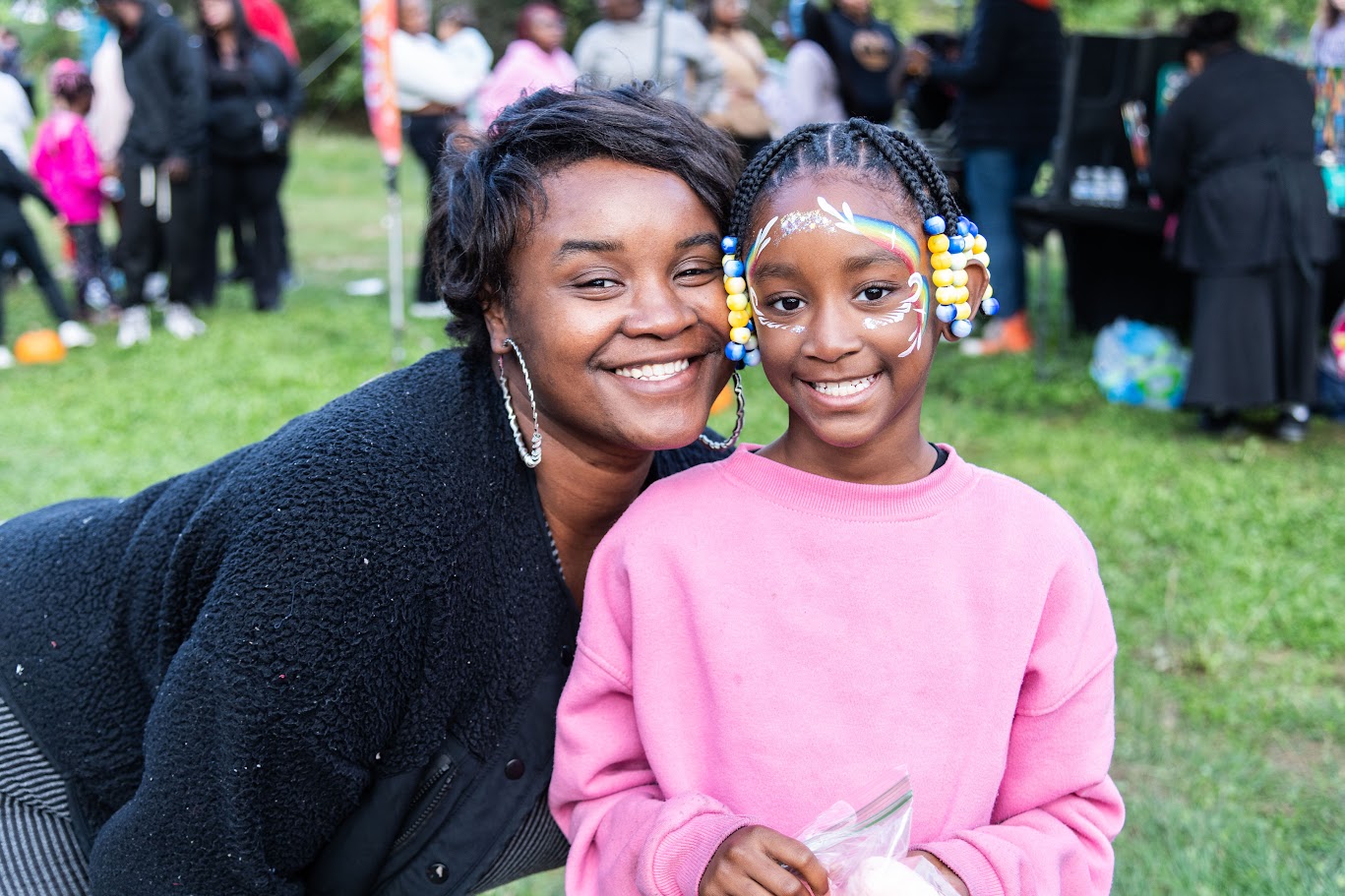
Urban Triage’s annual Harvest Fest returns for its fifth year, bringing the community together for a free, family-friendly celebration of food, land and community.
The festival, which draws nearly 3,000 people, will be held Saturday, Sept. 19, 3-8 p.m. at the Farley Center for Peace, Justice and Sustainability in Verona.
The event highlights Urban Triage’s growing agricultural work while offering a day of food, family, music and activities on the farm.
“There will be free music, free activities for kids, a land acknowledgment and a celebration of the land with African drummers,” says Ruthanna Hutton-Okpalaeke, who leads Urban Triage’s agricultural programs. “We really work hard to celebrate the land that we steward out there and let community members have access to experiencing that as well. So it’s as much a celebration for us as it is for the community members.

“We design it to be accessible,” adds Hutton-Okpalaeke. The first Harvest Fest was held a year after Hutton-Okpalaeke joined Urban Triage. “The event itself is free. There will be free food, free beverages and, while it lasts, free produce that we’ll be giving away.”
This year’s theme, “More Than a Harvest: Black Soil, Bold Futures,” reflects the growth of Urban Triage’s agricultural work over the past five years. The organization now grows and distributes fresh produce, provides agricultural education, creates opportunities for people to harvest food themselves and brings thousands of people together each year to celebrate on the land.
“We wanted to create a day where families can come out and actually enjoy themselves without spending the whole afternoon thinking about what everything costs,” said Brandi Grayson, founder and CEO of Urban Triage, in a statement. “Bring your children and let them play. Eat good food. Dance. Listen to the drums and the music. Walk the farm. Sit with the elders. You don’t have to keep reaching into your pocket or telling your child no because the next thing costs money. For one day, we want people to come out, be together and enjoy what we’ve created together.”
Urban Triage’s agricultural programs have deep roots in community-based gardening and food sovereignty. When Hutton-Okpalaeke first joined the organization, she assumed it already had established farmland. Instead, she learned that its agricultural programs were being run out of Grayson’s backyard on Madison’s South Side.
From there, Urban Triage began searching for land and eventually found a home at the Farley Center, where it launched what has grown into a long-term, community-centered agricultural project and the home of Harvest Fest.
“They’ve been such lovely supporters and partners in all that Urban Triage works to do,” Hutton-Okpalaeke said of the Farley Center. “They have been great community supporters.”
Like many nonprofits, Urban Triage has faced significant challenges in recent years. Hutton-Okpalaeke said the organization lost its federal funding for agricultural programs all at once, forcing it to make a major shift in how it supports community members.
In response, Urban Triage has shifted toward one-on-one gardening support, helping individuals start and maintain their own home gardens. The organization has also launched Less Noise, a product line and business designed to generate revenue to support its agricultural programs.
“We’re trying every avenue to keep offering those programs to our community members, so they can learn to grow wherever they happen to be,” Hutton-Okpalaeke said. “If it’s in the city, if it’s out of a bucket …”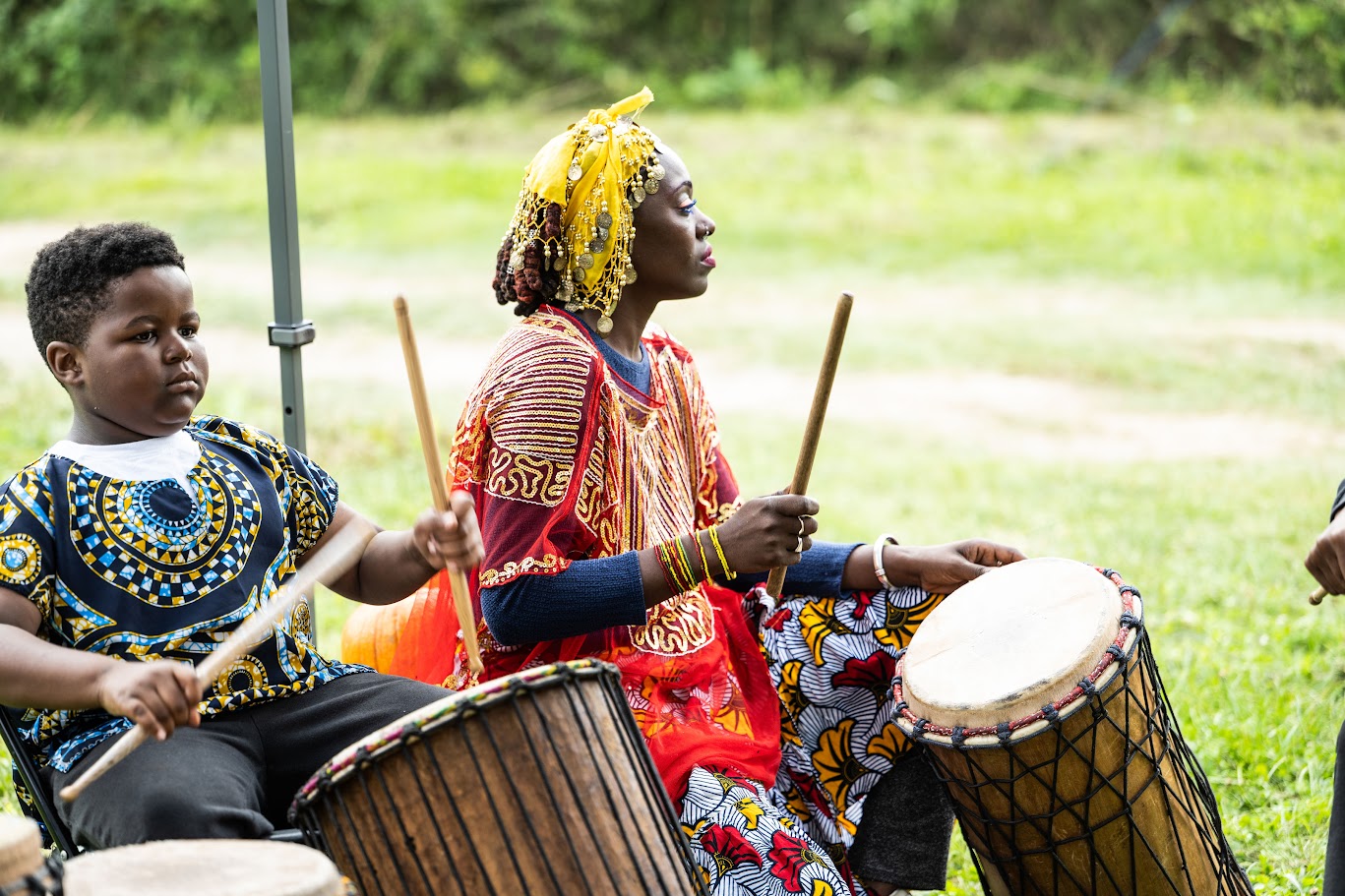
Urban Triage has been expanding access to fresh, organic produce across Madison, bringing food grown through its agricultural program into neighborhoods and community spaces, including a new garden where residents can harvest produce for themselves.
The organization has also formed new partnerships to make its produce available beyond traditional business hours. At the South Madison Goodman Branch Library, Urban Triage opened a community refrigerator stocked with fresh produce, accessible during the library’s extended evening hours, often until 8 or 9 p.m.
“So everyone who is working during business hours and can’t make it to our office can still access our produce,” Hutton-Okpalaeke said.
The demand was immediate.
“Once we opened that fridge at the library, I could barely keep it stocked,” Hutton-Okpalaeke says. “Every time I stocked it, the produce was gone immediately. … I didn’t grow enough food to keep this thing stocked all of the time.”
On Madison’s North Side, Urban Triage has partnered with Little Tibet Market and the Madison Area Food Pantry Garden to offer fresh, locally grown produce during the market’s extended hours.
Urban Triage also offers a weekly produce pickup on Thursdays from 1 to 4 p.m. at its office at 2312 S. Park St. In addition, the organization operates a free community garden at Heifetz Park, 924 Burr Oak Lane, created in partnership with the City of Madison. The garden is open seven days a week, allowing residents to harvest fresh produce.
Still, demand for fresh produce continues to grow.
“Food security is really important to me. Every single year at this job, I have had to work harder to produce more because the demand just keeps growing infinitely, at a pace that is hard to keep up with,” Hutton-Okpalaeke said. “I think that speaks to larger issues within our community and society — that there are so many people in need of support getting healthy and fresh food.”
Urban Triage is also developing future produce distribution partnerships with Wisconsin FoodShed and Grandad’s Farm Stop. Both locations are still under development, with more information expected as they prepare to open.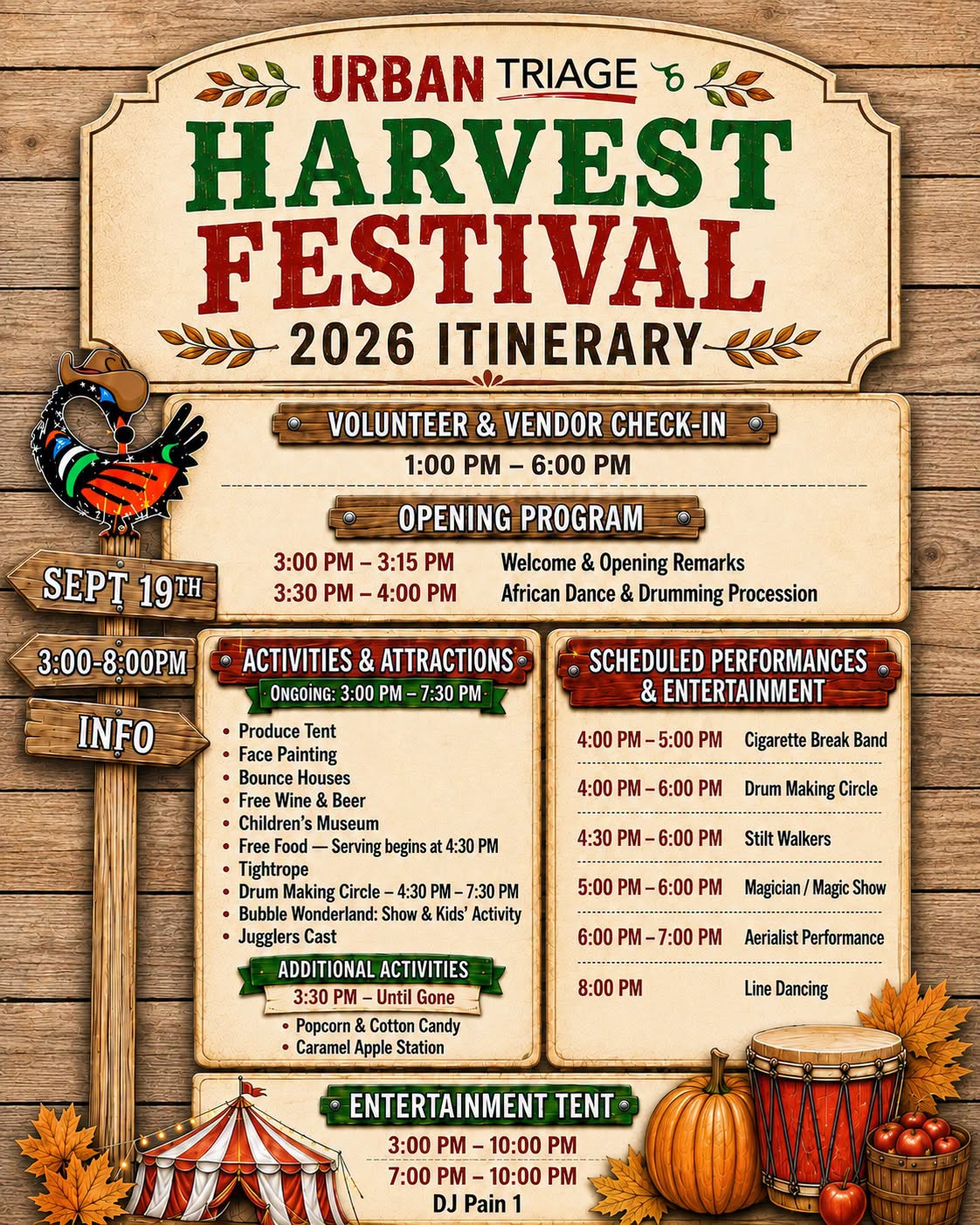
In the meantime, Urban Triage’s agricultural work will be on full display at this Saturday’s Harvest Festival.
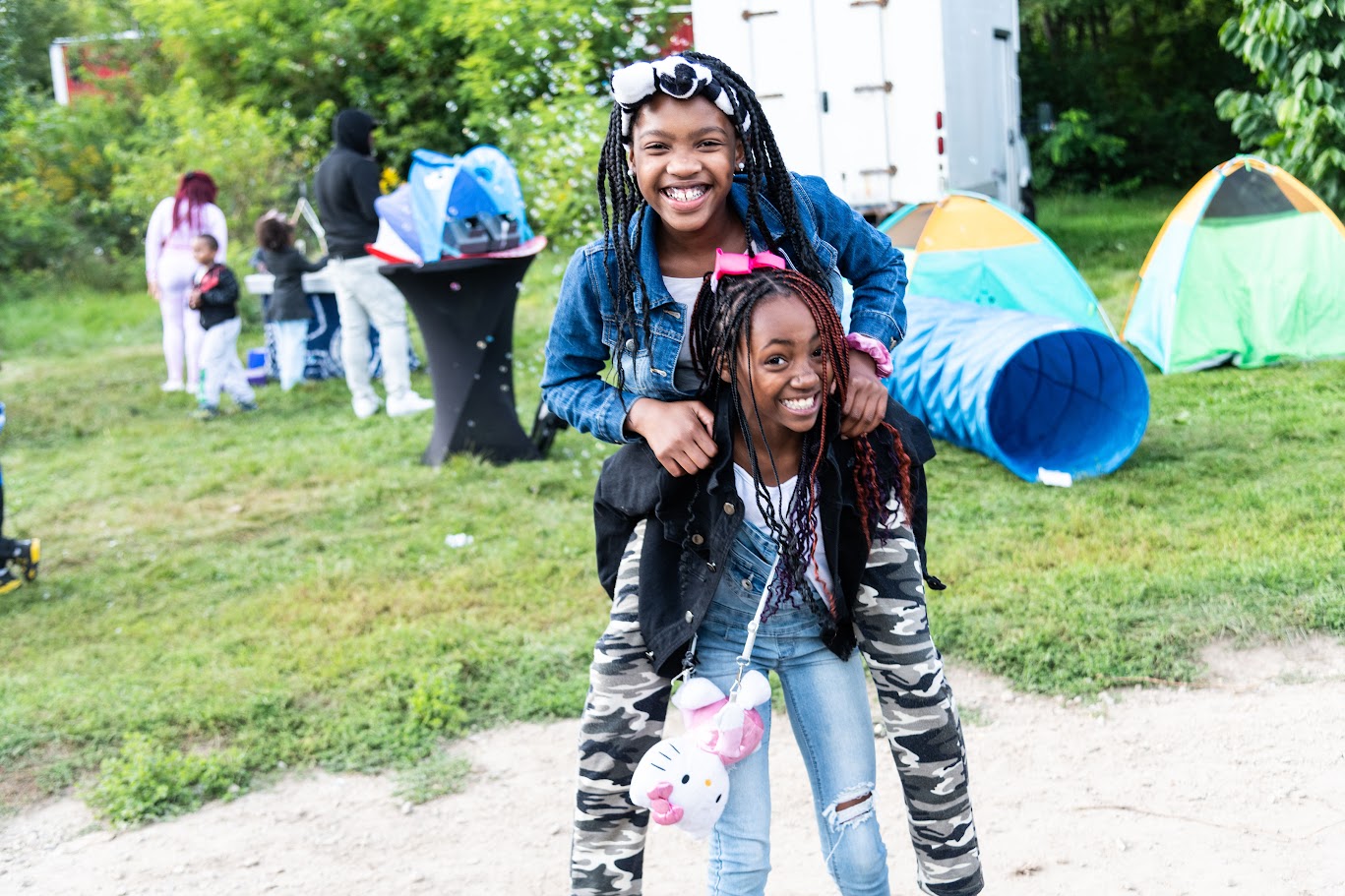
For children and families, the farm will be packed with things to do: bouncy houses, face painting, bubbles, a hands-on tightrope activity, drum making, a drum circle, a magic show, activities with Madison Children’s Museum, cotton candy, popcorn and a caramel apple table.
Hutton-Okpalaeke says one of her favorite parts of Harvest Fest is watching people experience the Farley Center for the first time.
“I do think it is a magical space,” she says. “It is a beautiful space for people to connect with the land and the food that the land provides them. I feel like oftentimes seeing is believing. What gets the ball rolling for a lot of people is just going to a place like the Farley Center and saying, ‘Hey, maybe I could grow my own food.’”