
Madison is often praised as one of the best places to live in America. But I call cap! That title doesn’t hold when you look at the lived experiences of Black people here — and especially not when you look through the lens of the Race to Equity 10-Year Report: Dane County. Decades of data paint a different picture: for example, despite Black people making up only around 7% of the population in Madison, Black adults and children are overrepresented in homelessness, incarceration, and evictions. These disparities are not accidental. They are the direct result of systems upheld by the status quo of white capitalist heteropatriarchy — values that remain entrenched in Madison.
What makes this reality more insidious is that some who loudly and proudly call themselves “progressive” are often the very ones stalling progress. While claiming the moral high ground, they hold on to anti-Black ways of thinking that show up in policymaking, in community conversations, and in the way they respond to Black leadership. And here’s the truth: progressives who see this behavior among their colleagues have a responsibility to call it in. Silence in the face of toxic dynamics only helps preserve the status quo. As the Shriver Center reminds us, “Internal equity work, within ourselves and our organizations, is crucial for real change in the communities we serve.” Until white progressives grapple with their own internal biases and the cultures they protect, their politics will continue to fall short of real equity. Their coded remarks, their closed-door strategy sessions to attack and put Black leaders in check, — all of it signals that their progressivism is faulty at best.
As bell hooks reminds us in Black Looks:
“Black folks who ‘love blackness,’ that is, who have decolonized our minds and broken with the kind of white supremacist thinking that suggests we are inferior, inadequate, marked by victimization, etc., often find that we are punished by society for daring to break with the status quo. On our jobs, when we express ourselves from a decolonized standpoint, we risk being seen as unfriendly or dangerous.”
This is exactly what happens in Madison: when Black women such as myself match energy and lead just as loud and boldly, — we become targets.
I know this firsthand. Earlier this month, I was targeted by folks who identify as white and progressive. They disagreed with a single vote I made — despite my long record of fighting to make sure people in this city have safe, long-term housing. Instead of engaging in honest dialogue, some who lead under the banner of “progressive leadership” chose to attack my character and diminish my leadership. They used the same coded tactics I’ve seen before: framing my decision as “not caring enough” about people in need, while ignoring the years of work I’ve dedicated to housing solutions. This is not an isolated experience; it’s a familiar pattern that Black women leaders across Madison — and across this country — face.
And yet, despite these hostilities, I will remain in Madison until I decide otherwise.
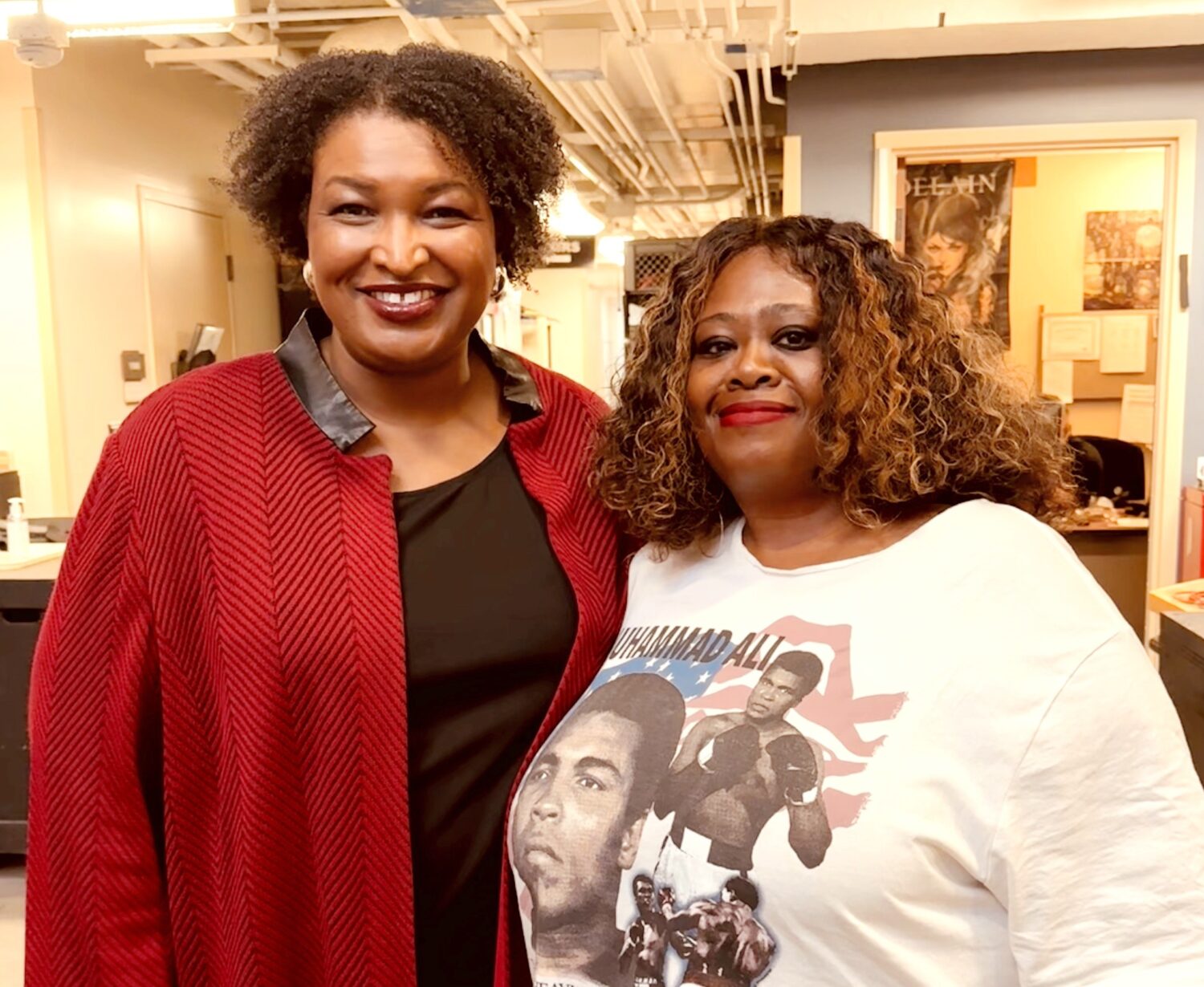
Recently, I had the honor of meeting Stacey Abrams on campus. Her 10 Steps campaign inspired me to reflect on my own experience and to create a list naming how white progressives work to diminish Black women’s leadership — and how Black women can protect our freedom and power in response.
This list is meant to do more than name problems; it’s meant to equip Black women with strategies to safeguard our leadership, strengthen our communities, and continue pushing for actual equity in a city that too often shields its anti-Black outcomes behind a façade of progressivism. It’s a sad reality, really, that we still face so much resistance to our collective progress.
10 Steps White Progressives Use to Undermine Black Women’s Leadership
- Performative allyship: Show up in photos or marches but vanish when policy, funding, or accountability is on the line. Support only when it centers white comfort.
- Weaponizing civility: Dismiss Black women as “angry,” “uncaring,” or “too much,” demanding politeness while ignoring the urgency of inequity.
- Gaslighting & character attacks: Shift from debating issues to attacking our integrity, then undermining our work by demanding “more data” or “consensus.”
- Public targeting: Use social media or email blasts to name us in ways that invite pile-ons, harassment, or intimidation.
- Erasure: Downplay years of leadership or minimize racial disparities whenever our choices conflict with their white progressive priorities.
- Projection of harm: Suggest or hope we’ll suffer consequences—politically, personally, or financially—for making independent decisions.
- Tokenism & co-optation: Showcase us for optics, but strip our influence unless it mirrors white-led strategies.
- Coded undermining: Question our “tone,” “professionalism,” or “effectiveness” as a way to cast doubt without naming race.
- Gatekeeping resources: Control access to money, platforms, or credibility, deciding who is a “legitimate” Black leader.
- Running us out: Use sustained criticism, coded threats, isolation, and shame to exhaust us until we leave—or go quiet.
10 Steps Black Women Can Take to Protect Our Leadership & Power
- Stand rooted in your vision: Lead from your values and community needs—not from the demand for white approval.
- Name the tactics: Call out tone policing, coded attacks, or harassment for what they are. Naming strips them of power.
- Document receipts: Keep records of votes, initiatives, and attacks so your work and truth live beyond distortion.
- Build trusted circles: Lean on Black women and allies who affirm you, back you up publicly, and check in privately.
- Center your people: Stay accountable to the communities you serve so your leadership cannot be dismissed as self-interest.
- Control your narrative: Use your own platforms—blogs, newsletters, op-eds, podcasts—so white gatekeepers can’t define your story.
- Flip the script: Turn attacks into teaching moments that reveal systemic patterns, not just personal grievances.
- Protect your peace: Guard your mind, body, and spirit. Joy, rest, and healing are not luxuries—they’re healing and survival strategies.
- Lead unapologetically: Speak, decide, and take space fully, without shrinking to fit white comfort.
- Stay on your own terms: Remain in this city—or leave—because you choose to, not because they ran you off.
Who would I be if I didn’t recommend books you can use in your leadership? I hope the following list is as helpful for you as it’s been for me over the years and more recently.
Sabrina’s book recommendations for Black women living, working and leading in Madison, WI:
Black Feminist Thought
- bell hooks – Ain’t I a Woman: Black Women and Feminism
- bell hooks – Communion: The Female Search for Love
- bell hooks – All About Love: New Visions
- bell hooks – Salvation: Black People and Love
- Audre Lorde – Sister Outsider
Political Leadership
- Stacey Abrams – Lead from the Outside
- Stacey Abrams – Our Time Is Now
- Shirley Chisholm – Unbought and Unbossed
Poetry, Artistry, and Personal Power
- Jasmine Mans – Black Girl, Call Home
- Renaada Williams – Find Her, Keep Her: A Memoir of Love, Loss, Healing, and Hope
- Sesali Bowen – Bad Fat Black Girl: Notes from a Trap Feminist
Expanding the Conversation
- Glory Edim – Well-Read Black Girl: Finding Our Stories, Discovering Ourselves
Audre Lorde – Zami: A New Spelling of My Name - Brittney Cooper – Eloquent Rage: A Black Feminist Discovers Her Superpower
- Keeanga-Yamahtta Taylor – How We Get Free: Black Feminism and the Combahee River Collective
Black women’s leadership is not a threat to progress — it is the progress. Our voices, our decisions, and our visions are necessary to transform Madison into a city that truly lives up to its progressive promise.
And let me be clear: while some white progressives have used these same tactics to run other Black leaders out of Madison, I intend to remain here until I decide otherwise. I am firmly planted in this city, and will continue leading just as loudly and boldly as I have been, no matter how uncomfortable that may make some white progressives.
As Zora Neale Hurston reminds us,
“If you are silent about your pain, they’ll kill you and say you enjoyed it.”
Stay up,
Sabrina