
Many people said — some jokingly, some seriously — that they’d leave the country rather than live under a second Trump administration.
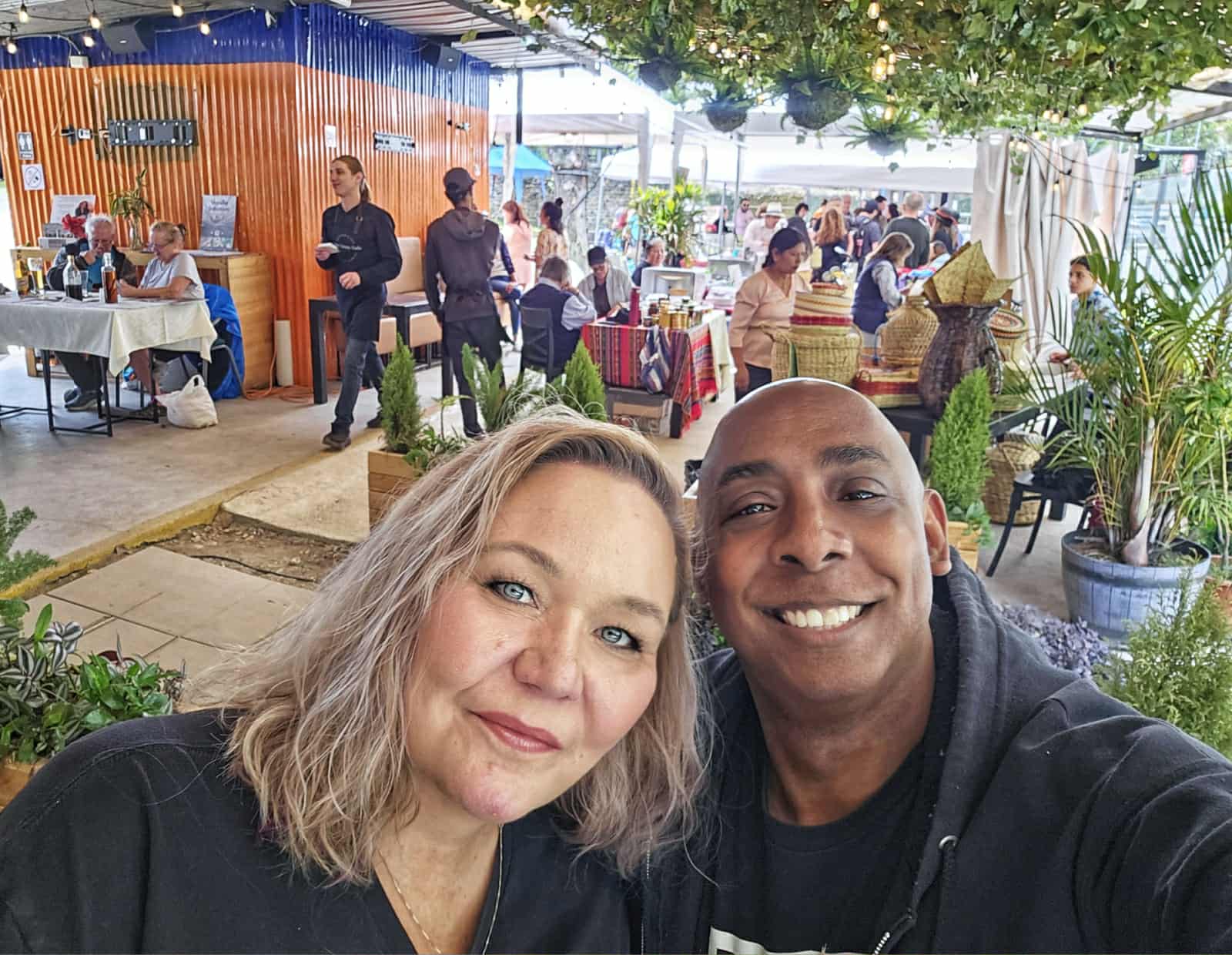
Jonathan and Karen Brown, longtime Madison residents, actually did it.
In an interview for the 365 Amplified podcast, they told us why they chose Ecuador, what they did to prepare, how they’re settling into their new life and more.
Listen to the full interview:
“Ecuador!”
It was 2022 when the Browns first started thinking about leaving Madison, and then leaving the US.
“We had already planned on moving after our kiddo graduated high school…but realizing our retirement savings didn’t seem great anymore, and medical debt was piling up … we knew we couldn’t work until we were 75,” Karen said.
One evening while Jonathan was on tour with his band — he’s a drummer — Karen was scrolling.
“I was bored, I had nothing else to watch on Netflix, so I was watching YouTube, and somehow the algorithm caught me and started showing me people that had moved abroad, and the cost of living. I got hooked on them,” she said.
When Jonathan got home, she got him hooked, too, and they started seriously thinking about where they’d want to land. They had a business they could run remotely, but they’d have to stay in a time zone reasonably close to Central; they have family they didn’t want to be too far from. So Central America seemed reasonable; Ecuador using American dollars as currency helped, too.
So they visited Cuenca, Ecuador, for two and a half weeks in the spring of 2023, and were looking to relocate within the next three or four years. But then in the summer of 2024, the presidential campaign ramped up and they felt the need to move more quickly.
“And both of us just talking, as we do all the time, we’re like, ‘man, regardless of how this turns out, there’s potential for stuff to go south,'” Jonathan recalled. “We just weren’t sure what Trump was going to do on day one or day two, and we just didn’t want to take a chance … But even if, say, Harris got elected, if there was going to be any backlash. The more we thought about it, the more we just felt like, you know what, let’s just erase all the doubt and just get out of Dodge.”
And on January 17, 2025 — just days before Donald Trump was inaugurated for the second time — they did just that.

“Tranquilo”
The couple settled in Cuenca, a city of roughly 500,000 people in Ecuador’s southern Andes. Known for its cobblestone streets, colonial architecture, and a historic center designated as a UNESCO World Heritage Site, Cuenca blends tradition with modern amenities. At an elevation of about 8,500 feet, the weather is temperate year-round, rarely straying outside the 55 to 72 degree range.
“If the worst you can throw at me is 55 degrees and raining, I’ll take it,” Karen said.
The city is also known for being walkable, with neighborhoods designed to be self-sufficient. Markets, pharmacies, bakeries, and small tiendas are never more than a block or two away. Public transportation is affordable and accessible: buses cost about 40 cents, and a light rail system, the Tranvía, runs through the city for about the same. Taxis across town rarely cost more than $3.
Housing is also affordable.
“You can have a 12th-floor penthouse apartment that’s 3,000 square feet, the best in town, and you’re kind of maxing out at $1,600 a month,” Karen said.
Cuenca has a thriving cultural scene, with music festivals, art galleries, and dozens of restaurants ranging from traditional Ecuadorian fare to international cuisine.
Life is a bit slower, too.
“They call it tranquilo,” Karen said. “It’s the atmosphere here, everyone is just laid back, and it’s great. The Spanish actually is spoken slower. So that helps us as we’re learning.”
Cuenca has become something of a hub for expatriates, who are drawn by the city’s quality of life and affordability. The Browns don’t consider themselves expats, though; they consider themselves immigrants.
“By definition, we’re expats, but we don’t like to use that word when we’re talking to locals,” Karen said. “It’s a very privileged word to use because it’s not used for anybody with brown or black skin.”
She said there are enclaves of expatriates from the US and Europe who live in “cocoons,” often not even learning Spanish.
“It’s like my shoulders dropped”
Among other benefits of the move, besides the tranquilo, the Browns list health care and race relations.
“(In the US,) you don’t even see your doctor anymore. You see a practitioner or whatever, and they’re basically filling out a prescription and sending you on your way,” Jonathan said. “The exact opposite happens here in Ecuador.”
“As a Black person, I can definitely tell you it’s different,” Jonathan said. “It’s different in a good way … I do not get the ‘You don’t belong here’ looks. Police aren’t looking at me. I don’t get profiled … when you get off the plane, it’s like my shoulders dropped because there’s a lot, there’s just so much back in the States, even Madison, Wisconsin, that I don’t deal with here.”
Obviously, race relations aren’t perfect, and there is some “colorism” among the population, but Ecuador doesn’t carry the “baggage” of the transatlantic slave trade the way the US and some other Caribbean nations do, Jonathan said.
The Browns had some cards fall their way in their preparation to move. Jonathan had intended to resign from his job at Spectrum Brands, but learned in December that he was being laid off — which means he got a severance package for leaving the job he was planning to leave anyway.
And the couple has been able to continue their business – matching freight carriers with truck drivers – remotely.
The Browns encourage anyone to give international living a try, but for the right reasons.
“I mean, the first thing I would tell them is, make sure that it’s more than about politics,” she said. “You have to want to leave for other reasons. You have to want to leave for yourself, because you are moving to a foreign land and a lot is different.”
“Depending on the country you go to, if you plan it out right, you don’t have to be rich to do it,” Jonathan said. “You really don’t.”
The Browns have started to document their journey on YouTube with a new channel called GenXPat.