The hip hop history museum returns to the Wisconsin Historical Society this Black History Month to celebrate 50 years of the genre’s history and Madison’s often unrecognized contributions.
“The Lead Between the Rhymes” exhibit has previously been on display, but is now back at Wisconsin Historical Society, 816 State St. The exhibit is created by local film company Pyramidal Production with a mission to explore the untold story of Madison hip hop and the accomplishment of artists in Wisconsin. The exhibit coincides with a documentary by Pyramidal Productions is currently producing.
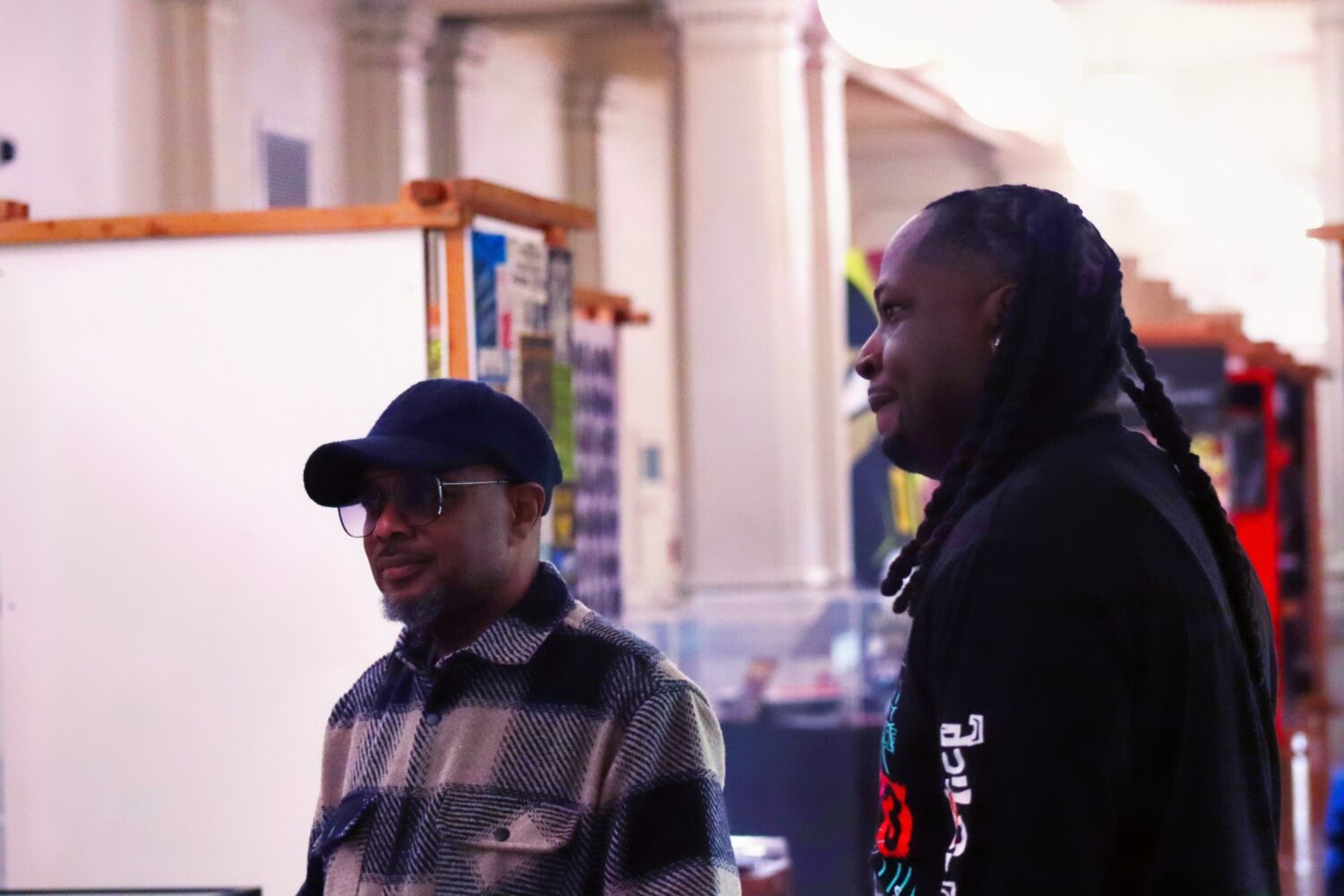
“This exhibit is for the public to celebrate 50 years of hip hop, and especially Wisconsin hip hop,” said Greg Doby Jr., one of the curators of the exhibit. “The unique part is there is a 50 year story of Wisconsin hip hop, so we’re telling it all.”
Wisconsin’s story is more vital than what typically comes to the front of the mind in hip hop.
The exhibit goes over the origins of hip hop in the work of New York DJ Cool Herc, its spread across the country and its connection to Madison. It touches on Clyde Stubblefield — drummer who called Madison home and whose work on James Brown’s “Funky Drummer” became the most-sampled drum break sample used in history across multiple genres.
Other portions discuss Fresh Force, who was the first local hip hop group in Madison to get a record deal; break dance groups like Home Boys Only, which the exhibit’s other curator Menkhu Ara Maat was part of; and Soul Patrol, shops, venue spaces, albums produced here and more.
It also notes WORT as the first station in Madison to play hip hop on the radio.
“Anne B was the DJ that moved to Madison, and we called her the queen of Madison hip hop, but she was the first DJ on the radio station that was fearless enough to play rap music, to play hip hop, and we really appreciate her,” Maat said.
Doby’s history in Madison’s hip hop scene also made it into the exhibit. He was the first African American to have a hip hop label in Madison; first producer from the city to have a platinum plaque, which is on display in the exhibit; and sits as the producer with the most platinum plaques from Madison.
Doby is also known for producing for artists like Lloyd Banks, 50 Cent and Young Jeezy.
Attention is also put on the University of Wisconsin-Madison. The university is noted for its First Wave Hip Hop and Urban Arts Scholarship Program, which provides a four-year, full tuition scholarship for incoming students for artistic programs.
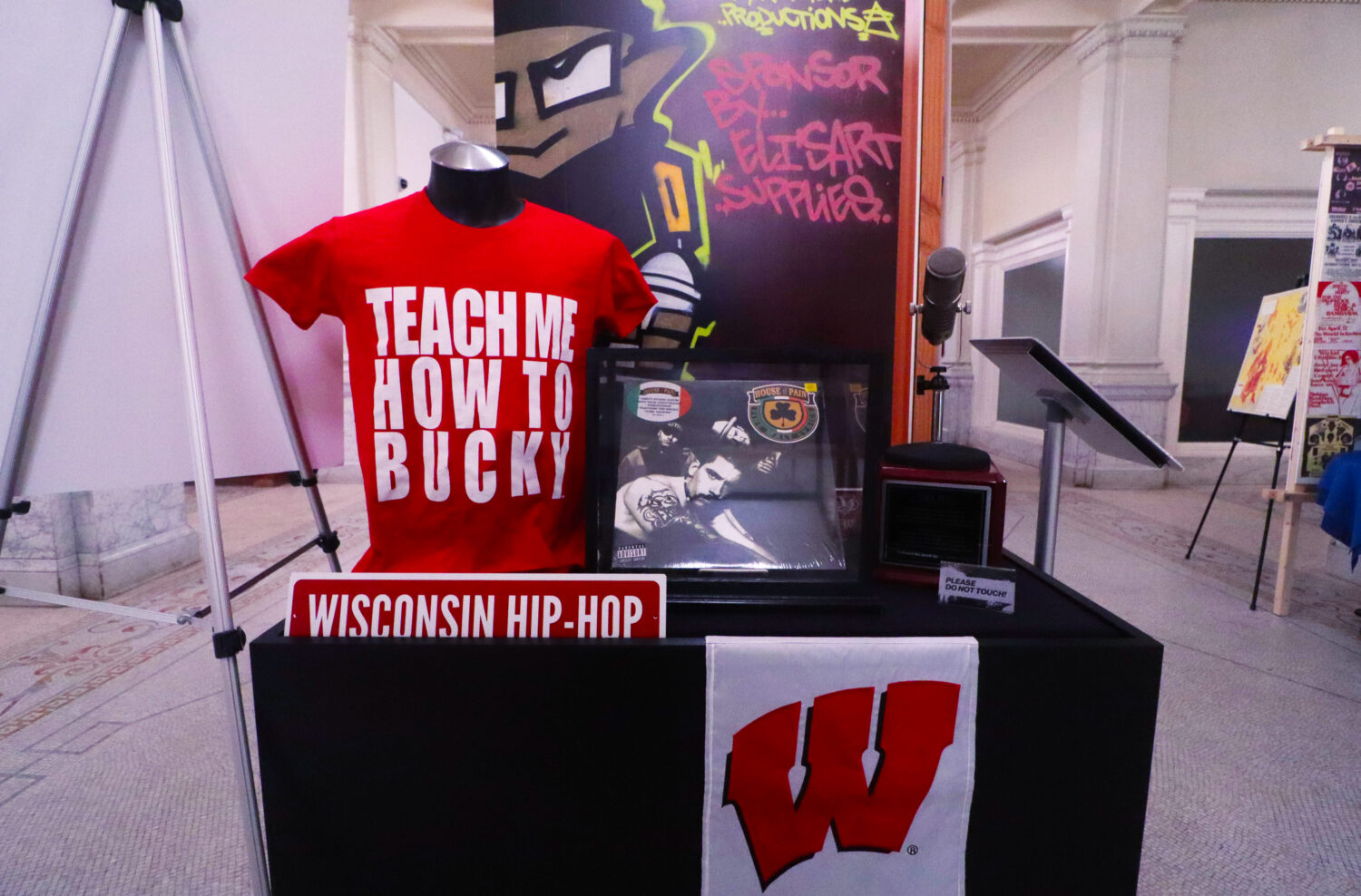
The program was started in 2007 with an inaugural cohort of 15 students, which DJ Cool Herc came to meet. An photo with DJ Cool Herc and the students and staff is on display at the exhibit.
Madison is also one of the first places to use hip hop in pedagogy. The practice started over three decades ago with scholars and educators like Christoper Edmin, Marcella Runnell, Martha Diaz and Madison’s own Dr. Gloria Landson-Billings.
Landson-Billings has long championed the integration of hip hop as a legitimate form of literacy and social criticism that reflects the experiences of Black and Brown students.
The exhibit at the Wisconsin Historical Society is part of the second phase for Menkhu and Doby’s plans to showcase Madison’s impact on hip hop. They are currently working on a documentary, and a sizzle reel is available for viewing at the exhibit.
Their grand goal for the exhibit is to find a permanent space.
“We’ve gotten offers to take the exhibit around the state, but hopefully phase three is a permanent home. Hip hop needs a home, and we’re trying to make that happen here in Wisconsin,” Maat said. “We want to secure a building and give all the glory and all the things we’ve been collecting and give it all the shine that it deserves.”
It’s definitely time to give the museum a dedicated, permanent space, Maat said. Doby said the time is now, with the 100th year of Black History celebrations and the 50th year of hip hop both hitting milestones.
“Hip hop is the perfect answer for what needed to happen after the Civil Rights Movement,” Doby said. “I feel like it was inevitable that hip hop would happen… We have inherited so much diversity, so much culture, so much spirituality from our ancestors and Black leaders from the past, I think hip hop was inevitable for young people to have a voice to express themselves on all the good and bad things that happened.”
The exhibit will be open until Feb. 28. On the day of its closing, Maat and Doby will host a forum and panel discussion on the exhibit along with a preview of the documentary.
Hours for the exhibit are Monday-Saturdays 10-4 p.m. Maat and Doby offer tours Saturdays at 11 a.m. and 2 p.m.