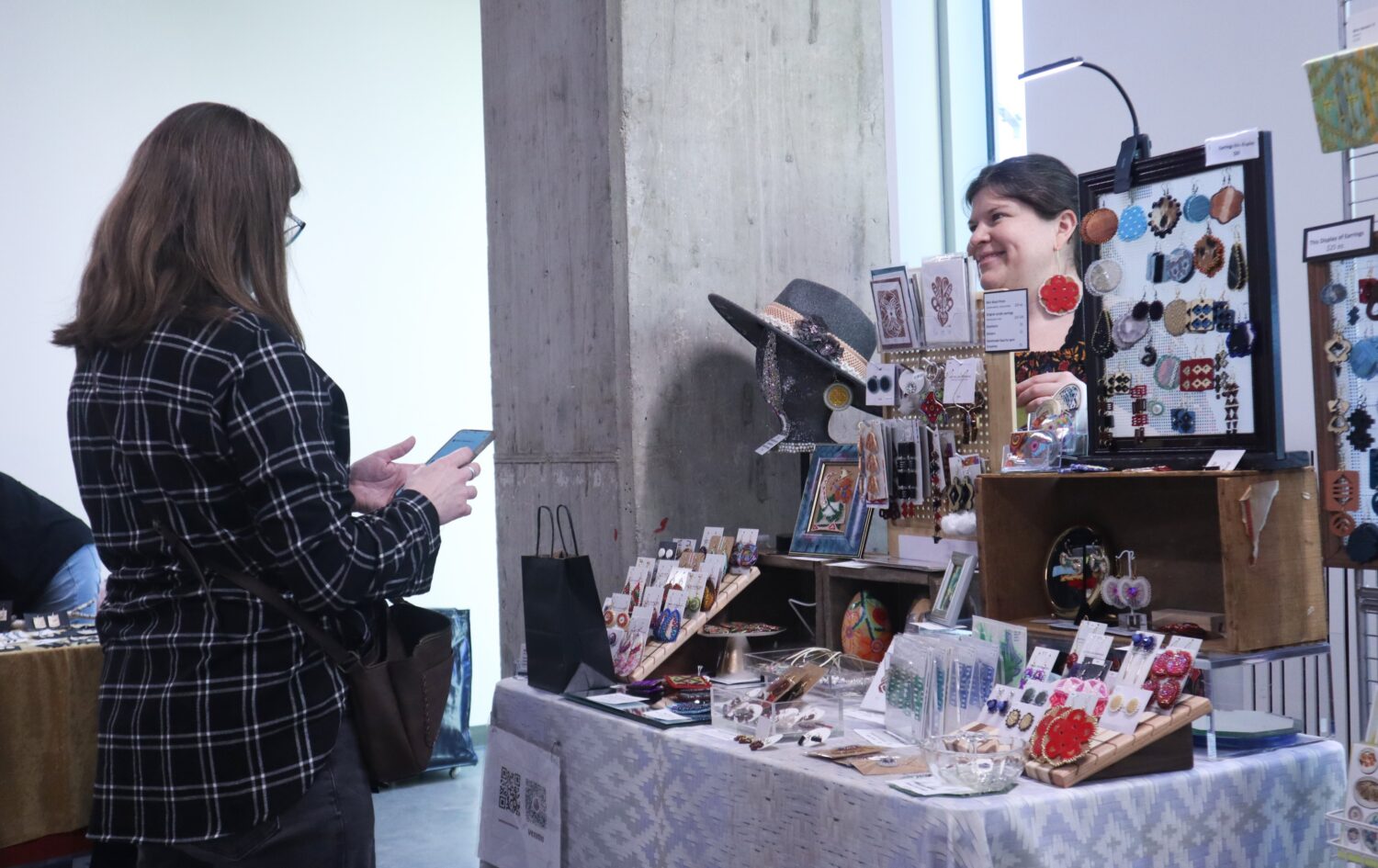
The Native Art Market returned this past weekend with more vendors than ever as Indigenous artists from across Wisconsin came to sell goods representative of their respective tribes.
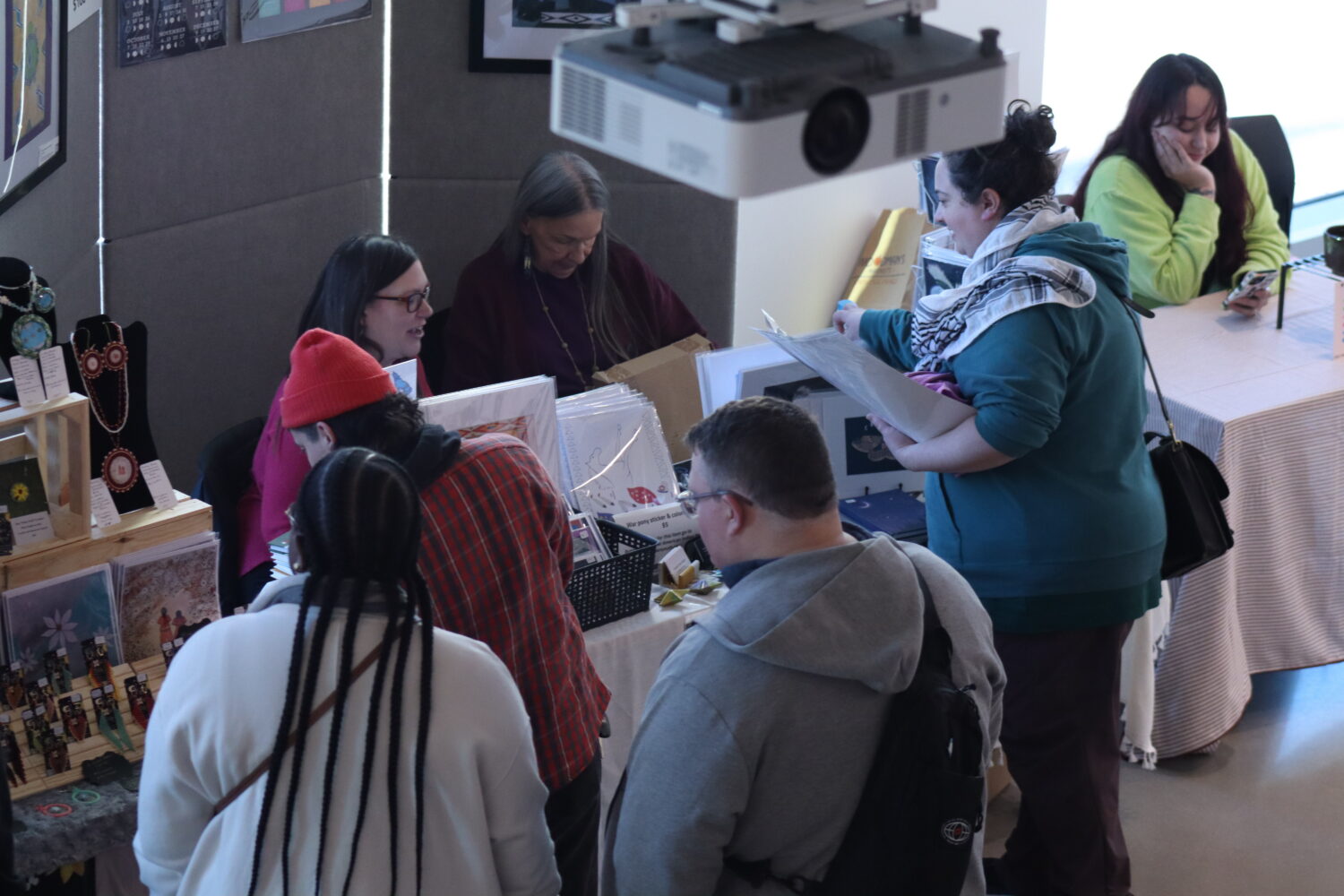
On Nov. 14, the annual Native Art Market was held at the Arts + Literature Laboratory, 111 S. Livingston St., with over 40 Native artists selling their work. This year saw the most artists ever at the Arts + Lit Lab, with a mix of longtime vendors and newcomers. The market spread across three floors of the building, the second year it has done so, and packed more vendors into the space.
Vendors like Sunny Webster, owner of It’s S.E.W Me Designs, have noticed the market’s popularity grow in the six years she has participated.
“Meeting everybody, seeing everybody again, because a lot of these people come from different distances, and usually it’s the same people,” Webster said. “There seems like a lot more people. Maybe there’s been more advertising, so more people are coming through.”
With the increase in people, Webster is excited to answer questions people ask regarding her work and heritage. She is Oneida and has multiple items with strawberries on the garments, jewelry, accessories and purses.
“We let them know that strawberries mean medicine; our medicine is food to us, and we’re bear clans, so that means a lot to us too. This aspect, plus it’s one of the first crops that are harvested in the spring,” Webster said.
Hattie Lee Mendoza has been coming to the market for three years. She is from the Cherokee Nation and is a multidisciplinary artist. Her works incorporate traditional Indigenous creations out of fibers, Cherokee basketry patterns, embroidered earrings and different types of beadwork.
Mendoza appreciates the community coming out to continuously support the market. She noted that it’s been busier than previous years.
(Photo by Omar Waheed)
Seeing people’s faces light up when they see something that they really love and want to collect or to give to someone,” Mendoza said. “A lot of people have bought things that they’re like, ‘I know the perfect person that’s gonna love this piece,’ and it’s exciting to see people connect with my things.”
New to the market was Lighting New Rider. He intended to come the previous year, but ultimately couldn’t make it out due to “technical difficulties,” he said. New Rider was excited to give more in-depth knowledge of his pieces on sale and the history of the Ho Chunks.
New Rider sold items like bone pipes, shells, staffs, war clubs, paintings and pearl earrings. The earrings hold a special place in his heart, being in remembrance of his mother who died about five and a half years ago. His mother always loved earrings.
New Rider dove extensively into a war club he had on display and the history behind its use. Often, war clubs were made of the butts of guns from settlers, he said.
“They didn’t know how to work it, so they took the metal off and everything, and then they made it into a club,” New Rider said. “But also, Ho Chunks, we were warriors. We were not to be messed with, so this could also have been a trophy from someone they had killed and then turned it into a war club.”
The club was adorned with feathers. New Rider talked about some of the complications of using certain feathers from protected animals like eagles in relation to traditions.
“We have the [eagle] feathers, which are decorations, which are legal,” New Rider said. “But these are stuck here. I got turkey [feathers] over there, which are perfectly safe and legal, so that was my implementation working with the crowd.”