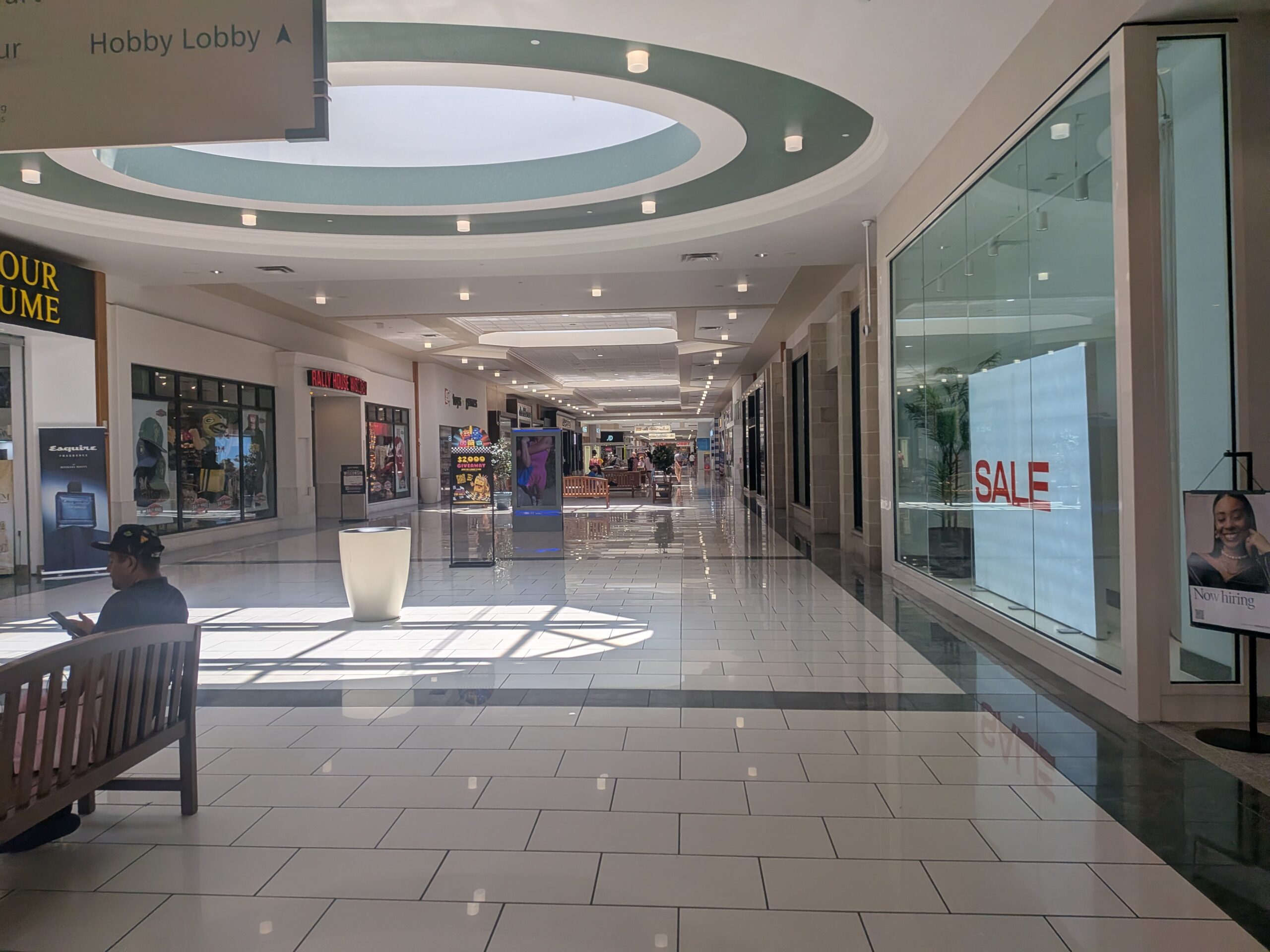
Since 2017, East Towne and West Towne Malls have restricted unsupervised access to minors after 4 pm on Fridays and Saturdays. Unaccompanied minors past curfew are escorted off the property by mall security. The Wisconsin State Journal reports the ACLU and some city officials oppose the policy.
Goodman pool, Madison’s only public pool, restricted access to unsupervised kids under 16. In the summer of 2025, the pool created a system requiring kids ages 11-15 to complete a waiver, with a current photo by Madison Parks staff, and confirmed household information; patrons over 18 need to provide proof of age. This year, all patrons over the age of 3 need to file the waivers, according to the Pool’s website.
This spring, Alder Will Ochowicz and other city officials communicated with police to consider reinstating a curfew for minors downtown, according to WMTV. The original curfew, requiring minors to be indoors after 11 on weeknights and midnight on weekends, was repealed in 2023. Conversations of alternatives included State Street businesses creating curfews for their stores.
Teens criticize these policies for forcing them out of businesses and public spaces.
“I get out of school at 3:36 pm, the mall closes (to unaccompanied teens) at 4 pm, so we don’t go most of the year,” said 15-year-old Jamal Johnson. “Same for the pool. I used to take my little sisters there in the summer because my mom works during the day. Now we stay in most of the time.”
Molly Weix, 16, said the curfews and restrictions are “an extension of a pattern of policing everything that children do.” Weix connects the restrictions to “surveillance by Kids Online Safety Act and the Kids Internet Digital Safety Act,” which garnered criticism for hindering youths’ First Amendment rights, censoring access to LGBTQ+ resources, and the high ambiguity of what content is deemed harmful for youth.
“The malls decided to turn away their best customers,” said 17-year-old Jayda Frazier. “Curfews should be determined by parents.”

Weix said they were escorted out of a business in West Towne Mall earlier than the curfew time because the security said they should be in school, despite the high school having a half day. All of these teens have been escorted out of malls by security because of curfews on minors.
In 2025, Goodman Pool’s stricter rules were in response to a fight, in which police used pepper spray to disperse teenagers. The malls, said Alderman Ochowicz, also cite fights and other unwanted behaviors from minors as the reason for enacting these restrictions.
“Some fights happen, but frankly, that doesn’t seem like a good reason for the restrictions,” said Weix. “Sometimes people hit other people with cars. The solution to that isn’t to get rid of all cars forever.” Frazier shared a similar sentiment: “It’s a fault on the person, not a fault on the entire generation of teens.”
Frazier goes on to say the curfews and restrictions don’t have the intended effect.
“The phrase ‘strict parents raise sneaky kids’ applies to this scenario really well because if you have people getting kicked out, now they’re gonna find somewhere sneakier to fight,” she said. “More damage can be done, they can hurt themselves; someone could get killed and no one would know because these curfews are preventing people from being out in public. It just seems more dangerous to me. I think they’re trying to keep us out of trouble, but limiting how much time we have and then kicking us out of places is why so many kids turn to drugs and alcohol, because it’s easier to get.”
Amid the restrictions on popular teen hangout locations, teens are looking for alternative spots during the summer months.
Weix, Frazier, and Johnson mentioned going to friends’ houses as a main spot, alongside parks, libraries, and putting in extra hours at work to stay busy outside of the school year. Class differences and the cost of living in Madison are major limiting factors to the activities youth can access.
“It’s hard to find places to hang out or have friends who are fortunate to have a TV and a basement in a house big enough to host gatherings,” said Frazier. “Not a lot of my friends have that, it’s a privilege.”
She adds that other activities, like going to the ice rink are too expensive. This excludes families like hers that aren’t part of Madison’s higher class, who have more opportunities.
“I’d like to go watch movies in the theater,” said Frazier. “It is so expensive nowadays, I don’t even want to go.” The price of a movie ticket and a junior popcorn at Marcus Theater is about $24, which can be a hefty price for teens working $7.25 minimum wage jobs.
Madison’s many parks are a great free place to chill during the day, though some are closed after 8 p.m. The City of Madison’s general parks are open until 10 p.m., while conservation parks close one hour after sunset, a time that can vary greatly throughout the year.
“On Friday nights I want to be out with my friends, not stuck in my house,” said Johnson. “We go to the park or hang out in my car in a parking lot and don’t bother anyone. I’ve had the cops called on me for being at the park late once.”
While community centers could be an opportunity for youth to have a place to socialize, these teens say their community centers don’t publicize activities for their age group. “I love my community center and go often,” Johnson said. “I don’t see a lot of people my age there though.”
“To be fair, I think part of the fault is a lot of teenagers don’t seek those spaces out actively,” adds Weix. “There actually are a good number of very nice community clubs in Madison. But the only way they advertise themselves is a single Facebook page.”
Creating more age-specialized activities in community centers and effectively communicating with teenagers could create an opportunity for youth.
Another classic youth option is summer camps. However, private camps can cost hundreds of dollars per week, tend to be geared towards younger kids, and have limited enrollment spots, causing teens to fall through the cracks in the summer.
Frazier works for MSCR camps during the summer. She says they are a good way for young kids to be cognitively engaged, build experiences, stay physically active, and socialize with other kids their age. The camps serve Kindergarten through 9th grade, missing older teens.
Johnson and Frazier say that the limited opportunities for teens cause them to turn to their phones and social media.
“The pandemic was the start of this trend towards people trying to fulfill all their social needs entirely online,” said Weix. “I have a lot of friends and have been in online spaces where people feel lonely and are trying to find community for lack of one they can find in person. I think it’s a combination of third spaces going away and of the predatory nature of social media app design these days. It actively encourages people to turn to online spaces as opposed to seeking out physical ones. Those are two cycles that kind of feed into each other, causing teens to be online more.”
In addition to choosing online spaces because they feel out of place in public, the lack of in-person social interaction in the summer is fueling the loneliness epidemic in this generation.
“In the summertime, I tend to miss school more because I feel more isolated,” said Frazier. “My friends can’t come hang out because they have jobs and need to think about pricing. What can we afford? If we go on a trip somewhere, it’s hard, especially if you can’t drive in Madison, so we walk and hit the bus. But the bus doesn’t go everywhere. I miss the social interaction of seeing all my friends every day when I am in school because there’s not a public place for us to go to to hang out, that’s not an option for us.”
Weix notes there are misconceptions that adults have about current teens due to the drastic differences in the world compared to previous generations. They say these changes need to be acknowledged to get to the root of the problem.
“There is definitely an aspect of ‘why aren’t you like how we were as kids?’” said Weix. “A lot of that comes from the fact that the world is changing even faster than it did during the 90s or the 2000s, huge technological revolutions integrated into people’s lives. Also, the pandemic is an elephant in the room of every single social conversation. The stocks are back up, so everything’s back to normal now, but it’s not. I bet it shut down a lot of third spaces, cause they’re not profitable anymore. Independent theaters and arcades are starting back up, but not as much as before. And frankly, people are scared to go outside because they got used to being inside all the time.”
Teens have suggestions of ways Madison can build more social opportunities for youth in the city.
Frazier referenced a kids’ club from when her mom was a teenager, a non-alcoholic place where teens can dance, have cheap, dirty sodas, and play arcade games. She suggests having themes and dressing up weeks to keep it an engaging hangout for Madison’s youth.
She also suggests a free public camp for older teens to socialize and go on field trips to keep them occupied during the summer months. “Instead of paying to enhance curfews, pay to enhance a public thing for kids,” said Frazier. “To build the community because they’re nice to have and that’s what we’re based around, community.”
Additionally, she was influenced by Japanese gaming cafes to bridge the gap between online teens and a place to meet people.
Johnson suggests creating more skate parks in Madison for teens to have a safe place to skate and meet people with the same interests.
Weix proposed creating a regular public bulletin board featuring Madison’s events in one place, off of social media, to keep teens informed on places and events meant for them.
“Teenagers are a part of your city. Get used to it,” she said.