There is a distinct, heavy silence that blankets the American Midwest, generally, and this city, particularly.
It is an institutionalized numbness wrapped tightly in the polite, suffocating fabric we have called on other occasions, “Midwest nice”. We in Madison love to celebrate our progressivism like a vintage vinyl record we keep on repeat.
But if you lift the needle and look closely at the grooves, you see the same old skips. You see the deep, jagged fractures of segregation. And nowhere is that segregation more polite—and more devastating—than within the ranks of Madison’s faith-based organizing.
As a trial lawyer, I know how the state structures its divides. As a pastor yoked to the gospel of liberation, I see how the church mirrors them. The bitter reality we must confront is that clergy activism in Madison is just as segregated as the neighborhoods our congregations go home to.
Hip-hop has always been my first theology; it taught me how to analyze power structures. When Chuck D said, “Don’t believe the hype,” he could have been talking about a cross-denominational press conference at the Wisconsin State Capitol.
We assemble for the cameras. We stand on the stone steps, an intentional mosaic of Black, brown, and white collars. We offer ecumenical prayers, nod in unison, and speak in the comfortable vernacular of “unity.” But when the lights fade, the coalition dissolves back into its predictable zip codes.
On one side of the isthmus, you have the well-meaning, predominantly white progressive clergy. They are fluent in the vocabulary of modern social justice. They organize committees, pass beautifully worded resolutions, and hold vigils. But too often, their activism is transactional—offering what I call the cold mechanics of Anglo-evangelical benevolence.
The capital and support they offer arrive wrapped in a theology that prioritizes the comfort of the ally over the disruption of the system. They want reconciliation without the messiness of redistribution. They want a sanitized justice that doesn’t threaten their endowment or their peace of mind.
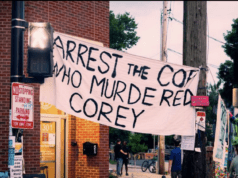
Meanwhile, on the Northside and Southside, Black pastors are operating in a completely different reality. We are not managing abstract policy theories; we are managing trauma. We are responding to gun violence in apartment parking lots, standing on the pavement where police bullets have stolen human dignity, and trying to patch up a community that is actively bleeding.
Like the late, great KRS-One famously observed, there is a vast difference between studying civilization and surviving the civilized. Black clergy organizing in this town is born of survival. It is loud, it is urgent, and it refuses to wait months for a state-sanctioned review to tell us what our eyes already know.
This creates a structural segregation of labor. The white progressive clergy handles the institutional access, while the Black clergy handles the proximity to the pain. It is an unequal distribution of risk. One group risks a bad review on a church forum; the other risks burying their youth.
True faith requires a courageous and consistent alignment with justice, not just when it is comfortable, but especially when it is difficult. If our organizing remains segregated, we are not building the Beloved Community—we are just running a more diverse public relations campaign for Madison’s status quo.
We cannot decolonize our city until we decolonize our alliances. White progressive clergy must move past the preservation of surface-level comfort. They must be willing to be led by those on the margins, to follow Black and brown leadership into spaces that disrupt the polite peace of this city. Until we are willing to smash the comfortable silos of our activism and share both the power and the pain, we are just playing our parts in a mediocre song.
Let us stop performing unity for the city’s conscience. Let us do the heavy, uncomfortable work of genuine, integrated resistance.