
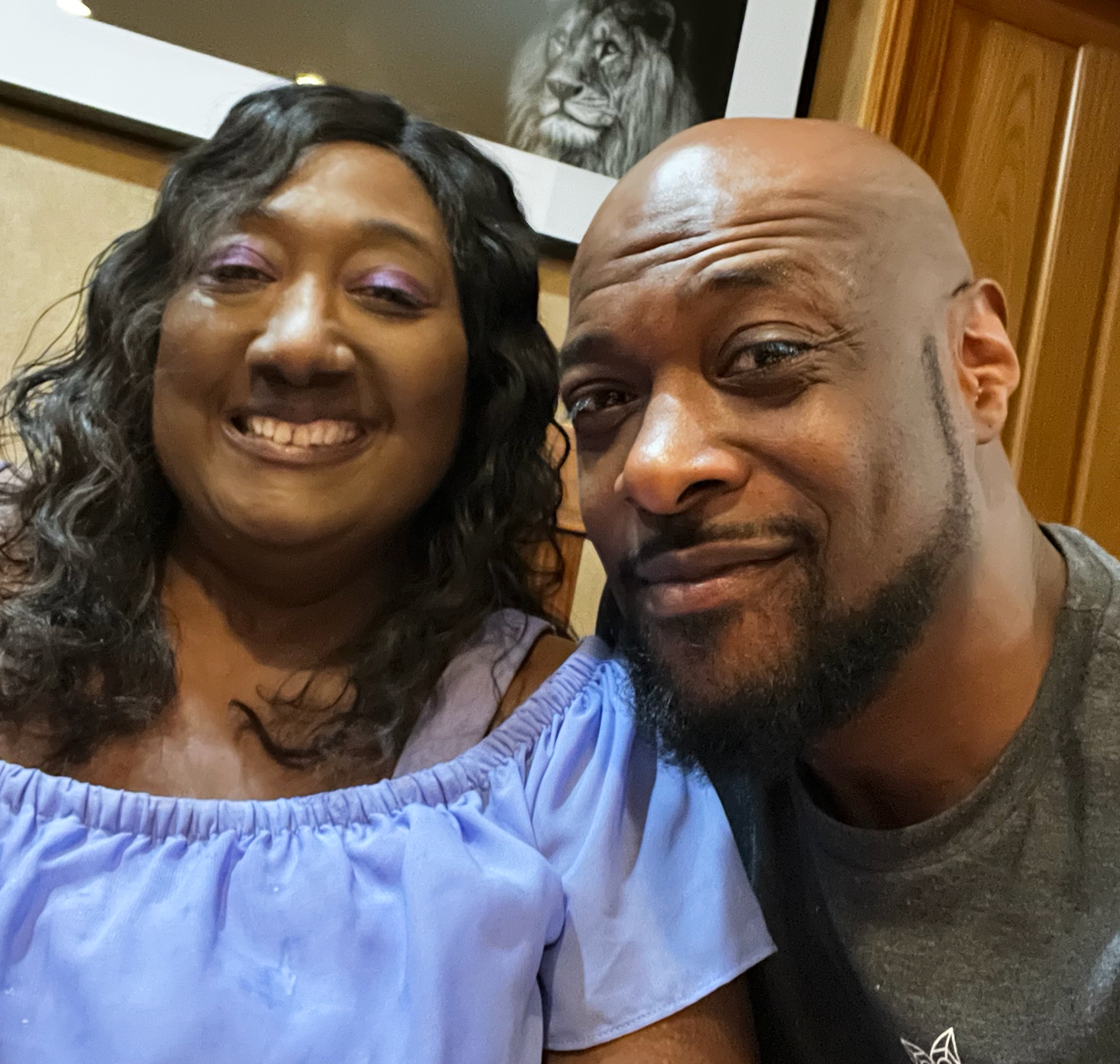
Last year, I took a cultural competency class, and there was one session I never really came back from.
The session was devoted to the historical pain of Black women. We talked about slavery, rape, forced reproduction, children torn from their mothers, women whose bodies did not belong to them. We talked about generations of Black women carrying violence that did not simply disappear when slavery ended.
None of that offended me. It was true. It was necessary. Black women deserved every minute of that conversation and many more.
What offended me was how completely Black men disappeared from it.
I sat there waiting for somebody to mention the Black men and boys living inside that same history. I waited for somebody to ask about the little boy who heard his mother scream. The boy who watched his mother brutalized and learned, before he was old enough to understand manhood, that whatever a man was supposed to do in that moment, he was powerless to do it.
What of the boy who watched his father beaten, humiliated or taken away? What of the enslaved Black men who were themselves sexually violated, a history scholars have documented but our popular conversations about slavery rarely seem to remember? What did it do to generations of boys who had to watch the people they loved stripped of dignity while learning that their own bodies were not their own either?
Nobody asked.
I remember sitting there feeling as though someone had taken an old family photograph, carefully cut the men out of it, and handed the picture back to me as the complete history of my family.
I felt invisible.
More than that, I was wounded by how unremarkable our absence seemed to everybody else.
I never went back to the class.
I think about that now because perhaps there is something painfully familiar about a Black man sitting in a room devoted to racial healing, realizing there is no language for his pain, and quietly disappearing.
The conversation simply continues without him.
I think about the mothers of those little Black boys too.
Imagine seeing something powerful growing inside your son during slavery. Intelligence. Confidence. Pride. Leadership. A stubborn sense of justice. Qualities that under any decent circumstances you would nurture with everything you had.
Then imagine knowing those same qualities might get him beaten or killed.
What do you teach him?
Lower your eyes. Watch your mouth. Don’t challenge authority. Do what you’re told.
Survive.
She is deliberately breaking her son In a desperate effort to keep him alive and safe.
That may be one of white supremacy’s cruelest achievements. It placed Black mothers in the impossible position of sometimes having to sand down qualities in their sons that freedom would have allowed them to sharpen. Pride could become dangerous. Defiance could become dangerous. Leadership could become dangerous.
The lesson was never that we were inferior.
The lesson was that somebody might kill us if we forgot to pretend we were.
We inherited versions of that lesson.
Keep your hands where they can see them. Don’t reach. Don’t argue with the officer. Yes, sir. No, sir.
Come home.
Please. Just come home.
Generation after generation, Black boys have learned that survival can require making ourselves smaller than we actually are.
Then society meets the grown man and wonders why something in him hurts.
We have developed a sophisticated vocabulary for many forms of oppression. We know trauma. We know misogynoir. We know marginalization, systemic racism, historical violence and intersectionality. We needed those words because people whose suffering had been ignored needed language capable of describing what happened to them.
But Black male pain can still arrive in the room without a name.
Our trauma becomes instability. Our fear becomes aggression. Our mistrust becomes paranoia. Our anger becomes danger. Our confidence becomes arrogance. Our wounds become something everybody else needs protection from.
Then the white supremacist power structure kills us.
And death performs a strange baptism on Black men in America.
Suddenly we are innocent enough to love.
Somebody finds the childhood photograph. There we are at eight years old with a ridiculous haircut, a wide smile and a missing tooth. Before the arrest. Before addiction. Before prison. Before homelessness. Before anybody decided the world needed protection from us.
Everybody can finally see the little boy.
I wish we could have seen him sooner.
Because everybody loves a dead Black man.
A dead Black man is safe. He fits beautifully on a T-shirt. His name fits neatly on cardboard. His photograph can be carried through the streets without ever challenging the person carrying it.
He cannot question the strategy. He cannot challenge the nonprofit leader or elected official. He cannot ask who appointed somebody to speak for him. He cannot ask where the money went. He cannot look around a room supposedly devoted to men like him and ask why so few men like him have any authority in it.
Death makes us wonderfully cooperative.
That is why I have struggled with what happens after a Black man is killed.
Black men can somehow become supporting characters in a story organized around our own suffering.
We are usually present. We march. We chant. We move things. We protect people. Sometimes, when another Black man becomes too angry for everybody else’s comfort, somebody comes looking for us to manage him.
But when it is time to develop strategy, negotiate with government, establish demands, control resources and publicly interpret Black male suffering, the room can start thinning out.
How does the death of a Black man become everybody else’s credential to speak about Black men?
How do our bodies become the cause while our voices remain optional?
Sometimes it feels like we have been invited to our own liberation after the seating chart has already been printed.
And I need to be honest about something else: I am not speaking from completely outside those rooms.
In many respects, I am an exception.
I have political friends. I am in Rotary. I know elected officials. I can call people in government and reasonably expect someone to answer. I am welcomed into spaces that many Black men will never see from the inside.
I know how to move in those rooms. I know how to put on the jacket. I know how to turn fury into language an institution recognizes as legitimate. I know how to read the report, challenge the numbers and translate something happening on the street into the sterile language required before human suffering becomes actionable.
I even know when I can say “fuck” and when saying “fuck” means nobody will remember anything I said afterward.
That access has value. I am grateful for it.
But nobody should confuse my access with an open door.
Sometimes being inside simply gives me a clearer view of everybody still standing outside.
I see the man who understands his neighborhood better than anybody around the conference table but does not know the vocabulary somebody learned in graduate school to describe his own life. I see the man with the felony. The man battling addiction. The man who has never read a city budget. The man with extraordinary lived knowledge and no credential proving he possesses it.
I see the man whose trauma enters the room before his résumé does.
Society has to make room for him too.
But Black men, love requires me to tell us the truth.
Some of us need to pick up a fucking book.
Seriously.
We cannot turn ignorance into an identity and then demand that everybody respect it as authenticity.
We need to read. Study. Learn our history beyond memes and YouTube clips. Learn how government works. Learn how money moves. Learn how policy gets made. Learn the difference between something we believe, something we heard, and something we can prove.
We need to know how to make an argument.
Volume is not an argument.
Anger is not analysis.
And being oppressed does not automatically make us informed about oppression.
If we demand a seat at the table, then we sure as shit better have something of substance to contribute when we sit down.
I want us arriving with history, data, strategy, ideas and solutions. I want us capable of looking across the table at somebody with three degrees and saying, calmly and correctly, “You’re wrong. Let me show you why.”
Knowledge is power nobody needs to appoint us to possess.
And we have healing to do.
Some of us have been bleeding for so long that we have mistaken the wound for our personality. We have inherited pain, inflicted pain and sometimes handed both to the people who loved us most.
We have hurt Black women. We have abandoned children. We have abused people. We have confused domination with manhood and silence with strength. We need to own that without qualification.
We need therapy. Education. Mentorship. Accountability. Brotherhood.
We need to become better fathers, partners, sons and friends. We need to learn that disagreement is not always disrespect and vulnerability is not surrender. We need to tell Black men we love them before somebody prints their photograph on a memorial program.
But intellectual honesty cannot travel in only one direction.
If Black men can internalize misogyny, Black women can internalize society’s fear of Black men. Black people can absorb ideas about Black male criminality, aggression, intelligence and danger. Oppression does not vaccinate any of us against reproducing somebody else’s oppression.
That does not make Black women our enemy.
Quite the opposite.
Some of the greatest moments in our history came when Black men and Black women recognized one another’s power instead of treating power like there was only one chair available.
Mahalia Jackson was sitting behind Martin Luther King Jr. at the March on Washington in 1963. As King spoke, Jackson encouraged him from behind. The Smithsonian recounts her calling, “Tell them about the dream, Martin.” King moved beyond his prepared text and into the section that generations would remember.
I love that story.
Mahalia did not need Martin to become smaller for her to be powerful. Martin did not need Mahalia to become silent for him to lead.
She heard something in that Black man and called it forward.
He heard a Black woman he trusted and he listened.
And somewhere between her voice behind him and his voice before the nation, American history changed.
That is what we can be to one another.
I don’t have to look only to history to know it.
During the protests and encampment following the killing of Corey Ruiz, Shadaray Kilfoy-Flores, Jazzman Brown and Lature Elizabeth Carter gave me something I desperately needed. They organized. They led. They challenged me. They supported me. And when the public-facing part of the work was over, they helped hold together the human being underneath it.
They recognized when I was exhausted. They recognized when I was hurting. They did not treat my pain as weakness or every frustration as danger. At times their care felt maternal to me, and I mean that with enormous respect. Not because they treated me like a child, but because there was care without humiliation, protection without control, concern without requiring me to become smaller to receive it.
Rylee Jenich showed me something important too. She’s a white woman who has repeatedly demanded accountability from white people while also making room for Black men. She has demonstrated that accountability means more than being able to identify racism in somebody else. Sometimes it means turning the mirror inward, interrogating what white supremacy taught you and listening when the answer is uncomfortable.
Those women did not lose power by making room for mine.
They called more out of me.
That is what I want for us.
I don’t need Black women behind Black men. I don’t need Black men above Black women.
I want us beside each other.
I want Black women willing to say, “There is more in you than this,” and Black men secure enough to listen. I want Black men protecting the dignity and leadership of Black women without believing their leadership requires our disappearance.
I want white people serious about racial justice to do what Rylee has done: interrogate themselves, make room, and understand that allyship sometimes means resisting the instinct to run to the front of a struggle that is not primarily about them.
I want institutions to stop searching only for the Black men polished enough to make everybody comfortable. Invite the man who is still learning. Invest in the man returning from prison. Mentor the boy before he becomes the man everybody describes as unreachable. Fund mental health, education, housing, employment and leadership development before another Black man’s suffering becomes a public spectacle.
And those of us Black men who have found our way into the room have work to do too.
Climbing that ladder means very little if we pull it up behind us.
We need to turn around. Hold the door. Mentor somebody. Bring another Black man into the meeting. Teach what we learned the hard way. Correct him privately when possible. Defend his humanity publicly when necessary. Expect excellence from him without making perfection the price of belonging.
Society does not get to set the house on fire and then deny us shelter because we smell like smoke.
Our need to heal does not excuse your exclusion of us.
Our imperfections do not cancel our humanity.
You cannot deny generations of Black boys mentorship, stability, education and access to power and then require every Black man to arrive perfectly prepared before you will let him participate.
Make room while we are learning.
And Black men, learn.
Make room while we are healing.
And Black men, heal.
Make room for our leadership.
And Black men, prepare yourselves to lead.
Those responsibilities belong together. I refuse to let either side use the other as an excuse.
I keep returning to that classroom last year.
I remember listening to all that history, knowing Black women deserved every ounce of compassion being extended to them, and still feeling myself slowly disappear from the story.
So I left.
Nobody came looking for me.
Maybe that is the part I cannot shake.
How many Black men have done exactly that?
How many have walked away from classrooms, movements, churches, organizations, politics and community spaces because we concluded there was no room there for our pain, our voices or our imperfect attempts to participate?
And how many times did everybody continue talking after we left and eventually decide our empty chair proved we never cared?
Tony Robinson is dead.
Richard Lee Johnson is dead.
Corey Ruiz is dead.
Now we know how to say their names.
I want us to learn the names of Black men while there is still time to ask what they need.
I want us alive enough to be inconvenient. Alive enough to argue back. Alive enough to learn. Alive enough to heal. I want us to be alive enough to disappoint each other, to forgive each other, and then to try again.
I want Black men reading, thinking, building and loving one another. I want Black women and Black men remembering that white supremacy has taken enough from both of us without our volunteering to finish its work on each other.
I want those of us with access holding doors instead of guarding them.
I want white allies examining themselves before examining everybody else.
I want institutions investing in Black men before our funerals become their racial-equity programming.
And I want all of us to stop waiting until death makes a Black man uncomplicated enough to deserve compassion.
See us before the mugshot.
Hear us before the eulogy.
Make room before the memorial.
Everybody loves a dead Black man.
The harder work is learning to love us while we are still alive enough to argue back.