
Advocates, activists, organizers and their respective organizations gathered in Milwaukee for a first-of-its-kind summit on collective liberation Nov. 8.
Several organizations and their representatives gathered at Milwaukee’s South Division High School, 1515 W. Lapham Blvd., for “Another World is Possible.” The summit, centered on collective liberation, brought multiple groups out such as the Milwaukee Liberation Center, Wisconsin Bail Out the People Movement, Voces De La Frontera, Milwaukee4Palestine and many others to discuss their organizations, efforts, the history of change and what work needs to be done.
The keynote speaker for the event was Marquette University professor Dr. Sergio Gonzalez.
“When the organizers invited me, they said they wanted someone who could help, quote, ‘Set the tone for a day related to justice, abolition and collective liberation.’ I’m not going to lie. That’s a tall order, but it’s the kind of challenge we need to meet,” Gonzalez said.
As a historian, organizer and scholar who studies Wisconsin’s Latino community, Gonzalez has spent a significant portion of his life fighting for immigrant rights.
His address tackled the history of the Sanctuary Movement of the 1980s — one of his areas of expertise — that provided a safe haven for refugees fleeing conflicts in Central America.
He hammered down on its history with its notable start in Tucson, Arizona, where faith-based communities disagreed with the rhetoric describing Guatemalan refugees as “economic migrants” rather than those fleeing terror.
Churches and synagogues in places like Berkeley, Chicago, Tucson, Milwaukee and several other small towns opened their doors to Central American refugees. They declared themselves sanctuaries for those seeking refuge from terror.
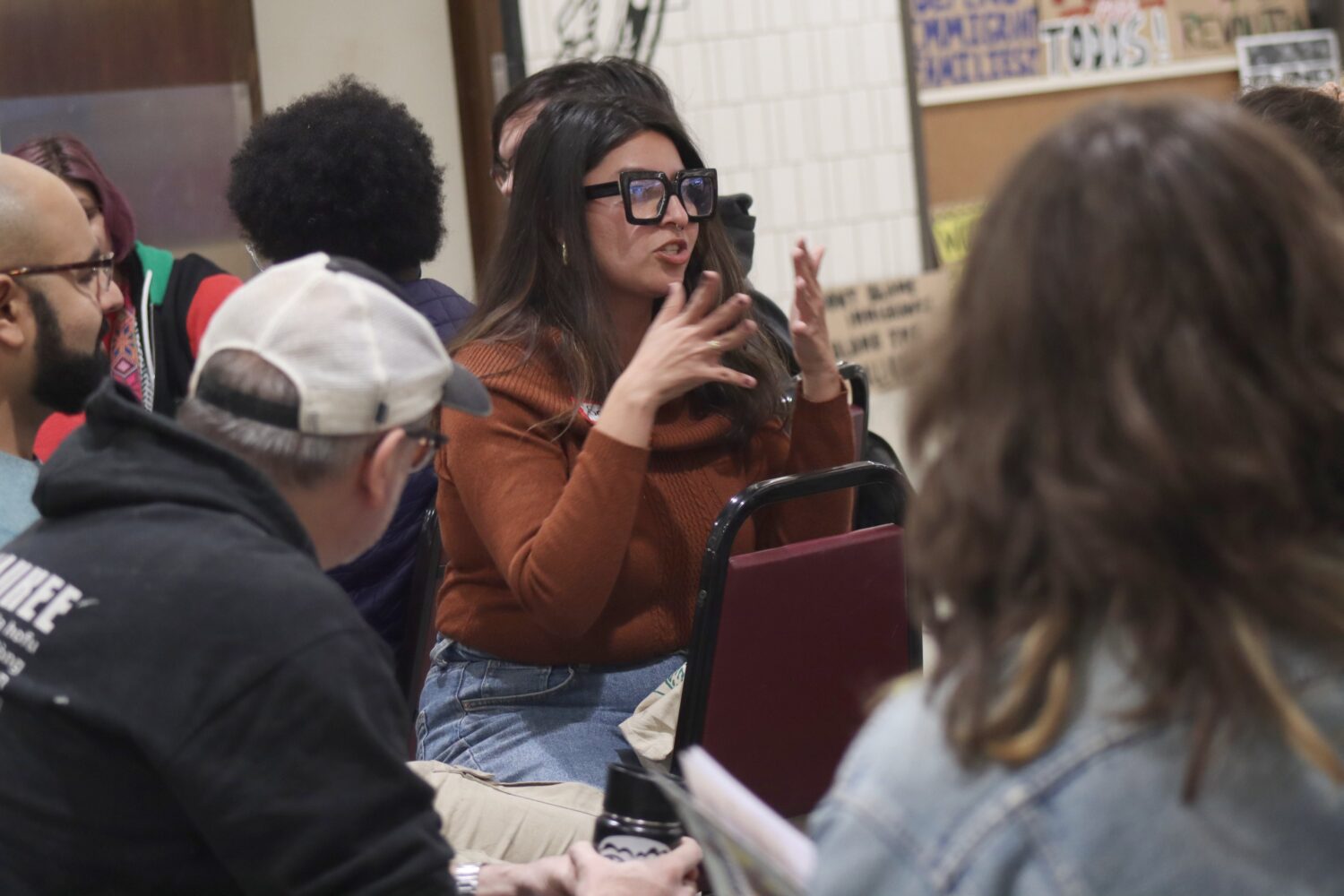
(Photo by Omar Waheed)
In Milwaukee, the city was a key hub for the movement, where it became the first city with Latino, Black and Jewish congregations to declare themselves as sanctuaries.
“People in the pews who had never heard of El Salvador or Guatemala suddenly heard voices describing the death squads trained with their tax dollars,” Gonzalez said. “They realized that the war wasn’t over there. It was in their politics, in their budgets and in their faith.”
The movement led to the creation of the Temporary Protected Status, which provides temporary work authorization and the prevention of deportation for those from countries that are experiencing conflict or disaster.
Gonzalez’s address imparted three lessons he wanted listeners to learn from the history of the Sanctuary Movement.
First, movements grow when they help people see their complicity and their power. Second, movements win because of their patents, relationability and persistence. Lastly, expect repression and plan for it.
“Sanctuary [Movement] survived because they practiced solidarity as both a shield and a strategy. They built a movement where mutual care was the very infrastructure of a movement,” he said.
Gonzalez related his speech to current events right now and how patients and persistence is needed to achieve change.
“We’re being told that the realm of what is possible needs to be shrunk and that we need to be grateful for whatever form of protections that we get,” Gonzalez said. “When we kind of acquiesce and we give up on the idea of education and speaking with people, I think we give up on the entire game.”
For a new Sanctuary-style movement, he believes that finding new ways to reach people will be what’s needed to mobilize them.
Lessons from organizing in Wisconsin
Other discussions brought out members from organizations to speak on lessons they learned from organizing.
In “Reform & Revolution,” Wisconsin Bail Out the People Movement’s (WiBOPM) Kai Rasmussen gave insight into how the organization operates.
He described a method called “The Cuban Model,” where before WiBOPM initiates any of its political programming, it makes an effort to perform some action for the community to build goodwill.
“To earn their respect, you have to show that you can do something for them, whether that’s supporting a strike or going to a Juneteenth event or Pride events,” Rasmussen. “We never fold on our political program. We’ll always raise the issues that need to be raised because they’re important.”
Another session delved into U.S. imperialism abroad and domestically. Heba Mohammad, organizer with Milwaukee4Palestine and a Wisconsin native of Palestinian descent, spoke on how imperialism in other countries trickles into policies for residents in the U.S.
“I think here in the U.S., they do such a good job of propagandizing us to not ask questions and to not understand our role across the world and the damage that we do as a country,” Mohammad said.
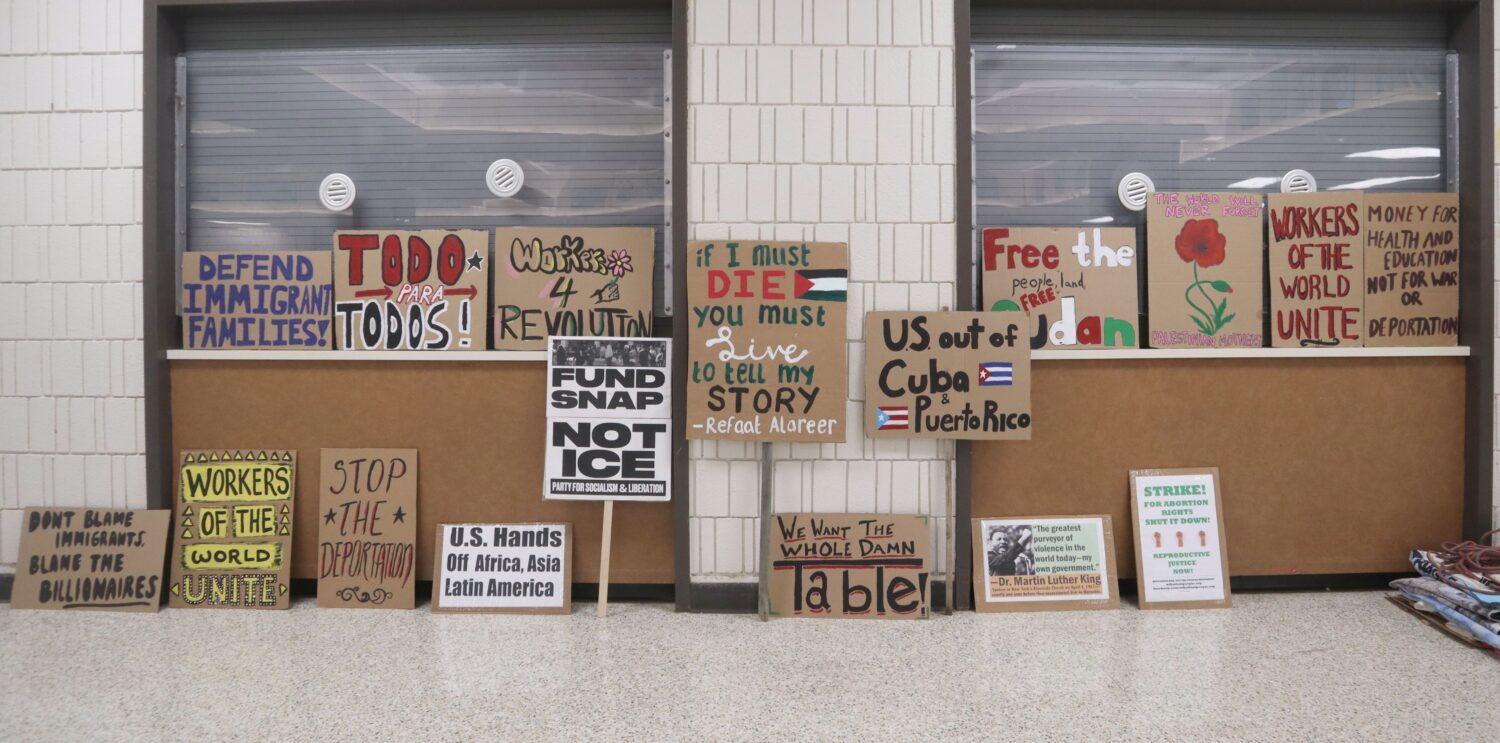
(Photo by Omar Waheed)
Despite propaganda, imperialism is getting easier to spot, Mohammad said. She points to Palestine, the ease of access to seeing events unfold, and being able to track how places in Wisconsin benefit directly towards the genocide.
“People are still watching in real time a live stream genocide and seeing it with their own eyes what our government is saying and what the facts on the ground actually are,” Mohammad said. “Being able to point to [contradictions] has made it easier to show people that our government is not to be trusted. It has its own agenda that does not center the needs of the people.”
She notes a campaign to protest Milwaukee-based Derco Aerospace, a subsidiary of Lockheed Martin that distributes and repairs parts for Israel’s F-100 fighter jets.