Anxiety over artificial intelligence is roiling U.S. schools. Many teachers and parents worry students will outsource their assignments to chatbots and thus miss crucial learning opportunities.
At the epicenter of the debate is writing, a skill typically fine-tuned through years of instruction, feedback and revision. Some teachers have stopped giving take-home writing assignments for fear that some students may just ask AI to write for them.
But what if this new technology, instead of helping students write less, could teach them to write better?
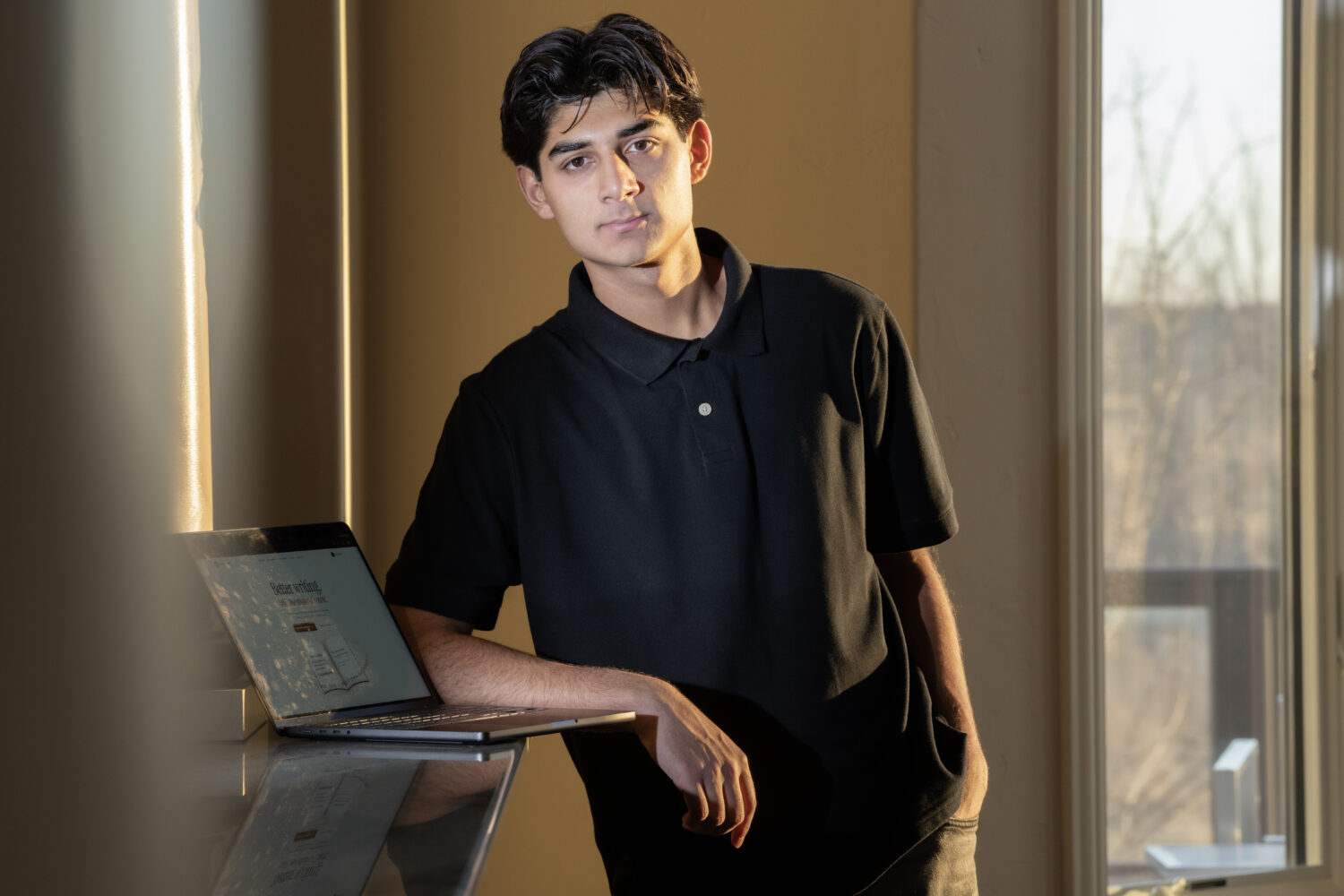
That’s the idea behind Tutor Copilot, a free tool created by Milwaukee-area teen Taha Nazir, 17. Inspired by the refugee children he tutors, the Brookfield East High School senior built an AI-powered platform that offers students advice for improving their drafts — without doing it for them.
Part of a small but growing category of “Socratic” AI tools, Tutor Copilot gives rubric-based feedback, customized to the assignment, then challenges students to revise their writing themselves. That’s a big difference from what happens when students share their writing with most common chatbots, Nazir said.
Nazir credits Advanced Placement English and language classes with making him a strong and confident writer. He doesn’t think the rise of AI will make those skills any less important.
“Writing is not just a way to get good grades. It’s a way to express your ideas,” Nazir said. “It’s about challenging your brain.”
Here’s how Tutor Copilot works: Students tell the platform what kind of writing assignment they’re working on, such as a college application essay or research paper. They paste in their draft and add a rubric if they have one. The tool scores them on a variety of criteria and suggests ways to improve, like where they could clarify ambiguous phrases or add more detail.
Many free web platforms generate revenue by selling ads or user data. Nazir has not monetized Tutor Copilot, and he has no plans to do so.
Since its public launch in January, the Wisconsin-made tool has gained local and national attention. Its website has drawn more than 4,000 visitors from more than 60 countries, who have uploaded more than 840 writing assignments, Nazir said. The tool won second place in the AI and machine learning competition organized by the Industrial Engineering and Operations Management Society International.
Now Nazir is trying to get Tutor Copilot in front of more students and teachers — and tweak it to better meet their needs. Already, the tool has piqued the interest of Tanya Baker, executive director of the National Writing Project, a nonprofit that helps educators teach the craft of writing.
Baker said she finds efforts like Nazir’s refreshing.
“He’s not a person who hates writing and is trying to make it easier. He’s a person who loves writing and wants other people to love writing.”
Inspired by refugee students
Nazir began designing Tutor Copilot last year to help the middle school and high school students he tutors at SEA Literacy, a nonprofit serving refugees in the Milwaukee area.
Most received little formal education in their home countries. Even those who speak confidently in English still need lots of support with school work, SEA Literacy Executive Director Anne Bingham said.
“A lot of them have never had electricity, cellphone service, access to computers, or even seen computers, (or) been in schools,” Bingham said. “They can be chatterboxes and tell you about everything, but when it comes to reading comprehension and writing, they really struggle.”
At his twice-weekly tutoring sessions, Nazir noticed students tended to improve most when he helped them but didn’t give the answer.
“I realized that if they’re able to improve this much in just two sessions, imagine what they could have if they had constant access to something like that,” Nazir said.

He started watching YouTube videos to learn to code, then coded the first version of Tutor Copilot himself. He asked Bingham if he could share it with the SEA Literacy students. She agreed.
Knowing how much the students loved soccer, he brought a jersey for famed, top-scoring Portuguese player Cristiano Ronaldo to give to the student whose writing received the highest score on the platform.
“I’ve never seen those boys so focused on something before,” Bingham said. Being able to make their own changes in response to the tool’s feedback gave the students confidence, she said.
“They were so excited about it … and I felt like they were able to express themselves.”
What’s the potential?
There’s not enough research to show whether AI will help or hurt students, Baker said, noting that some peer-reviewed studies that purported to answer that question have been retracted or otherwise called into question.
“I think anybody who says with certainty that they know whether AI tools in education are good or bad is overstating their hand. We really don’t know,” she said. “We’re really in a place where we should be very curious and very experimental.”
Baker said the tools she’s most optimistic about push students to think harder instead of revealing the answer. Developers at Cornell University, Georgia Institute of Technology and Massachusetts Institute of Technology have all built their own versions.
“If there is a place for AI in learning and AI in writing, it’s got to look something like that,” Baker said.
So when Nazir contacted her earlier this year, she connected him with the Greater Madison Writing Project to show how the Wisconsin group might use the tool. She also offered to share it in one of the nonprofit’s online groups, which includes about 10,000 educators nationwide.
She told Wisconsin Watch she likes that the tool is made by a high schooler who just wants to help other young people and that he’s asked his teachers for feedback.
“He’s thought about how powerful writing is, what a great experience it is for him as a learner, how he’s used it in his life,” Baker said. “He’s trying to provide support — not to help kids get a good grade necessarily, not to help kids get over the hard part — but to support them through the hard part.”
Natalie Yahr reports on pathways to success statewide for Wisconsin Watch, working in partnership with Open Campus. Email her at [email protected].
This article first appeared on Wisconsin Watch and is republished here under a Creative Commons Attribution-NoDerivatives 4.0 International License.