
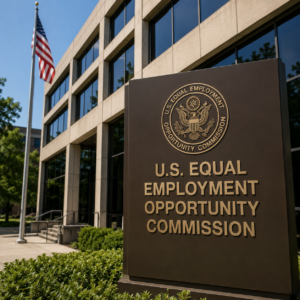
The U.S. Equal Employment Opportunity Commission voted 2-1 on July 21 to advance a rule that would eliminate the federal government’s longstanding collection of workplace demographic data, according to reporting from the Associated Press published by the Washington Times.
The Republican-majority commission’s vote authorizes publication of a Notice of Proposed Rulemaking that would rescind the EEO-1 report and related EEO-2 through EEO-6 reports, along with associated recordkeeping requirements, according to an analysis by employment law firm Littler. Since 1966, the EEO-1 form has required companies with 100 or more employees, and federal contractors with 50 or more, to report the number of male and female workers in 10 broad job categories along with workers’ race and ethnicity, the AP reported.
The proposal now moves to a 30-day public comment period after publication in the Federal Register, with a public hearing scheduled for Aug. 11, according to employer-advocacy group DirectEmployers Association. A final rule would still need to complete the notice-and-comment process required under the Administrative Procedure Act, meaning employers remain subject to existing reporting obligations for now, Littler noted.
The move is part of a broader effort by the commission under the Trump administration to discourage employer diversity, equity and inclusion practices it considers potentially unlawful, Bloomberg Law reported. EEOC Commissioner Kalpana Kotagal, the panel’s lone Democrat, introduced a motion to extend the public comment period from 30 to 60 days; it failed to advance, according to Bloomberg Law.
Ahead of the vote, 10 Democratic lawmakers led by Sen. Lisa Blunt Rochester of Delaware and Rep. Jerrold Nadler of New York wrote to EEOC Chair Andrea Lucas urging the commission to proceed transparently with the annual data collection, writing that timely EEO-1 data is critical to enforcing civil rights laws and ensuring workplace equal opportunity, according to Time. The EEOC processed more than 88,000 discrimination charges and resolved more than 90,000 in fiscal year 2025, Time reported.
Some state reporting requirements would remain unaffected by a federal rescission. Colorado law, for instance, requires employers to keep reporting demographic data even if the federal requirement is repealed, Littler noted.