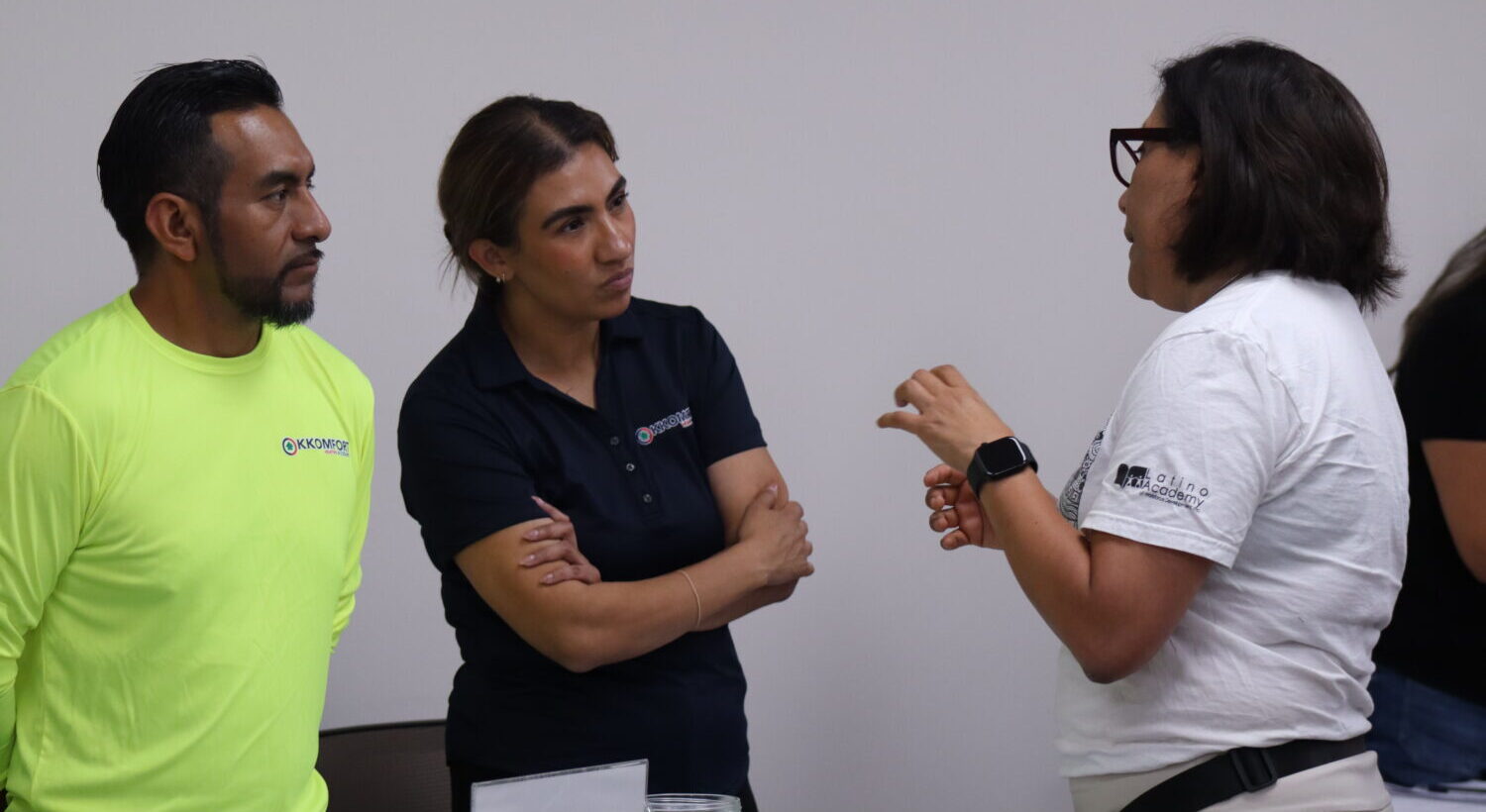
Employers across Dane County came to the Latino Academy of Workforce Development for a career fair as the organization looks to increase economic mobility for marginalized communities.
On July 23, over 20 employers from construction, roofing, food systems, tiling and more came to the Latino Academy for its career fair. The Latino Academy periodically puts on its career fairs, but has been keeping its head down a bit as immigration crackdowns have impacted communities across the country and federal funding cuts have weakened some nonprofits’ ability to meet needs. It has delayed some of its programming for the safety of students and the community, but knows that the work is imperative for those seeking better opportunities.
“I think especially right now, that economic mobility is a huge need that we have. Everything, like the cost of living, is getting more expensive,” said Nydia Martinez, executive director of the Latino Academy. “Currently, we can say that someone having a job is not enough for economic mobility.”
The Latino Academy is heavily focused on the advancement of opportunities to find jobs that can sustain a family. It offers support for individuals with certifications to expand what opportunities they can find — and hopefully find higher-paying jobs.
One employer noticed that attendees are some of the highest certified they’ve seen in all of their years attending the Latino Academy’s career fair.
Daniel Webster, director of workforce development and community engagement for the Walbec Group, a Waukesha-headquartered civil engineering and construction company collective, sees the Latino Academy as a place that provides workers with a competitive advantage as they seek work. He noted that many in attendance have attended pre-apprenticeship programs.
“I think that’s a little bit different than we’ve seen in the past,” Webster said. “Our experience in interacting with certified pre-apprenticeship providers is that generally they provide individuals that are going through those programs with some good experience, both on the certification and the professional development side, which is what contractors really, I think, enjoy about sourcing talent from those entities.”
Webster said that there’s a lot of work going on, but workforce challenges — like quality employees — have been a challenge in the past. However, recruiting from the Latino Academy, and other similar organizations, is a chance to source well-prepared workers.
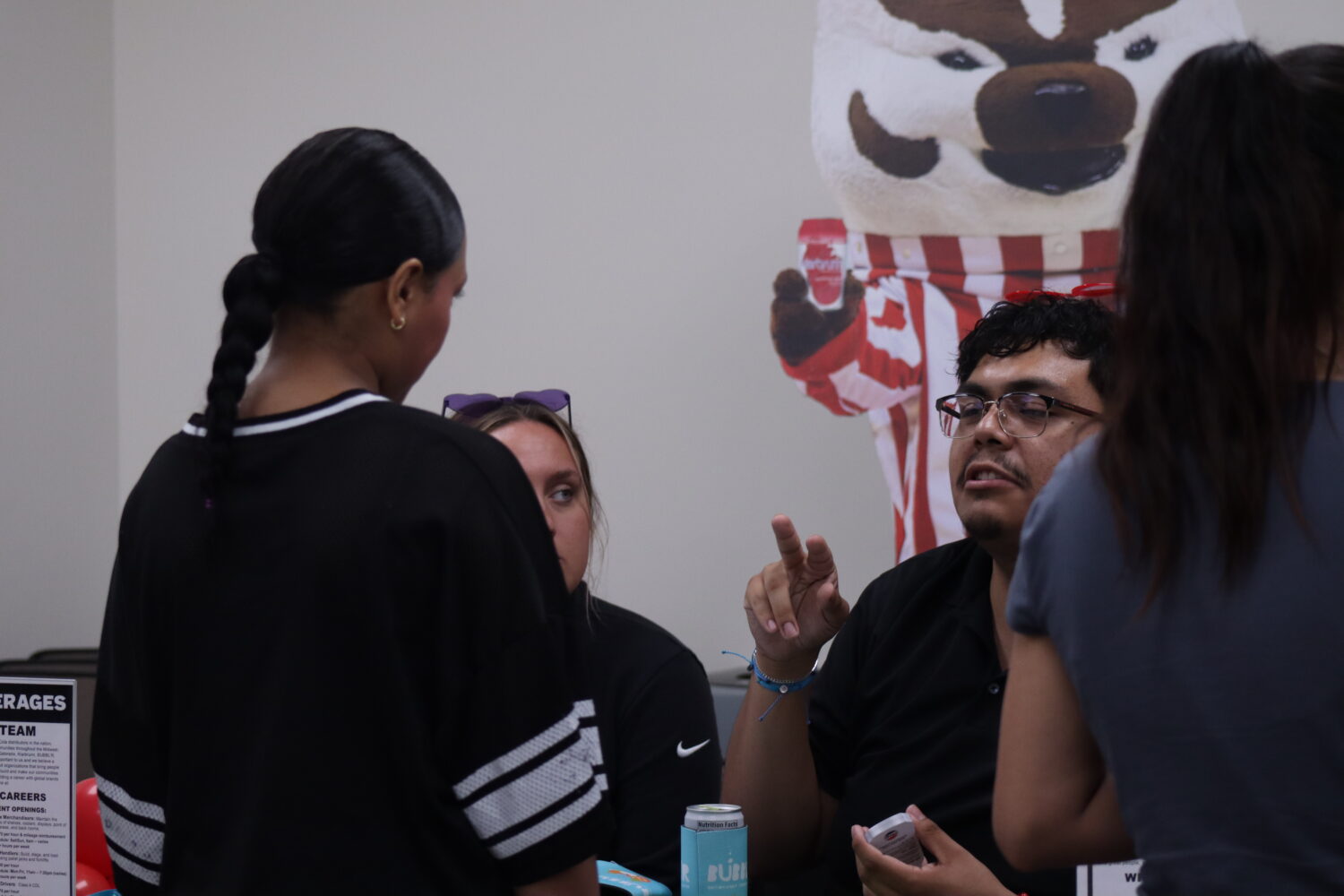
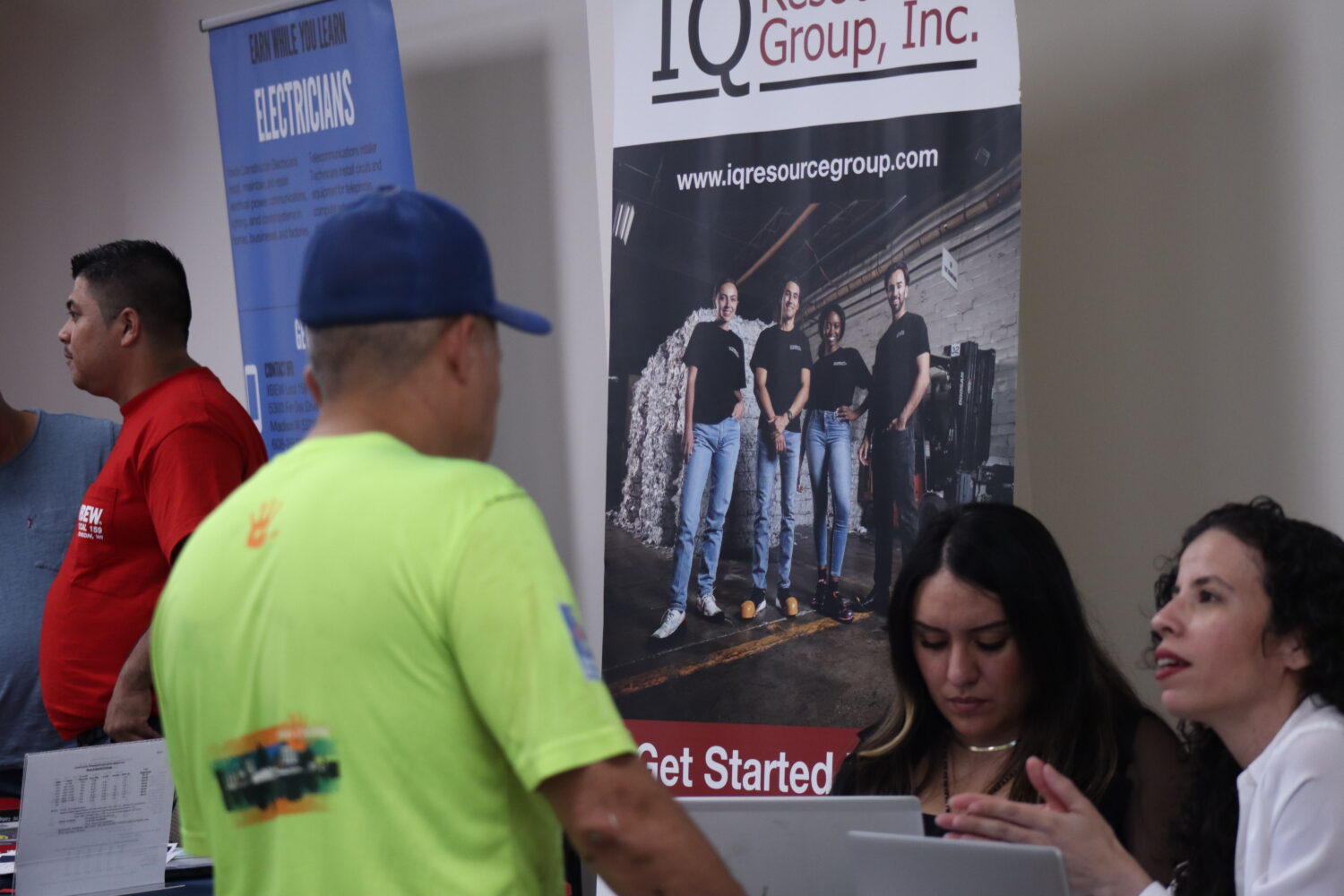
(Photos by Omar Waheed)
One of the highest points for the Latino Academy and the career fair is to reduce the friction of systems to end up at places like Walbec Group. Often, the Latino community is well prepared, but language and cultural barriers make it hard to navigate those systems to find well-paying jobs, Martinez said.
“Our community many times don’t know how to navigate access to employment because there are systems that are not similar in our countries of origin,” Martinez said.
Martinez pointed to resumes, networking with employers and online portals to apply for jobs where an expectation of English is the default as some of those barriers.
Still, the Latino Academy has been hit by newer barriers with federal funding cuts to programs aimed at communities of color and immigrants.
“It’s not only the opportunities that are available out there that are more restrictive, the structure of those opportunities is also much more difficult right now,” Martinez said. “I would say that it is the ‘death of 1,000 cuts’ through policies and restrictions.”
There are still funding opportunities out there, but who is eligible and how those funds are distributed to organizations makes providing opportunities harder, Martinez said.
“We also want to be mindful because our mission is workforce development. We are respectful of that space, and we have to be careful. We are recipients of federal funding,” she said.
Martinez said there has been a bit of a shift where employers are asking for more collaboration with organizations like the Latino Academy. That takes time, resources, and support that just isn’t the same as before. Employers do not necessarily have the same timeline the Latino Academy does as it works to ensure that people are prepared to enter the workforce.
“When employers need this workforce, the workforce that is ready to enter into the market, a lot of times they don’t think about how much it takes,” Martinez said. “Timelines between what the employer needs and what a nonprofit that focuses on development sometimes are different. Employers need a workforce ready now.”