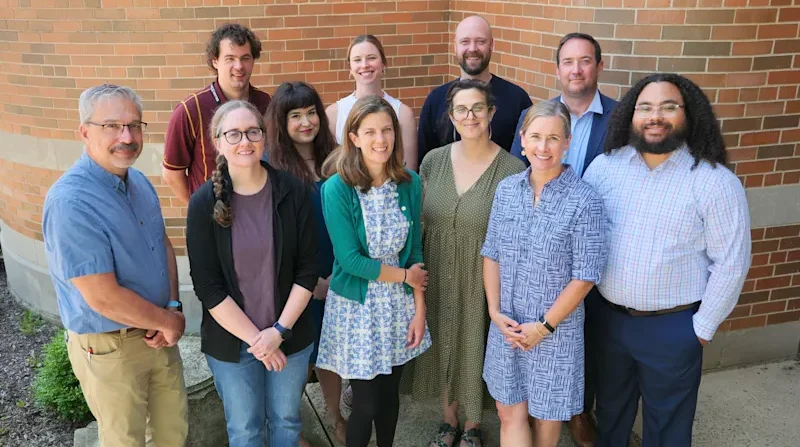
Madison Metropolitan School District (MMSD) has won a national award for its innovative approach to help educators make more informed decisions with literacy innovation to better support students most in need.
The award comes from the Council of Great City Schools, a coalition of the country’s 82 largest urban school districts dedicated to improving education for inner-city kids, for the work of MMSD’s Research, Assessment and Improvement (RAI) team. It was awarded the Informing Progress in Urban Education Research Team Award for an automated tool it created that assists educators with making evidence-based decisions for literacy interventions.
“This recognition reflects our commitment to using research to solve practical problems that matter for students and educators,” said Dr. Caroline Racine Gilles, MMSD executive director of RAI. “In this project, we studied how literacy interventions were working in practice and developed a tool to help educators make more timely, consistent decisions about when to continue, adjust or intensify support.”
Evaluations of literacy interventions at MMSD began in the 2022-23 school year. Its purpose is to determine if current intervention methods were effective.
The district didn’t really have a sense of which literacy intervention methods worked and whether students accomplished their goals previously, said Dr. Deonte Iverson, district data literacy coordinator at MMSD.
Based on RAI’s evaluation findings, RAI created a tool that allows educators to use progress-monitoring data from an intervention to determine whether the method should be discontinued, adjusted, intensified, or stopped.
An example Dr. Iverson gave was on sight words — words that can be readily identified quickly by students.
“Let’s say a student is not recognizing words at the frequency that we want them to. We want them to be able to … identify them quickly, and we have a certain number in mind via the screener,” Dr. Iverson said. “Let’s say a student isn’t able to do that to the degree that we want them to outside of intervention. That intervention might look like drilling, repeated drilling sessions.”
The tool aims to strengthen literacy outcomes for students by making pertinent data easier to interpret and act on. It will allow teachers to meet a student’s individual needs better.
“We are transforming how we look at student success by making data more accessible to our staff,” Dr. Iverson said. “By giving teachers and interventionists clear, reliable information, we’re removing guesswork and empowering them to make confident, precise decisions that directly impact student outcomes.”
The tool is praised by the Council of the Great City School for its rigorous methodology and immediate applicability in classrooms. The district’s RAI team will continue to contribute to national conversations on how to improve research and evaluation practices in other urban school districts as a result of its work.