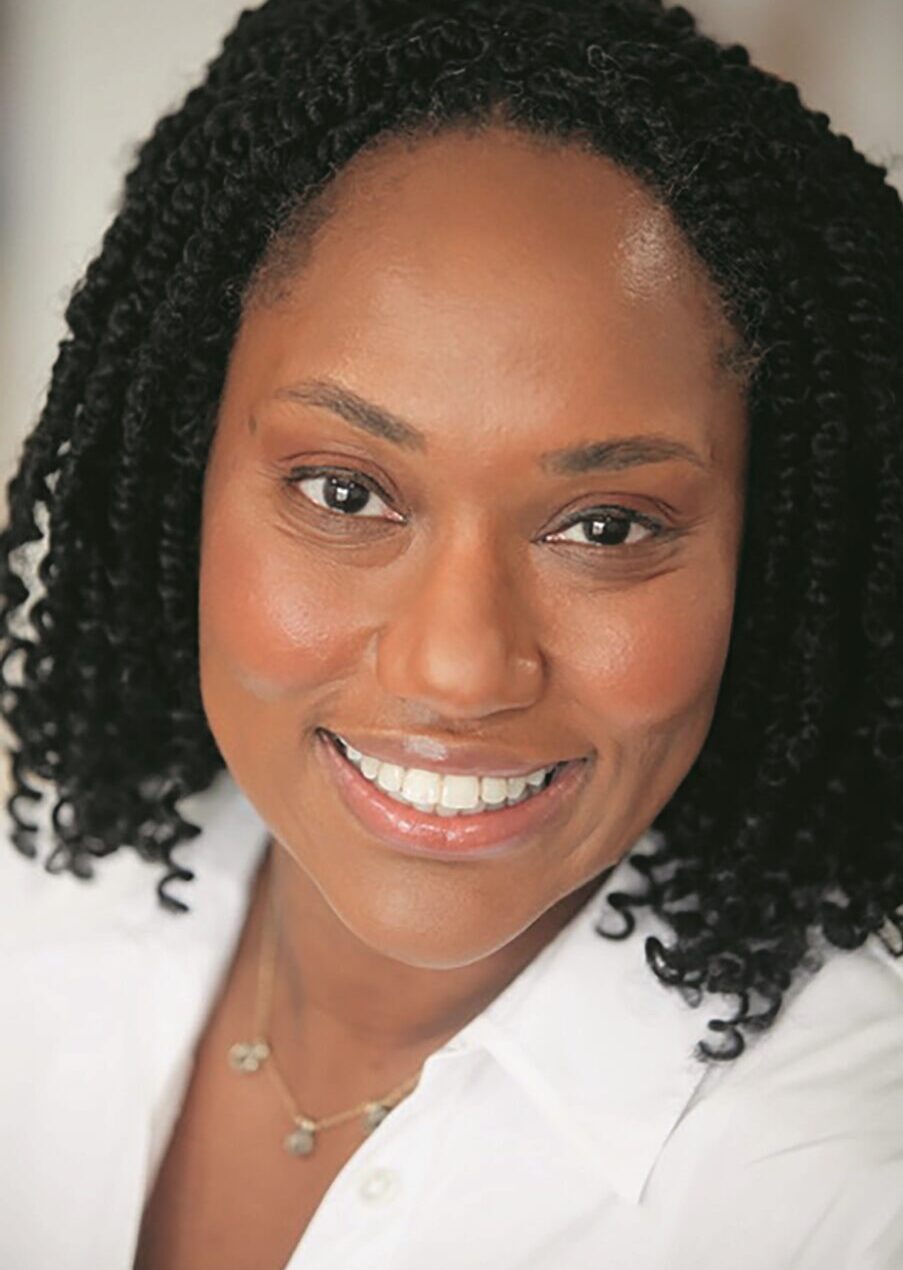
Pulitzer Prize-winning author and historian Marcia Chatelain will visit Madison for the Wisconsin Book Festival to discuss her newest book, How the Bright Path Grows.
Chatelain, a professor whose scholarship explores Black history and lived experiences, has earned critical acclaim for examining the connections between race, business and community life.
Her previous books include South Side Girls: Growing Up in the Great Migration and Franchise: The Golden Arches in Black America, which won the Pulitzer Prize. In Franchise, Chatelain examines how fast-food chains became intertwined with Black capitalism, the civil rights movement and community
In her newest book, Chatelain gives a new insight into the women behind the March on Washington. The 1963 protest saw around 250,000 Black Americans march to D.C.’s National Mall to demand civil and economic rights.
“For so long, people’s understanding of the March on Washington has been reduced to Martin Luther King Jr.’s ‘I Have a Dream’ speech,” Chatelain said. “Although the speech was obviously a remarkable moment in his career, it doesn’t really fully encapsulate the depth and the complications and the tensions that were also part of that day.”
While the book is centered on the March on Washington, its exploration of women is not. “How The Bright Path Grows” explores the backgrounds of 13 women who were integral in the march and the Civil Rights Movement.
Women profiled include historical figures like Josephine Baker, Rosa Parks, Mahalia Johnson, Daisy Bates, Anna Hedgeman, Eva Jesseye, Gloria Richardson, Marian Anderson, Myrlie Evers and more.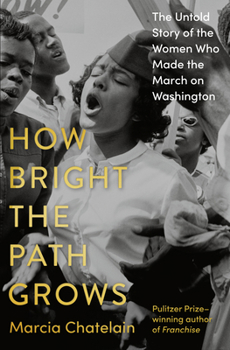
“When we start looking at the experiences of women through the march, I think we get to see more diverse and a more thorough analysis of where the movement was in 1963, how it got there, and the different ways that although women were part of the everyday struggle, there was still a lack of recognition of the extent to which their work was also animating the movement,” Chatelain said.
Chatelain said that she is not creating heroes, but rather wants people to understand the humanity of people who have done extraordinary things. She wants readers to see that these are real people who had stresses, challenges and stood up and made important choices for themselves.
“I think it makes them more relatable, and I think it inspires us to action if people are not just on this pedestal,” Chatelain said. “For me, I wanted to make sure that the women in this book are not just recognized because they were either part of the March on Washington or they were invited to attend, but because they were real people and they really struggled throughout their lives.”
Those struggles make their work so much more meaningful, Chatelain said. Stories like Hedgeman’s show a relatively sheltered life away from the realities of race relations in the early 1900s until she left for college.
Hedgeman served in the cabinet of New York City’s Mayor Robert Wagner. Prior, she came from a rather affluent family where her fairer skin allowed her to skirt issues other Black people faced all over the country as she grew up in a small Minnesota town.
Her understanding of her race, and the gravity of race relations in the United States, changed drastically as she got closer to adulthood — but it was only an inkling of what she would learn as she went to college. Hedgeman became painfully aware of her Blackness, and soon became wary of white people. She moved to the South in Holly Springs, Mississippi, to teach at Rust College.
Hedgeman became increasingly interested in moving to Harlem during the Black Renaissance. She steadily became more involved in the Civil Rights Movement from then on. She would go on to serve on the planning committee to organize the March on Washington, where she noticed a stark lack of acknowledgement of women’ s contribution to the movement. She pressed to have women recognized for their work.
“I’m also from the Midwest. I’m from Chicago, and there’s something about Anna I really understood,” Chatelain said. “I don’t let any reference kind of slip past me without just taking a beat and just looking and trying to see if I could figure out what that looks like or what that would feel like. That kind of Midwestern cold. I feel that and I know that experience. The idea of showing up on a college campus and having to figure life out, I actually really relate to that experience.”
While Chatelain said she hasn’t been part of a major movement like Hedgeman, she did have her own similar experiences.
“I have had to move, and I’ve had to make decisions about relationships, and I’ve had to confront parenting, and those are the moments that I really like to spend a little time with, in order to think about how I’m going to write that moment, so that everyone who’s been in that position can also relate to this person,” Chatelain said.
Chatelain will come to Madison on Saturday, Oct. 17, at Central Library, 201 W. Mifflin St., in Community Room 302 from noon-1 p.m. It is free to attend; no registration is required.