The concrete on Willy Street does not remember the names of the dead, but the people who walk it do. In fact, the names live with them, tucked into their bosoms like dollar bills a mother of the church keeps tucked away for a grandchild.
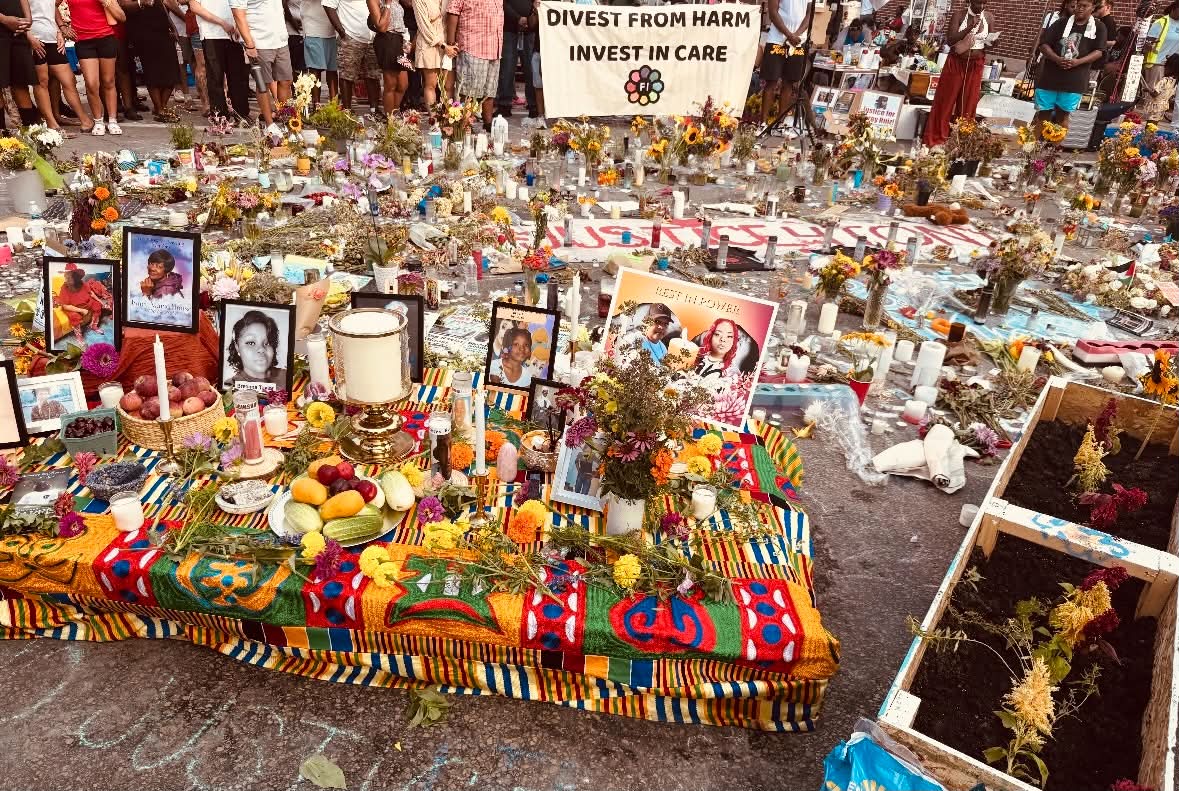
When Madison moved to dismantle the memorial for Corey Ruiz, it was not merely executing a municipal code or clearing a public right-of-way. It was performing an act of bureaucratic erasure. In the American lexicon, order is often a euphemism for displacement. We see this in the way our cities are mapped, gentrified, and scrubbed clean of the inconvenient reminders of our collective failures.
To understand the destruction of a makeshift shrine — the candles, the photographs, the handwritten notes melting under Madison rain — one must understand how power operates in a city that prides itself on progressivism. Madison wraps itself in a blanket of liberal righteousness, a city of lakes and farmers’ markets, of Subarus and bike paths, a city of farmer’s markets and concerts on the square, yet it remains haunted by the same racial and economic fault lines that define the republic.
The memorial was an archive of grief. It was an unauthorized historical marker erected by those who knew that without it, Madison would simply move on to the next development project, the next bike path, the next budget cycle, the next thing.
By forcibly removing these tokens of remembrance, the empire has struck back and forever asserts a monopoly on memory. It declares which lives deserve permanent monuments and which deaths must be swept away like autumn leaves.
We are told that public spaces belong to everyone, but the enforcement of these codes reveals a harsher truth: public space belongs to the unblemished, to the comfortable, to those who do not need a street corner to scream their sorrow because their losses are validated in wood-paneled boardrooms and manicured cemeteries.
The empire can break the glass of the candles and paint over the messages left on the pavement. But it cannot erase the underlying anatomy of a city that produced the tragedy in the first place. The debris of the memorial may be sitting in a municipal landfill, but the ghost of Corey Ruiz remains anchored to the geography of Madison, a silent witness to a progress that requires forgetting.
But, I won’t forget. And I urge you not to forget when it’s important to remember what happened today.