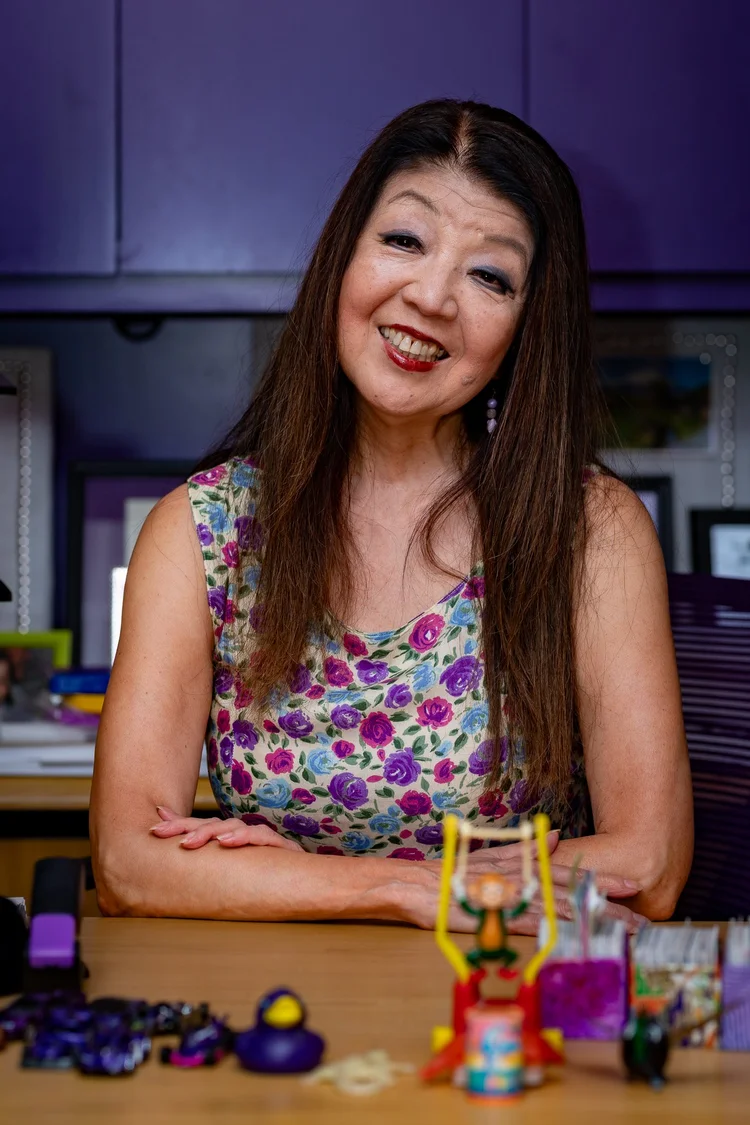
Sharyl Kato was a graduate student working in a Madison child care program when she noticed that something wasn’t working.
Seven or eight of the roughly 28 children in her class were staying at a domestic violence shelter, and the curriculum that served the other children didn’t reach them.
“I knew some of those things weren’t working, and so that’s when we developed special programming,” Kato told Madison365.
That programming became The Rainbow Project, a child and family counseling and community resource clinic on Madison’s near east side. Kato, its founder and executive director, has led it for 46 years. In that time, she said, the clinic has worked with about 40,000 children and families affected by abuse, domestic violence, community violence and other trauma.
Kato is a licensed professional counselor and a clinical adjunct professor in the Department of Psychiatry at the University of Wisconsin School of Medicine and Public Health. She was named to Madison365’s 2026 list of Wisconsin’s Most Influential Asian American Leaders.
Kato was born and raised on Chicago’s South Side, in the 4800 block of South Blackstone Avenue, before moving to the city’s North Side. She earned a bachelor’s degree in fine arts and art education, taking studio classes at the Art Institute of Chicago and academic classes at Roosevelt University.
When budget cuts eliminated art and music programs in the public schools, Kato moved into private special education schools, where she still used art but in more therapeutic ways. She later came to Madison for graduate school in educational psychology, working in early childhood programs while she studied.
She also taught special education, art and other classes in schools across Dane and Sauk counties. The work introduced her to Wisconsin, she said, and to bias she didn’t expect. In teachers’ lounges, she sometimes heard teachers say “Oh, remember Pearl Harbor” on Dec. 7, a day she said she dreaded growing up “because there was much more bias against Asians when that happened.”
“But it happened in the schools where I was working too, which I wasn’t expecting,” she said.
The early childhood program where Kato worked had a contract with Domestic Abuse Intervention Services that allowed children staying at the shelter to attend. Those children came from across the city and county, and they were in crisis.
Kato researched trauma programs elsewhere, visiting the Rutland Center in Athens, Georgia, which was affiliated with the University of Georgia, and programs at the University of Colorado, “taking good parts of each of these programs.”
Federal law enforcement funds allocated through the Wisconsin Council on Criminal Justice paid for the first two years. City and county funding followed. According to the organization, it began as the APPLE Project — Alternative Preschool and Parent Learning Environment — with a staff of three in a shared residential office on Williamson Street, and took the name The Rainbow Project in 1983.
The startup grant covered children from birth through age 6 and their families. “We never work with children in isolation,” Kato said.
“We were in the same budgets as building prisons, and building adult programs or delinquency programs,” she said. “It was really truly innovative for them.”
When the program opened its doors in 1980, every slot was full and 35 families were on the waiting list.
“I think it’s because so many of the law enforcement, hospitals, ER, they kept seeing the same families over and over in domestic violence, child abuse, sexual abuse, and they’re just saying we need something more in our community,” Kato said.
Shelter staff told her they watched boys at play say, “I’m the dad. I get to hurt you. I get to hit you.”
“We were one of the first to develop programming for domestic violence exposure for children because it’s as devastating as if they’re directly abused sometimes,” Kato said.
Kato said her understanding of trauma is also rooted in her own family’s history. She is third-generation Japanese American. During World War II, her mother’s family, who lived on the West Coast, was incarcerated for about three years. Her grandfather, a community leader and attorney, was separated from the family. Her father served in the U.S. Army; his family lived in Montana and was not incarcerated.
Her mother was a teenager at the time. Families received little notice and could pack only one suitcase, leaving everything else with neighbors. When they got out, most of it was gone, including items her grandparents had saved from Japan.
“She does remember watching my grandmother turn white overnight, white-haired,” Kato said of her mother. Her grandmother died early, Kato said, and the medical care she needed wasn’t there.
Kato’s aunt remembers that her job as a child was to roll up newspaper and stuff it into the gaps in the walls of the family’s barrack, in a camp where winters were freezing. That barrack is now on display at the Japanese American National Museum in Los Angeles. Kato recalled watching families connected to the camps the night before the museum opened.
“They couldn’t sleep because it just brought back all these horrible memories,” she said.
The family didn’t talk about it, Kato said, until her niece interviewed Kato’s mother and aunt for a college paper.
“When you talk about cultural history of trauma, that’s something that really is definitely experienced in how that impacted our families,” Kato said.
That history has helped her connect with families at Rainbow, including families who have come to Madison from other countries.
“It’s helped me open doors, at least getting my foot in the door when we’re working with families,” she said. To build trust, she added, “you really have to pass the test of being able to totally communicate and connect with families.”
She recalled a deeply depressed father from an African country whose child had experienced trauma there. Kato said a shared understanding of losing culture and traditions — “musical instruments, all these other things that we treasured and they’re gone” — led to a breakthrough. Later, the father’s mother visited and brought Kato a bolt of handmade purple cloth as a thank-you. Whether to accept gifts is always tricky, Kato said, but she thought it would be an insult to refuse.
“There are those ways of touching and connecting that really are so important in trust,” she said.
Rainbow’s work has grown from that first birth-to-6 program to what Kato calls “the full spectrum of trauma”: child abuse, sexual abuse, domestic violence and community violence, but also tornadoes, serious accidents and house fires. Since about 2020 and 2021, she said, more children have come to the clinic after exposure to gun violence — shot directly, hurt in accidents or caught in the line of fire.
“I keep telling people it’s not just those big cities; it’s happening here,” Kato said.
The clinic’s central focus is secure attachment between a child and an adult, which Kato described as a kind of inoculation — a protective factor that reduces symptoms when trauma happens.
Rainbow has 26 staff members and nine programs, which Kato said grew out of what families told the clinic they needed. A single family might be seen three times a week: in a classroom, helping a child adjust so they don’t get suspended; in parenting work; and in individual or family therapy.
“We’re smaller, so we’re more agile in that we can really tailor an individual sort of service plan,” Kato said. The goal, she said, is to avoid “one size fits no one.”
One program supports grandparents and other relatives who are raising children as primary caregivers.
“You shudder to think if the grandparents didn’t take these kids, where would they end up? They’d be in the foster care system, out of home placements, going from one place to the other,” Kato said. “They’re feisty grandparents.”
The clinic also runs groups, including one for middle school girls, as well as parenting groups and a 10-week emotion coaching course that Rainbow has taught in other settings, including Allied Wellness Center. Kato said the clinic works with about 1,500 children and family members each year.
Most of that work is in Dane County, but Rainbow has done courtesy work for places such as Juneau County and has offered consultation and training statewide, nationally and internationally. After the tsunami in Japan, mental health workers there asked Rainbow to talk about the impact on children, including orphans who were being adopted, and the two groups have visited back and forth since. Staff from the Oneida and Ho-Chunk wellness centers have also come to Rainbow to adapt “bits and pieces” of its approach, Kato said.
Looking toward Rainbow’s 50th year, Kato said the field has caught up to what the clinic has been doing.
“We’re a little cocky in that we’ve been doing this for 46 years and now it’s become science, and that’s a good part,” she said. “But there is another critical part of it, and that is looking at the bigger picture of why, what else adds to trauma: poverty, racism. We really need to look at the bigger picture; otherwise, we’re just continuing that cycle.”
She pointed to a mental health clinic in New Zealand that built a second building dedicated to social justice. Rainbow does more advocacy than most mental health providers, she said, “because you can’t not do that in terms of some of the systems, and some of those systems are a little too comfortable.”
“I’ve always made this comment that I don’t want to be a gear in a system and unknowingly be a part of something that’s not healthy,” Kato said.
She said funding is hard at both the federal and local levels, and that over the years Rainbow has had to raise a growing share of its budget itself.
“I don’t think sometimes nonprofits are appreciated. Some of them are just so state of the art, and they’re not appreciated,” she said. “They’re always looked upon as kind of always having a handout, and it’s just not true.”
Rainbow also offers community education, including brown bag lunches at businesses and sessions through employee assistance programs on topics such as what to tell children who keep seeing news about war. Kato said she has seen attitudes change since she started. Comments about domestic violence that she heard in groups 46 years ago were “not really helpful,” she said; today, people come forward to say it happened to a niece or a daughter.
“You can have more of a dialogue,” she said.
Beyond Rainbow, Kato co-chairs the Wisconsin Organization of Asian Americans with Jan Miyasaki and is a member of the Pacific Asian Women’s Alliance. She has served two terms as president of the Wisconsin Women of Color Network and two terms as president of Wisconsin Women in Focus, which raises college scholarships for graduating high school students. She also chairs the Children, Youth and Families Consortium and the Child Abuse and Neglect Coordinated Response Task Force. Her honors include the YWCA Women of Distinction Award and the Wisconsin Dr. Martin Luther King Jr. Heritage Award.
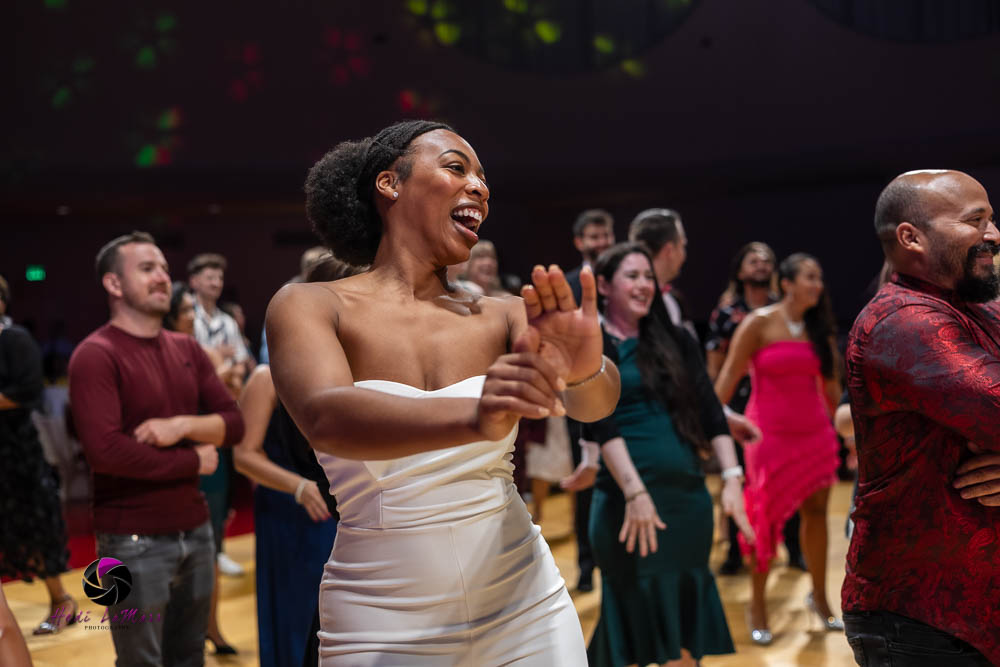
Rainbow’s signature fundraiser is Rhumba 4 Rainbow, a salsa-themed event held each September. Volunteer, donation and event information is available at therainbowproject.net.
As for her Chicago roots, Kato said she comes from “sort of a split family” on baseball, but she is a Cubs fan.
“I am definitely a Bears fan,” she added.