
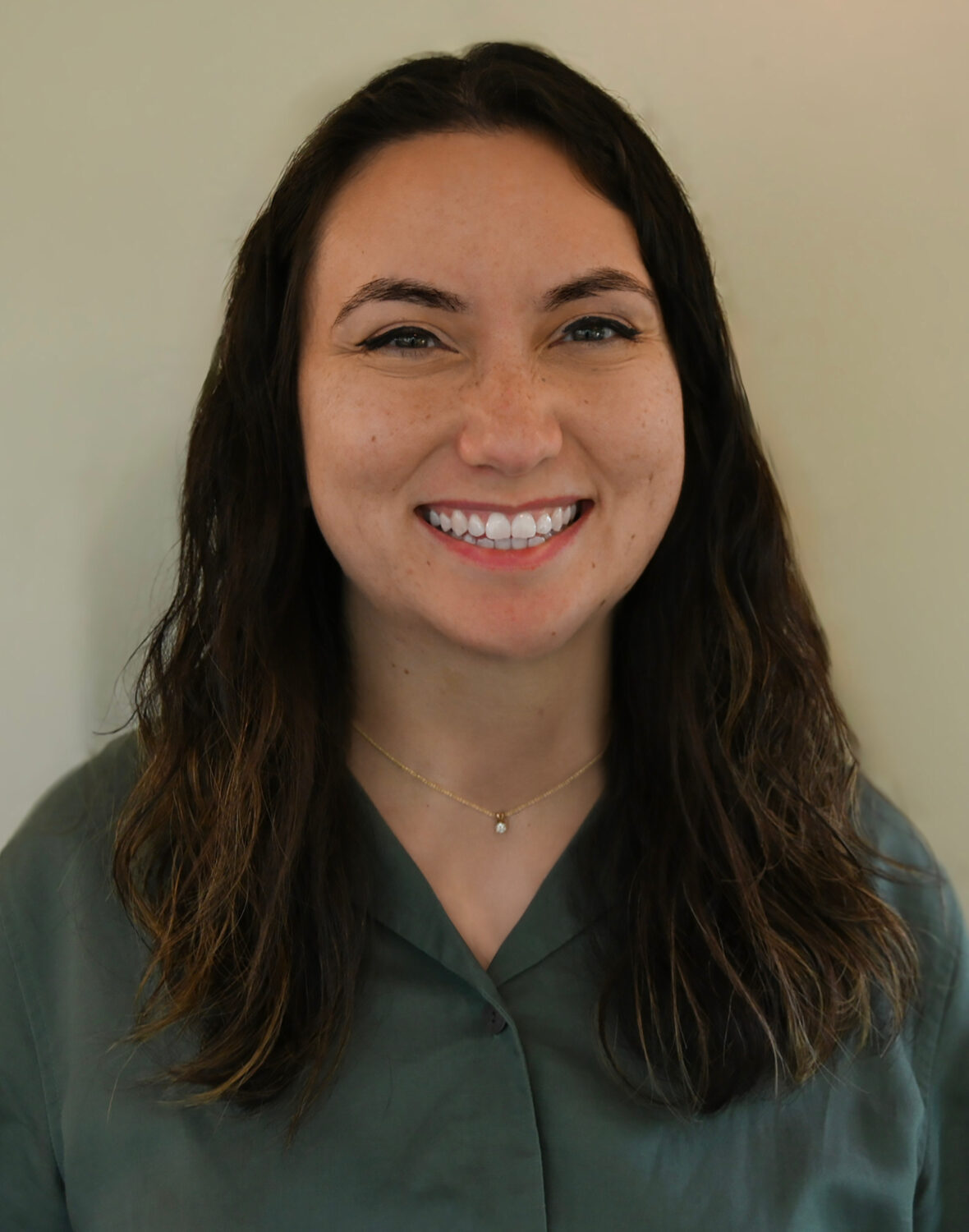
When Erika Gallagher walked into her first classroom at Capital High School in Madison, she wasn’t sure she was ready.
“I was very scared of it being my first year as a teacher, because I know the kids at Title I schools have very high needs, and I was worried that as a first-year teacher, I would need more help supporting them than I felt like I should,” she recalled. But what she found was a small, close-knit community and students who quickly let her know she belonged.
One day, after a minor argument between classmates, a student slammed her hands on the table and declared, “I know you’re not talking about my teacher like that.”
“That was kind of when I knew I’m really connecting with these kids,” Gallagher said. “They know that I care about them. They care about me too.”
That sense of mutual respect has defined Gallagher’s career. Now entering her fourth year at Verona Area High School, she has become a leader in advancing equity, social justice, and student belonging. This summer, Madison365 named her one of Wisconsin’s Most Influential Asian American Leaders, a recognition, she says, that really belongs to her students.
From Northern Virginia to Wisconsin
Gallagher grew up in Springfield, Virginia, just outside Washington, D.C., and attended Fairfax County Public Schools, one of the largest districts in the country. “I personally believe Fairfax County schools are some of the best public schools in the country,” she said proudly. She came to Wisconsin after earning a full Posse Foundation scholarship to attend UW–Madison.
She hadn’t planned to become a teacher. With triple majors in English literature, social welfare, and gender and women’s studies, she originally considered law school or social work. But a persistent email from UW’s School of Education nudged her toward teacher training. Unsure, she called her former high school English teacher for advice.
“I said, ‘should I become a high school English teacher?’ And she said, ‘well, who did you just call to ask?’” Gallagher remembered. That teacher was the first openly lesbian adult Gallagher had ever known. “That representation, I think, really led me to feeling like I could be an authentic teacher,” she said. “I always wanted to be that teacher that kids relied on and felt comfortable with and felt loved by.”
Building Belonging in Verona
Moving from a predominantly Black and brown Title I school in Madison to Verona, a suburban district with very different demographics, made Gallagher nervous.
“As a person of color, as a queer person, I was a little nervous about that transition,” she said. “But again, it was exactly where I’m supposed to be. My former principal told me, the kids that need you will find you. And I have found that to be the truth.”
In Verona, Gallagher quickly immersed herself in student advocacy. She advises the school’s Gender and Sexuality Alliance, supports the Asian Student Association, and serves as facilitator of the district’s gender inclusion committee. That committee, once just a handful of adults, now regularly includes students, elementary staff, and even school board members, all working together to ensure LGBTQ+ and marginalized students feel supported.
Her work has led to tangible changes: a professional development series for teachers on supporting queer youth, a district webpage with LGBTQ+ resources, and even a bullying policy that explicitly protects gender-expansive students. “Everything I do is because students want and need and request it,” Gallagher said. “Students are always at the center of everything I do.”
Teaching Justice Through Empathy
Gallagher bristles at the idea that social justice has no place in the classroom.
“You can think of it as this overt ‘I’m teaching you justice,’ or you can think about how social justice is just teaching kids empathy,” she said. “And empathy shouldn’t be controversial. Learning that there are people different from you that have different struggles from you is an important part of being a good human.”
That approach has shaped how she teaches English. She shares her own identity—Filipina heritage, first-generation college graduate, queer identity—at the start of the school year, knowing some students will see themselves reflected in her story for the first time. “It’s really interesting to see like the kids that really latch on to that and really remember that, and those are the kids that really need it,” she said.
Her colleagues, she added with a smile, have dubbed her “spicy and social justice oriented.”
Gallagher’s drive for equity is deeply personal. She grew up the daughter of a single immigrant mother, after her father died by suicide when she was nine. “She’s an immigrant, she’s multilingual, she didn’t finish college, and she’s done such incredible things, like raising me and my brother to both be educators,” Gallagher said. Those early experiences gave her a strong sense of justice and a determination to care for others.
Even as she’s gained awards and recognition—including from the Wisconsin Council of Teachers of English—she insists her students are her true motivation. “When the kids found out that I got the award, they surprised me and did their queer recognition about me,” she said. “And I stood up and I told them, none of this happens without you. You are my reason.”
A Future Focused on Students
Like many teachers, Gallagher is still seeing the effects of the pandemic—students more anxious, more reliant on their phones, more disconnected socially. But she is optimistic about the resilience and activism of this generation. She points to Verona students organizing a walkout on the National Day of Silence, or writing op-eds demanding more Asian American representation in the curriculum.
“Kids are ready for different kinds of social justice work that we might not even be thinking about at the beginning of the year,” she said. “All of these people that have been around me have been my reason. But I do it all because I love the kids. I love them, and they know it, and many of them love me, and I know it. And I just think that’s the most important part—it’s all for the love of the kids.”