
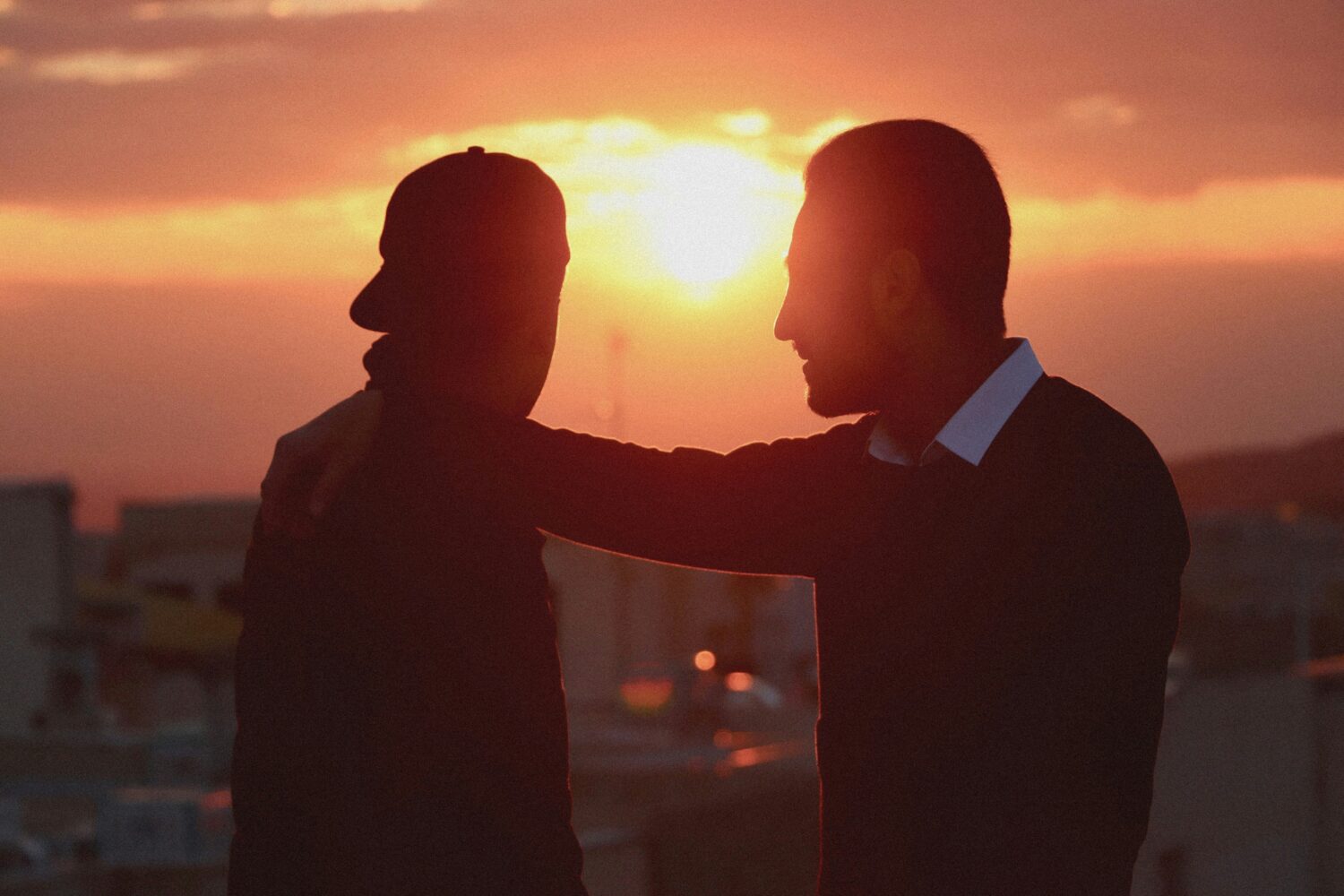
 Father’s Day was this past weekend.
Like many people, I spent some time thinking about the fathers in my life and the fathers I know.
I sent a text to a group of dads. Part of it read: “Keep the faith. Keep showing up. Keep leading with love.”
The responses were encouraging. A few were funny. Some were deeply personal. What struck me most wasn’t what was said. It was what wasn’t.
Many fathers spend their lives making sure everyone else is okay. Few people ask if they’re okay.
The same thing is true for a lot of leaders. The superintendent. The pastor. The nonprofit executive. The business owner. The coach. The community leader. People count on them every day. Yet many carry the weight alone. That should concern us.
We spend a lot of time talking about economic deficits, housing deficits, and workforce shortages. Far less attention is given to another deficit that may be affecting millions of men every day: the brotherhood deficit.
Somewhere along the way, many men learned how to build careers, provide for families, and carry responsibilities without learning how to build meaningful friendships with other men.
Most men know how to network. We can collaborate, exchange business cards, and talk about work.
What many of us have never learned is how to let other people see what’s really going on in our lives. The result is a strange contradiction. Men spend years helping everyone else carry their burdens while quietly carrying their own alone.
I’ve seen it in leadership circles, in business, in ministry, and among successful men whose calendars were full and whose lives looked impressive from the outside. Many had influence. Few had brothers.
Part of the problem is cultural. From an early age, many boys are taught strength but not vulnerability. Independence but not interdependence. Achievement but not connection.
Somewhere along the way, asking for help begins to feel like weakness. Needing support feels like failure. The safest response becomes silence. Yet silence has consequences. Loneliness rarely arrives all at once.
A man gets busy building a career. Then he gets busy raising children. Then he gets busy paying bills. One day he looks around and realizes he has spent years investing in responsibilities while neglecting relationships. His network grew. His brotherhood did not.
A man can sit in a boardroom, a church, a school, or his own living room and still feel alone. Not physically alone. Relationally alone. Known by many. Understood by few.
That’s a different kind of loneliness. The consequences reach further than most people realize. Isolation affects mental health, marriages, leadership, physical health, and decision-making. Men who carry everything alone often begin to believe they must carry everything alone.
That belief rarely ends well.
The strongest men I know are not the ones who never need support. They are the ones who have built relationships strong enough to receive it when they do.
Every fighter needs a corner. Someone who tells the truth. Someone who notices when they’re hurt. Someone who reminds them they still have something left in the tank.
Life is no different. Neither is leadership. Real brotherhood is not built around convenience. It is built through consistency.
Trust grows through shared experiences, honest conversations, accountability, and the willingness to tell each other the truth. Not the polished version. The real version. The version that admits fear, acknowledges failure, and says, “I’m not doing as well as everyone thinks.”
That kind of honesty is difficult. It is also freeing. A burden shared is often lighter than a burden carried alone.
Perhaps that is why some of the strongest friendships are forged in adversity. People stop performing. Masks come off. The need to impress disappears. What remains is trust. And trust is the foundation of brotherhood.
The answer to the brotherhood deficit is not another podcast, app, platform, or social network. Most men do not need more information. They need a few people in their corner.
People who know their story. People who ask hard questions. People who celebrate their successes, challenge their blind spots, stay when life becomes complicated, and help carry part of the load. That is not weakness. That is wisdom.
Strong families need strong fathers. Strong communities need strong leaders. Strong organizations need strong servants. But strength does not come from isolation. It comes from connection.
The brotherhood deficit will not be solved by technology, popularity, or influence. It will be solved one friendship at a time. One conversation at a time. One burden shared at a time.
Somewhere in your phone is a man carrying more than he admits. He doesn’t need another motivational quote. He may just need a friend willing to call and ask how he’s really doing.
Reach out. Send the text. Schedule the coffee. Join the men’s group. Start the leadership circle. Build your corner before you need it.
Because every man will eventually face a round he cannot win alone. Brotherhood isn’t a luxury for hard times. It’s one of the things that helps us survive them.