
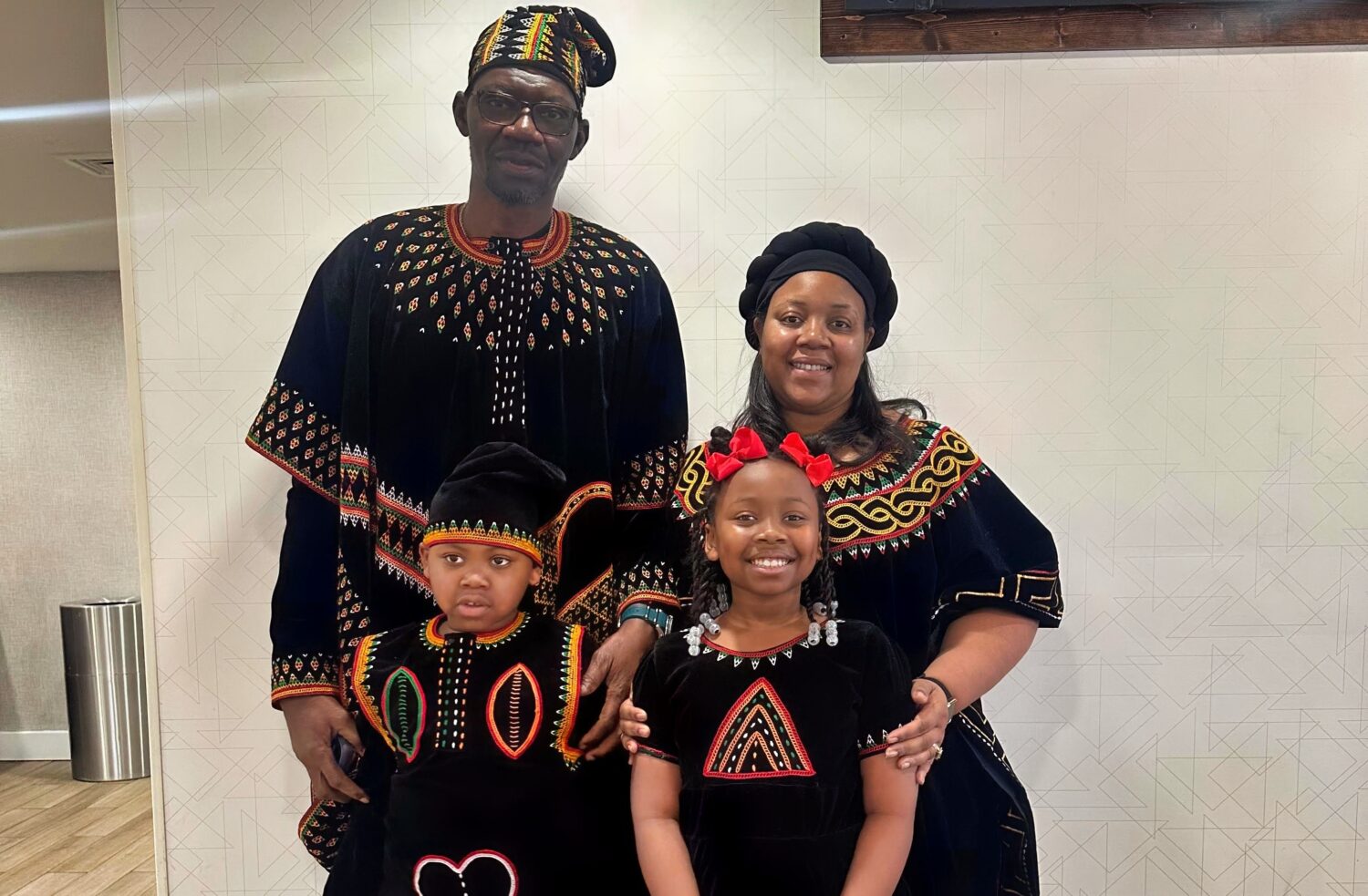
When she obtained confirmation that her daughter would be denied entry to a dual language immersion program, Signe`Mbainai knew the basis of not being able to accommodate her disability was unfounded. Her daughter is in advanced placement in all her subjects.
Upset and frustrated, Mbainai decided not to fight.
“Looking back, I wish I had fought it, not for her to go but for the next kid. That’s my failure in this,” Mbaini said. “I saw something and I said I should fight that? But then I’d be putting my kid in a place where she was not wanted.”
Mbainai and her husband work constantly to balance between fighting for the next child and caring for theirs.
“Maybe you don’t want to bite off more than you can chew. You can just teach the kids that don’t have any challenges, they show up kind of neurotypical and that’s all you want to work with. That’s not the world you’re going to deal with people that have different brains, and you’re going to have to learn how to educate them,” Mbainai said.
Being Black and Autistic
Mother of Aristide Narmbaye-Mbainai, 7, and Madjire`Mbainai, 9, Mbainai continually advocates for her children. As a mother of two Black children she said she “trains them to exist in the world as a Black person.”
“They are trained not to expect that their needs will be met. They have to meet their own needs, and when you have a challenge like autism, that can be really difficult,” Mbainai said. “It’s the reality of being Black that you will often be overlooked. You will often be avoided. It’s not because they don’t like you as a person, but your skin color is a barrier to services and to access.”
Teaching the nuances of existing as a Black person challenges the parents of neurotypical kids, this difficulty is exacerbated by autism, Mbainai said.
Mbainai worries about her daughter how feeling confident in herself as she grows up surrounded by mostly white people. Neurodivergent or not, growing up not seeing oneself in one’s peers may lead to picking up European standards of beauty, Mbainai said.
Mbainai’s daughter wears her hair natural, which often garners comments from teachers. These may seem innocent but make her daughter conscious that her hair is different.
“I think they’re just trying to engage her, but so many make comments, and so she’ll start to internalize that. ‘Is there something wrong with my hair?’” said Mbainai “I will tell her no, it’s just really different and really cool looking, and people are just really interested, right? Trying to filter that through her brain is … it’s a process.”
Difficulty in School
Mbainai’s son and eldest, Madjire`Mbainai, is nonverbal. Having more “classical symptoms of autism,” he was more readily diagnosed. He fits what is accepted as autism, said Mbainai.
After Mbainai received a call from her son’s school about his behavior – lying on the ground refusing to move – all she could think about was ‘a file of his behaviors’ that inevitably thickened that day.
“I went up to the school and I was really upset, not with her or that he wouldn’t get off the floor,” Mbainai said. “I was upset because I felt like everything you do, they write down every every incident of your non-compliance, they will write it down, and then they will label you as difficult or challenging.”
Many behaviors can be difficult for teachers to deal with when working with disabled children but to Mbainai, it felt like they did not even try.
As this file of behaviors thickens, your opportunities are limited, said Mbainai.
Black boys and men suffer from society’s push for them to constantly identify themselves, explain their existence in a certain space, said Mbainai.
Her son cannot advocate for himself, which increases his likelihood of being singled out.
“There are many areas where Black men are suffering, and I think more so with our Black boys,” she said. “Their behaviors are often highly scrutinized, they’re not given the same quote-unquote benefit of the doubt.”
Autism in young girls
An early diagnosis is paramount for access services and long term success in children for autism, according to PubMed. For Mbainai’s daughter, just receiving a diagnosis required tireless advocacy. Girls with symptoms of autism are diagnosed at one quarter the rate boys are, according PubMed.
Mbainai, on the recommendation of a teacher, brought her daughter to the neuropsychologist to seek an autism diagnosis.
After being dismissed, Mbainai pushed the doctor to believe her about her daughter’s symptoms, a process all too familiar for Black women. Advocating for her daughter was only possible after learning the right phrases, Mbainai said.
“That’s what you have to do when you’re Black. You have to say everything the right way, so that you can get the access,” Mbainai said. “You’re jumping through a whole lot of hoops. Now you guys are gonna take me seriously.”
Assessed three times by the school district, Astride finally received the essential services she is entitled to.
“I think a lot of it was about not giving her access to services. I think a lot of times what Black children experience is a difference of mindset. They see a child in need, they’re very perceptive of a white child’s needs, and they need to be told about a black child’s needs,” Mbainai said.
Parents Advocacy
After her children’s diagnosis, Mbainai joined autism parent groups, often noticing she was the only Black mother attending. She knew her children were not the only Black autistic kids. Compounding effects lead to these spaces being void of Black voices, she said.
A lack of access to the system of resources available to autistic individuals may be one reason, said Mbainai.
“It’s just the system has always been that way. We’re all just trying to navigate it and make it better. It’s not the best, it’s not perfect, but it’s still much better than other places,” Mbainai said. “The way Dane County specifically has prioritized the needs of children is unmatched. We really do try to meet the needs of our students and our young people and try to give them what they need.”
Mbainai’s advocacy is paramount to ensuring her children receive the services they need, especially in school, she said. Symptoms of autism often make educational settings much harder for individuals with autism, Mbainai said.
Mbainai works hard to ensure children get the services they need, especially in school.
She also works hard for other children. In many of the spaces she and her children occupy they are ‘the first’ to do so. Her advocacy lays the foundation for families who follow.
By fighting for her children Mbainai provides opportunities, spaces and services to other children.
“My husband and I, we are being intentional. We want to let people know that autism is not a white condition, right? Its neurological divergent condition impacts many people of all colors. Since we have these layered complex realities and interactions within the system, we have to make room for each other, so that we can get care for our kids, especially in the school setting,” Mbainai said.