
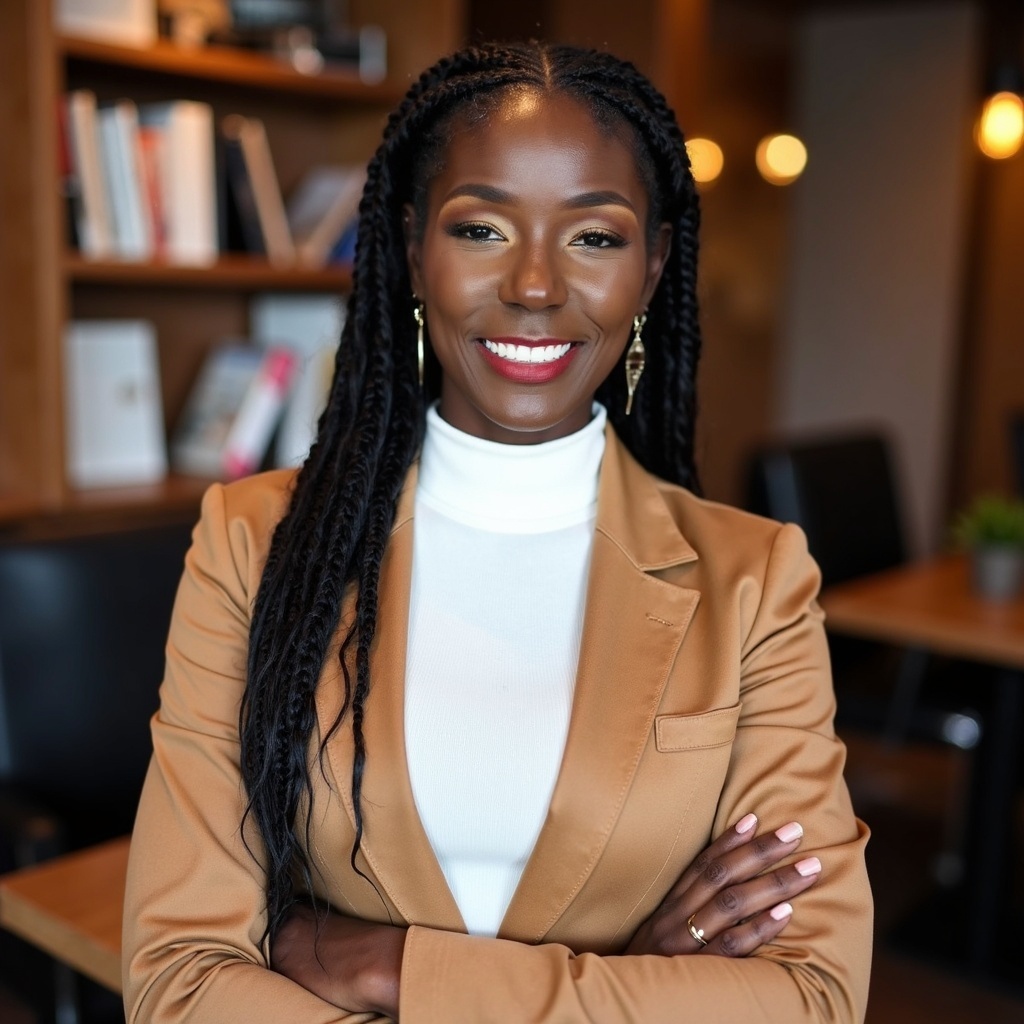
I have spent more than a decade trying to understand my relationship with Madison.
This city has loved me loudly. It has put me on stages, invited me into rooms, asked me to speak, lead, and show up when something terrible happens. People call Urban Triage when their child is being harmed at school, when somebody is being racially profiled, when they are fighting family court, homeless, sitting in jail, trying to navigate Medicaid, or simply need somebody to believe them.
There is real love in that trust. There are people in Madison who have loved me, protected me, invested in me, and believed in Urban Triage when believing in us wasn’t popular.
But I have spent years trying to understand why being loved by Madison can feel so much like being harmed by Madison. How can a city celebrate you and punish you at the same time? How can people trust you with their most vulnerable moments and distrust you when you become powerful? How can they ask you to build something and become uncomfortable when what you build actually works?
I felt it after Tony Robinson was murdered.
Madison remembers me in the streets. What Madison doesn’t remember as well is what happened when everybody went home. I organized without pay. I lost my job. I faced housing instability. I had a baby I was raising largely by myself. The movement knew how to call me when it needed my body in the street and my voice at the microphone. But when I needed not a chant or another meeting, but a hand carrying my actual life, most people were gone.
Years later, one of the poorest periods of my adult life was rewritten as the beginning of my financial success. People said I profited from Tony’s death. I was struggling to survive, and Madison remembers me as profiting.
What did people already have to believe about me for that story to feel believable? Why was my suffering so easy to erase and my ambition so easy to invent? I kept moving. I built Urban Triage. Somewhere along the way, I started believing excellence would protect us.
Then came allegations about our finances. People ran with them. Madison365 investigated. An independent CPA reviewed our records. HUD sent another auditor. We passed. We have continued passing audits, monitoring, and meeting or exceeding our deliverables. But being cleared does not necessarily clear you. The allegation travels through Madison like fire. The correction crawls.
How many times does a Black institution have to prove the same innocence before suspicion becomes the thing we interrogate?
Then I got arrested, and something that happened to Brandi became evidence against Urban Triage. My employees weren’t arrested. Our housing programs weren’t arrested. Our contracts weren’t arrested. Urban Triage wasn’t arrested. I was.
Yet somehow my body became evidence against an entire Black institution. When did a Black woman’s humanity become the institution’s balance sheet? Those questions eventually forced me to stop examining only what Madison had done to me. I had to examine me.
Survival taught me to scan outward. I could find racism, white supremacy, manipulation, and danger because there were seasons when finding danger was how I stayed alive. When I finally turned the scan inward, I found fear, scarcity, control, projection, and trauma sometimes pretending to be discernment.
That changed how I understand systems.
If survival could live inside me without my permission, why would I assume it isn’t living inside the systems we control? A judge doesn’t stop having biases when she puts on a robe. A journalist doesn’t become neutral because she gets a byline. A teacher doesn’t become healed because she walks into a classroom. A police officer doesn’t become less afraid because we give him a gun and authority. And I didn’t become healed because I became a CEO.
Systems are people with power, and what lives inside us eventually shows up in what we control. In Madison schools, bias can become a Black child’s suspension or path into truancy court. In journalism, it can become a headline remembered long after the correction. In government, it can determine whose suffering becomes urgent and whose program becomes expendable.
In policing, it can become a murder. Richard Lee Johnson was Black and experiencing homelessness when he died after an encounter with Madison police. Then came Corey Ruiz. Another Black man. Another man experiencing homelessness. Another death at the hands of police.
These are not isolated tragedies. They are patterns.
The pattern is Black people being overrepresented in systems that punish, confine, and destabilize us while remaining underrepresented in investments that create stability and power. The pattern is Madison becoming deeply concerned after somebody dies while debating what we are willing to invest in while people are still alive.
And this is not reproduced only by white people. Black people live inside white supremacy too. We absorb the same ideas about who is credible, dangerous, angry, greedy, or difficult. We can reproduce misogynoir and anti-Blackness against one another. That doesn’t absolve white supremacy. It demonstrates its reach.
Maybe that is why my relationship with Madison has been so difficult to understand.
What if Madison really does love me and still harms me?
People love what I represent. But Madison likes my presence considerably more than it likes my power. If I don’t show up, people demand to know where I am. If I show up without waiting for permission, people ask who invited me. If I lead, I am controlling. If I step back, I abandoned the community.
What if Madison’s problem has never been Black leadership? What if the problem is Black power it cannot control?
It was easier to consume when I was organizing for free. I became more complicated when I built something. Urban Triage became infrastructure. We hire people systems have counted out and watch them become extraordinary. We answer when mothers call about their children, when elders need advocacy, when families need housing, and when people have run out of doors to knock on.
I already know how to organize after Black death. I am now building infrastructure for Black life.
That is why Corey hit me differently. His video came to me before most of Madison knew what happened. Within the same hour, Urban Triage faced losing hundreds of thousands of dollars in program funding. Programs could disappear. Staff could lose their jobs. Services could end.
I initially refused to organize. Then at least a dozen people demanded that I step in: We need you. We don’t know what to do. Where is Brandi? Where is Urban Triage? Eventually I did because knowledge creates responsibility. I came to share 11 years of lessons from Tony Robinson, Black Lives Matter, and George Floyd. I came to teach, not take over. And it fell apart. Everybody wanted to lead. Nobody wanted to follow, and by follow I mean learn, listen, and study. Some of the same people who demanded that I come thanked me in the room and talked about me afterward.
Come here, Brandi. Go away, Brandi. We need you. You are too much.
I think about Michael Johnson differently now. His story is not mine, but I recognize what happens when a community turns a Black leader into infrastructure and forgets there is a human being underneath. I am old enough now to recognize weight before it becomes a eulogy.
Does Madison love Black people, or have we learned to love what Black people can carry for us? That question is sitting inside Dane County’s proposed elimination of Urban Triage’s Housing Navigation contract. The budget is not the story. It is the pattern becoming material.
Black people are profoundly overrepresented among people experiencing homelessness in Dane County. Urban Triage is the only Black-led organization at the table doing this housing work. People line up outside our doors at the Beacon. We meet and exceed our goals. We move people experiencing chronic homelessness from the street into housing even when physically housing them goes beyond what our navigation contract requires.
Richard was homeless. Corey was homeless. Black people are disproportionately homeless. The Black-led organization trusted by people living through that crisis is producing results. And the recommendation is elimination.
This is why I call Madison the Sunken Place. Not because Madison cannot see. Madison sees remarkably well. We have studies, commissions, equity statements, reports, and data. We know who is homeless. We know who is suspended. We know who is arrested. We know who is dying. We know, and somehow knowing keeps failing to become transformation.
Maybe Madison doesn’t need another Black person explaining racism. Maybe Madison needs to turn the scan inward. Look at who you doubted. Whose mistakes became permanent. Who had to prove themselves again and again. Who you called when everything was falling apart, and whether you were there when they were falling apart.
Urban Triage has lost millions and kept standing. But standing is not the same as being indestructible. My resilience is not a funding model. Black women’s resilience is not a funding model.
If Urban Triage matters, love has to become more than language. Show up during Dane County’s budget process. Contact the County Executive and County Supervisors. Fight for our Housing Navigation funding. Donate. Become a recurring donor.
For 11 years, Madison has asked what I am going to do when another Black person is killed. I have a different question now: What are we willing to do while Black people are still alive?
The phones are still ringing. The mother, the elder, state reps, the family facing homelessness, the person sleeping outside who has not yet become a name on a sign or a photograph at a vigil. They are still here. Urban Triage is still here. I am still here.
Madison, I know you know how to love Black people when we are useful. I want to know whether you know how to love us when we need something in return.
[Part Two coming: What happens when the Black infrastructure Madison depends on becomes expendable?]