
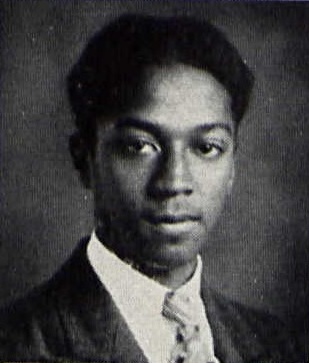
Author, historian and professor Ethelene Whitmire released a new book documenting the life of an unseen figure in Black history with “The Remarkable Life of Reed Peggram” and will speak on her book tonight, Feb. 18, at Central Library, 201 W. Mifflin St., 7-8 p.m. as part of Wisconsin Book Festival. It is free to attend; no registration is required.
Her latest book documents the life of a queer Black scholar, translator and teacher who was imprisoned by Nazis during World War II. Reed Peggram lived a remarkable life, but not particularly well known. In Whitmire’s own interest in writing a book, she wanted to tell a story of African Americans beyond myths of many being “poor, uneducated and limited in their dreams,” she said in the book.
”It’s about a gay African American man from a modest background who, to me, lived a very extraordinary life at a time when it wasn’t easy for African Americans to be in these spaces that he inhabited,” Whitmire said.

One of Whitmire’s passions is to tell stories of hidden history, like her previous book about Harlem Renaissance librarian Regina Anderson Andrews. For her latest book, Whitmire wanted to merge her love for Denmark and her interest in hidden history. Whitmire herself is a frequent visitor to Denmark to the point of losing track of how often she’s been.
Denmark has been visited by Black historical figures like Booker T. Washington, Ella Fitzgerald, Ben Webster, Billie Holiday, educators, writers, painters, singers, jazz musicians, the Black Panthers, and so many more known and obscure.
Initially Whitmire wanted to do something broader for a book on the connection of Black historical figures in Denmark. She was encouraged by literary agents to do something centered on World War II.
“People like good versus evil. They like the whole Nazi thing. There’s not enough books about Black people who were not soldiers during World War II. And also, there’s not enough gay love stories. And that actually seems to resonate with people,” Whitmire said. “Just over the years, when I talked about the book gay men, regardless of race, regardless of nationality. In Denmark, Paris, England, the United States, Black, white, Danish, they all seem to resonate with them.”
While Whitmire was in Denmark during one of her many visits, she happened to meet a descendant of Peggram’s — Teju Adisa-Farrar. Peggram is Adisa-Farrar’s great-uncle.
Adisa-Farrar stopped to talk with Whitmire after a lecture when she recognized a picture of Peggram she saw growing up in her home. She wanted Whitmire and others to realize that there’s more to Peggram’s life than “met the eye,” Whitmire wrote in the book. Whitmire also wanted to know more.
“I wanted to show a richer portrait of African Americans, just ordinary, ordinary people who have been forgotten in history,” Whitmire said. “To me that’s more interesting than hearing about the same people over and over again.”
Whitmire is pleased on Peggram’s behalf. Peggram, as exemplified in the book, thought he was important and wanted to write his own story into a book. He didn’t get the chance to, but the book has been resonating with readers.
“I’m glad his story is out there and people really seem to like it and find it interesting and fascinating,” Whitmire said. “And I keep hearing I never heard of him. I mean he has a Wikipedia page only because that was an assignment for one of my classes. A student created that, but otherwise he’s really not known, but I feel like he should be. I’m glad that it’s out there.”