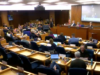
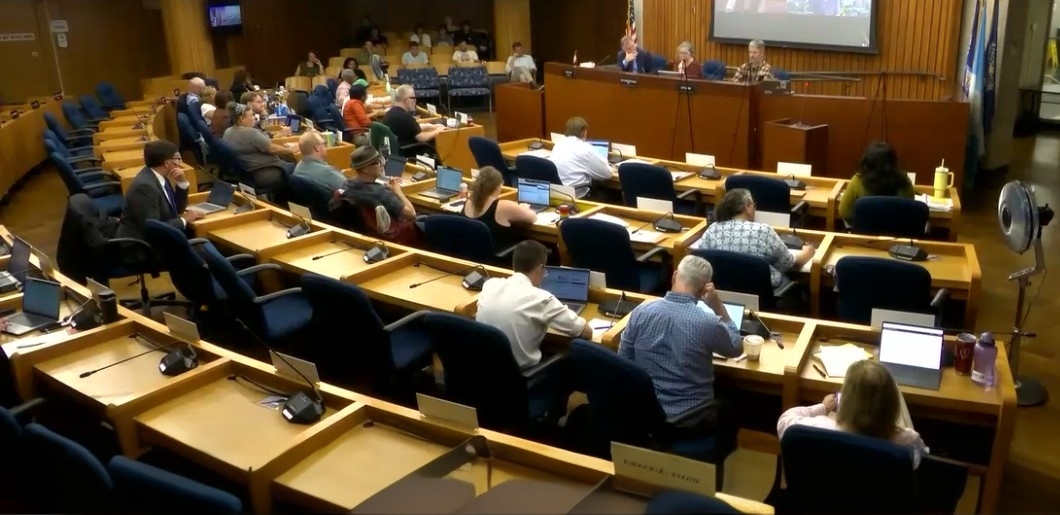
On August 4, 2026, I waited in the Common Council Zoom webinar for over five hours to give my public comment on Agenda Item 2 regarding the Police Civilian Oversight Board (PCOB). I promptly left after giving my comment to get some sleep. That meeting drew over six hours of public comment with one resounding demand: fully fund the Office of the Independent Police Monitor (OIM) and PCOB, to at least 1% of city funding that is allocated to the Madison Police Department (MPD); many in attendance specified that this amounts to about $1.3 million.
The next day, I check my phone and open a group chat to see that our efforts actually resulted in a small win: Alder Matthews introduced the following motion (seconded by Alder Glenn), calling for accounting of how much was spent on mutual aid & police costs from 7/22/26 (the day officer Kiel-Batinger Petersen killed Corey Ruiz) until 9/8/2026 (the next time Common Council was set to meet), and that this amount would be matched to fund the OIM. This means that the Common Council was forced to discuss this policy, and do a full analysis and consideration, not just listen and move on. I’ve provided the full transcript of Alder Matthews’s 8/4/2026 motion below:
- Between 7/22/2026-9/1/2026 [amended to 9/8/2026], the Council needs an accounting of all additional budget year 2026 police costs, mutual aid, and overtime related to response throughout 8/4/2026, for example,
- the amount identified in item 1, we would also authorize to be spent in 2026 by the OIM for needed investigation related to use of force throughout 8/4/2026, for example, or to study and put together policy recommendations related to the duty outlined in Madison General ordinance 5.19(7a): “Powers and Duties of the OIM and monitor, and that first duty is to monitor police compliance. The OIM shall actively and on an ongoing basis monitor the MPD’s compliance with its own SOPs, governing laws, and lawful orders from the Common Council, including compliance with, or progress towards meeting any recommendations or directives contained in the MPD policy and procedure review ad hoc committee report from 10/18/2019 and the independent policy oversight and review report (OIR report) to the extent they are adopted and approved by the Common Council as well as the MPD’s own stated goals and mission statement.”
I found out via group chat about this small win. Nothing on social media. Barely any of my friends knew about this outcome from the Common Council meeting. I wait another day, still nothing more.
Finally, on Friday August 8th, the Cap Times reported on the outcome, but only as an afterthought, at the very end of the article.
When I first set out to write this article, my original intention was to call for fellow Madisonians to keep your own account of police overtime spent on brutalizing and arresting protestors (which continues- MPD arrested 2 people at a related protest on Friday 8/21). Surely, we can’t trust the city government to do its own accounting simply based on a motion that was introduced at the tail end of a Common Council meeting.
But then, on Monday August 10, a friend sent me a Channel 3000 article saying that Madison’s Finance Director David Schmiedicke gave a preliminary estimate that the city will spend around $1 million on police overtime alone since Corey Ruiz’s murder, and through the next few weeks.
I looked at my phone in shock. The city is actually accounting for how much has been spent on policing protestors. Are they actually beginning to respond to our demands?
After my initial outrage that my city is spending $1 million on police without Common Council’s permission (or yours), am I the only one whose reaction to all this is:
HELLO? If this becomes a real budget amendment, then we’ve reached 75% of our goal to fully fund the OIM ($1.3 million)! Why is no one talking about this?!
You should know about this progress. You should be able to tell your community how you won this concession, and how you can keep winning until community control of police becomes reality.
It’s called structure-based organizing. You did it by accident this time- history shows you can win so much more if you do it on purpose. Let’s start with how you participated in structure-based organizing at the 8/4 Common Council meeting:
- You identified the Common Council as the highest decision maker for your demand. When you target the highest decision-maker for any given demand, they cannot honestly say “my hands are tied” and throw the issue to their higher-up (i.e. state government in this case). Alan Robinson did a great job outlining more demands from the community with targets that are the highest decisionmakers.
- You decided to organize within your structure, instead of with just self-selecting groups. In this context, a structure is a place where people are brought together by material interests (i.e. workplace, apartment building, school, or city/state/country), but do not already share other interests. In other words, in a structure, you didn’t choose to be next to your neighbors, co-workers, or classmates. A self-selecting group would include organizations or activist groups– places where people choose to come together and act based on a set of shared personal interests. More information about that here, en español (other languages available here)
- Enough people showed up to a Common Council meeting to provoke change– 200 something people to be exact. We now have evidence that 6+ hours worth of public comment with a crystal clear demand of the highest decision maker led to a proposed change from that decision maker. That means we know (for pretty damn sure) that at least 200 something people is the number we need for next time.
- You did more organizing, and relied less on mobilizing. 6+ hours of public comment does not happen just through viral sharing of social media flyers asking people to attend the Common Council meeting. Real conversations also happened, both at the vigil for Corey, and at home. Conversations where people asked each other: do you want your city budget to fund murderous police? Or do you want your city budget to fund your groceries, your healthcare, and YOUR control over public safety? Organizing means expanding your base by connecting with people who don’t already agree with you, and empowering them to connect with others, and keeping track of these networks in order to reach more participation with each action. Mobilizing means sharing a flyer as much as you can, hoping that people who resonate with the flyer show up, and doing a similar marketing campaign next time.
The Madison Common Council does not answer to particular organizations or groups of activists. The Madison Common Council answers to the city of Madison. What I saw at the 8/4 meeting was the city of Madison demanding change from the Common Council, not any particular groups or activists- at least several people said this was their first Common Council meeting they gave public comment at.
Structure-based organizing means organizing within a structure (workplace, apartment building, school, city), rather than just in self-selecting groups (whoever’s already showing up to protests) in order to win demands. Structure-based organizing is the most predictable strategy for winning change that I have encountered so far in my experience. This isn’t to say that other methods more reliant on self-selecting groups don’t work- sometimes they do, and sometimes they don’t; the point is, their effectiveness is less predictable. Structure-based organizing is behind Zohran Mamdani’s successful mayoral campaign and NYC tenants’ recent win of a 2-year rent freeze. A key part of their strategy was electing Mamdani to the position of mayor, the highest decision-maker relevant to their goal, and collecting over 20,000 tenant signatures on a petition calling for the next mayor to make a rent freeze a top priority. Structure-based organizing was also behind United Teachers Los Angeles (UTLA’s) successful strike in 2019, which built the foundation for their next win of a 25% cut to the school police budget, along with more investment into mental health services. And every time I’ve attended an Organizing 4 Power (O4P) training (one place to learn structure-based organizing methods, always free!), I learn more and more examples of wins across the world (see some of them on their Instagram page).
You might be asking: If structure-based organizing is so successful, why isn’t everyone doing it already? The short answer is that it takes a long time. It requires you to actually get everyone in your structure to participate. That means having lots of real conversations, and doing lots of following up on with people who promise to join you in having those conversations themselves.
However, if it’s clear that police will arrest, brutalize, and kill civilians in small numbers, then it is worth every additional day that it takes to build towards the certainty that hundreds, if not thousands, will show up to an action. In a state where sufficient state funding for local governments is dependent on maintaining or increasing police spending, inviting people to actions that don’t prioritize supermajority participation is inviting people to situations where arrests are more likely than winning change. Structure-based organizing shows that the opposite is possible.
Let’s do this on purpose next time: a way to win community control of police through structure-based organizing
First, you need a credible plan to win. How I start determining credibility is by first answering three questions. What is your structure–your workplace, your school, your district, your church, or something else? Is your target the highest decision-maker between you and your demands? Is your collective action creating a crisis for your target (is it threatening their money and/or power)?
For example: if over 70% of voters (your collective) in Madison (the structure) signed a petition addressed to mayoral candidates (the highest decision-makers) saying “we will only elect a mayor who allows community control of police,” it is quite credible that any mayoral candidates interested in winning would incorporate community control into their platform. Another idea: you could have over 70% of Madison sign onto a “People’s Budget” and present that to the Common Council and any alder or mayoral candidates. Of course, any plan’s credibility in your collective’s eyes will depend on whether you can accurately identify the structure, the highest decision-makers it, and articulate an action that threatens the decision-maker’s interest.
And how do you organize an entire city? Since you would want a supermajority of each city district supporting this, organizing by city district is key. Districts can be broken up into even smaller units– neighborhoods and blocks. The only way this works is for you to work locally, with whoever is next to you, and then embolden those next to you to work with whoever is next to them. Structure-based organizing is about always, always increasing capacity. It’s never about a small group doing all of the work. Organizing 70% of Madison to do any collective action is most certainly going to take a lot of time and many structure tests. Thankfully, there are past successes to guide us (see UTLA’s structure test timeline below as an example).
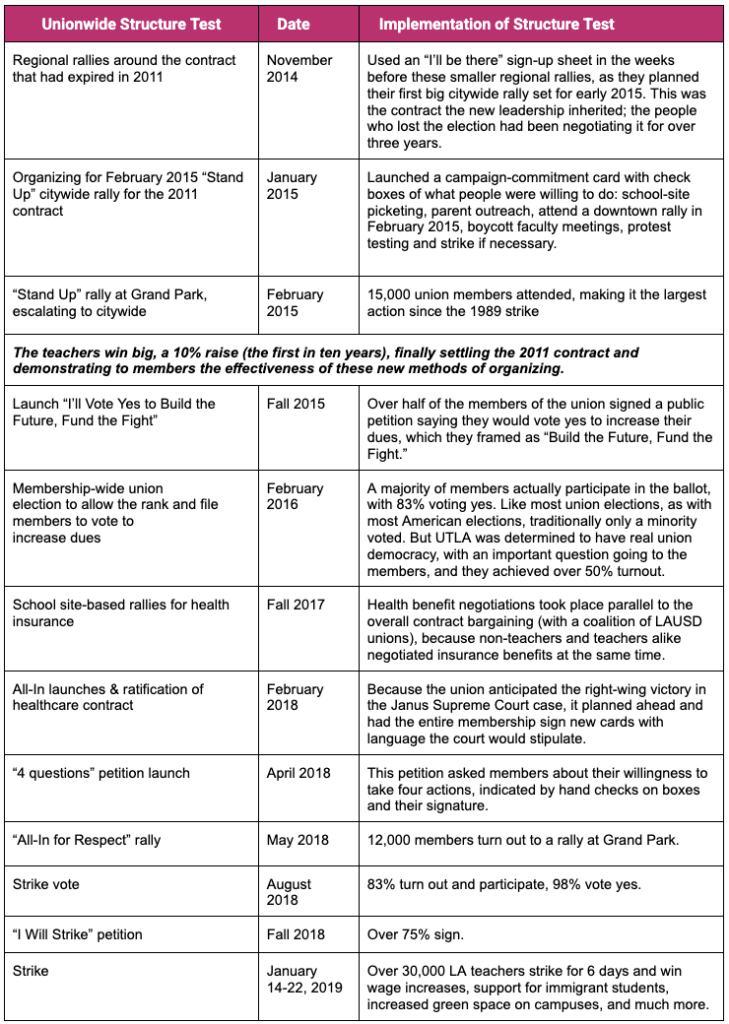
From A Collective Bargain, by Jane McAlevey
Now, the (1.3) million dollar question: How do you get people who don’t already agree with you to participate in the next action? Two things:
1) You don’t need people to care about community control of police specifically, you just have to show them how winning community control of police is the best path towards winning whatever they care about more.
Remember those conversations ahead of the 8/4 meeting I mentioned earlier? “Do you want your city budget to fund murderous police? Or do you want your city budget to fund your groceries, your healthcare, and YOUR control over public safety?”
Let’s keep up that energy. “Winning community control of police means you and your community having more control over 22% of your city budget. Participating in [insert collective action] is the best chance you have right now to divert a lot of your tax dollars towards [insert issue you care about most].”
Then, lay out the plan to win and include a safety measure:
2) The action doesn’t happen unless you reach a supermajority of commitment (70%). THIS is the safety measure. Now, for something like a Common Council meeting, you might not need to institute this all-or-nothing safety measure, but for a larger action, such as a rally or signing onto any petition with your full name on it, this is essential to ensuring safety, and important for the most difficult organizing conversations.
Most importantly, no matter how the conversation goes, you follow up with that person. Whether it’s a reluctant neighbor of yours who won’t participate until more people sign on, or a friend who committed to talking to their neighbor: follow up. Update your neighbor that more people signed on: “do you feel safer to sign on now?” Ask your friend: “hey, did you end up talking to your neighbor?” Write down what happens so you can keep track: who has talked to their neighbors, who said they would sign on only if X% of neighbors also signed? That’s how you can start to measure how much of your district is ready to act in support for community control of police (or whatever campaign you use structure-based organizing for).
In my own experience, the hardest part of structure-based organizing is finding enough people to start– but once you have enough people to start (about 10 is enough in my experience), it becomes much easier to keep building capacity. The good news is: if hundreds of people showed up to the 8/4 Common Council meeting, there’s definitely more than 10 of you who want to win community control of police, and more.
Power is built by people, not “bodies”
There’s a message I see on social media, often when police start arresting people at smaller Madison protests. “We need more bodies!” “Bodies needed now!!” The irony of those words is never lost on me. Police already dehumanize you enough- must we dehumanize each other when asking for support and safety, too?
One of the most joyful things to me about structure-based organizing is getting to know people in your structure as whole human beings: to learn what they care about, what’s holding them back, what they love about this city we both live in. I have felt so much hope every time I’ve seen a co-worker, neighbor, even managerial staff at my workplace, believe that their participation matters. It’s changed my view completely about who is willing to take risks: turns out, if you treat those in your structure as people, not “bodies,” they will feel like winning change is actually possible, and feel safer taking action towards that.
If you’ve ever felt conflicted about organizing and activism because it’s felt too risky, you keep seeing people getting arrested, or you can’t pinpoint what actually results in change: structure-based organizing has given me answers to all of those concerns, even if on a longer timeline than I would like. At least, the journey motivates me to measure how close you and I are to winning change, which I will take over a last-minute “we need more bodies now” text any day.
Most importantly, structure-based organizing has shown me how people have won, meaning it is entirely possible to win again.
What happens when there is no real threat to power
On Monday, August 31st, the Finance Committee (voting members composed of 6 alders), unanimously voted no on a budget amendment that would have used $28,500 from the contingent reserve (the city’s emergency funding) to fund the OIM to account for how much was spent on policing between 7/22/2026-9/8/2026. To my dismay, I found that this budget amendment was filed under the same motion put forth by Alder Matthews on 8/4/2026– when Alder Matthews’s motion was referred to the Finance Committee to be voted on, the entire second part of the motion that specified matching the amount spent on policing between 7/22/2026-9/8/2026 to fund the OIM was removed. Still, I decided to attend the meeting and give public comment in support of this amendment: this time, public comment didn’t even last a full hour.
It’s important to note that the Finance Committee’s vote was just a recommendation, as City committees are only advisory in nature. The item then went before Common Council on 9/8, for a final vote. In a situation where there is an ongoing structure-based organizing campaign, this recommendation would not deter you: there would already be an estimate of how many people will give public comment at the 9/8 meeting itself in support of the item. There would be an escalation plan if the final vote wasn’t successful.
But in a situation where there is not an active structure-based organizing campaign, as you are in now, there is no threat to any elected official’s power (read: chances of re-election). Therefore, there was no tangible pressure on the Common Council to vote against the Finance Committee’s recommendation. On 9/8, I gave public comment once again to speak in support of the same item; public comment lasted under 2 hours. That night, Common Council rejected two proposals addressing the aftermath of Corey Ruiz’s murder: 1) the $28,500 that would have funded the OIM’s accounting of police spending, and 2) $75,000 that would have supported Willy Street businesses affected during the community vigil for Corey Ruiz.
I wouldn’t call this a loss: it was the most likely outcome given that there was no strategy present for how to continuously build power beyond 8/4. If anything, I appreciate the Common Council making it clear that business owners, workers, and customers ultimately have the same target for achieving the change you and I all desperately need.
To recap: at the 8/4 meeting, you accidentally used structure-based organizing to start on the path to winning community control of police. Common Council immediately responded with a motion proposing to match the amount of money spent on policing from 7/22/26-9/8/26 to fund the Office of the Independent Police Monitor. Madison’s finance director has quickly estimated how much has already been spent on policing in that time. On 8/31, alders cut out a crucial portion of the 8/4 motion, reducing it to a small budget amendment. Then Finance Committee still recommended Common Council vote against that budget amendment. And on 9/8, the Common Council voted against funding both the OIM and impacted Willy St. businesses.
Tell everyone you know how this happened, and how to build power from now on. I’m happy to meet in person with anyone interested to start building a structure-based organizing campaign.