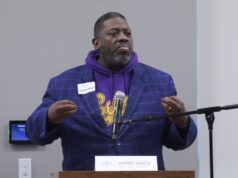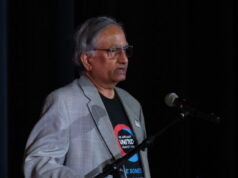
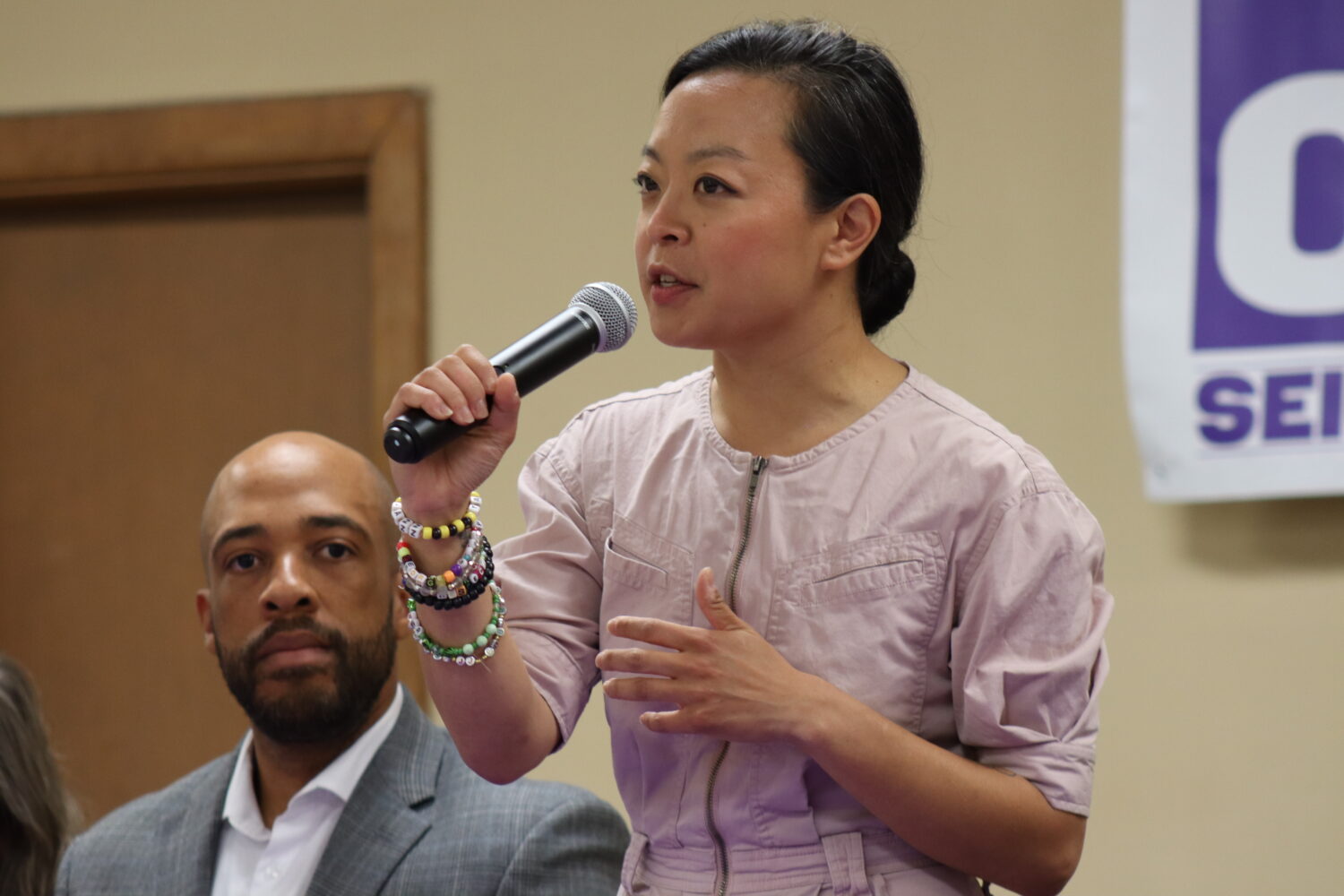
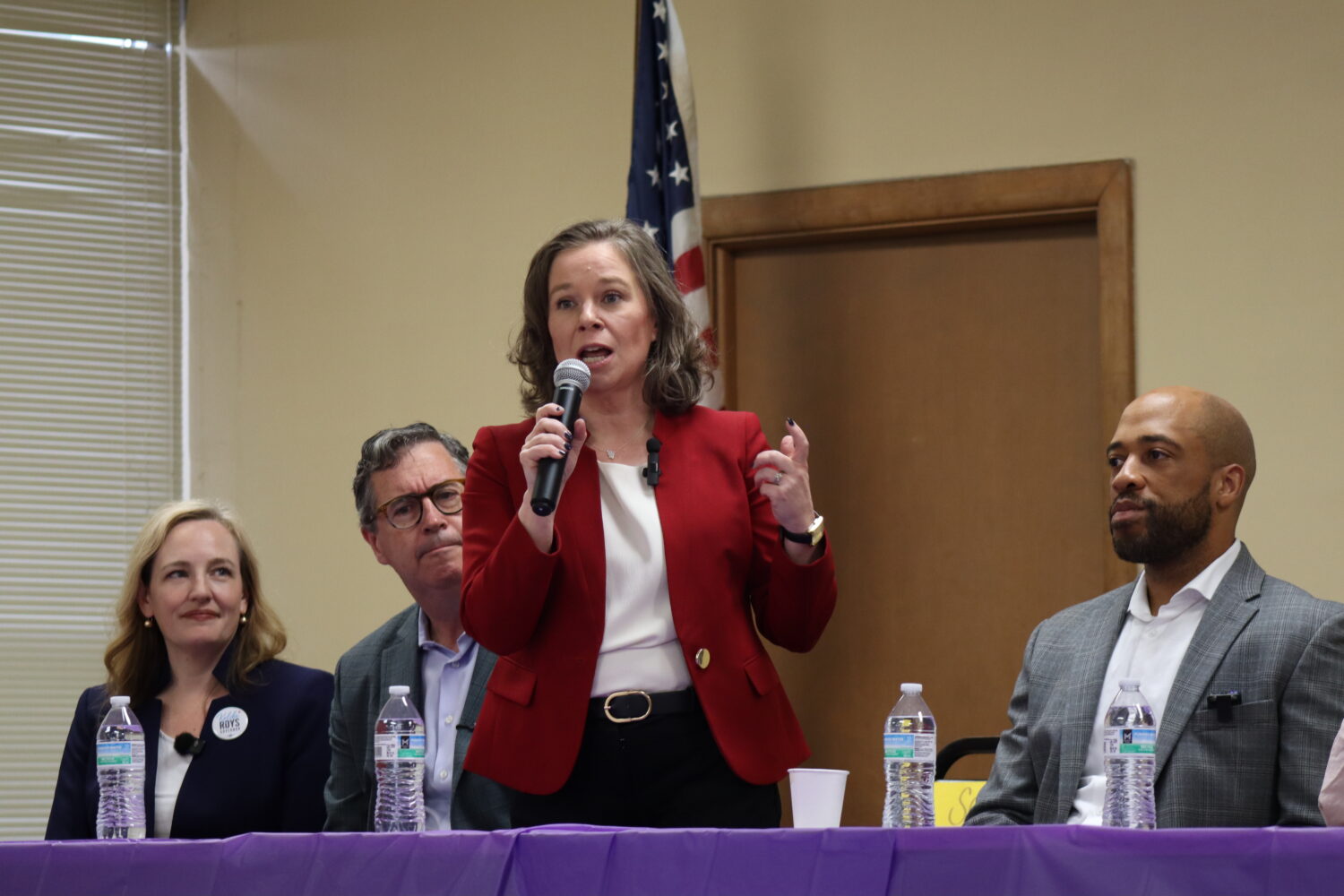
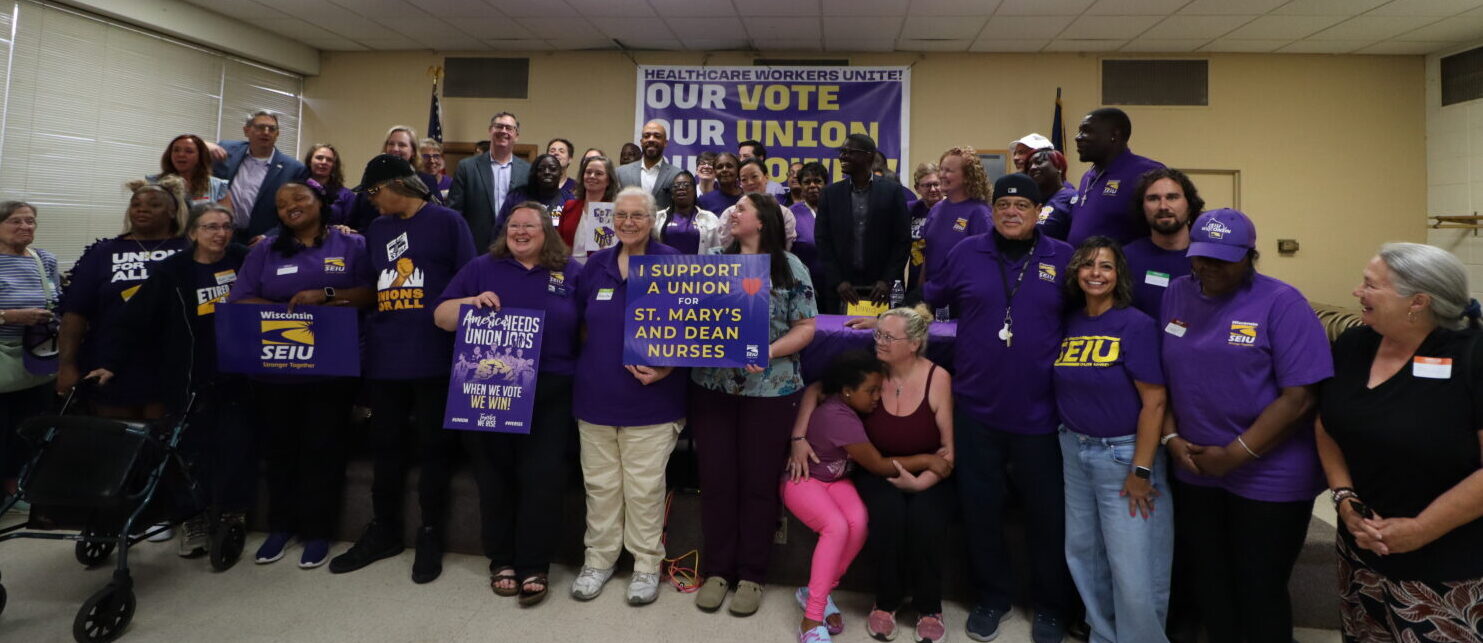
Democratic gubernatorial candidates came to the Madison Labor Temple for a forum to discuss affordability, the future of collective bargaining, Act 10 and workers’ rights.
On June 25, Service Employees International Union (SEIU) Wisconsin hosted gubernatorial candidates Mandela Barnes, Francesca Hong, Kelda Roys, David Crowley, Joel Brennan and Sare Rodgriuez. The group faces off for the upcoming primary in August ahead of the general election in a highly congested race for governor.
At the forum, the candidates were asked by SEIU members on their stances on various topics like affordability, workers rights and projections, collective bargaining and Act 10 — a controversial act passed under former Gov. Scott Walker’s administration that essentially stripped the rights of public sector employees to collectively bargain.
(Photo by Omar Waheed)
A more affordable Wisconsin
Candidates were asked by Michael Elvord, service and support staff member at UnityPoint Meriter and part of the bargaining team for current contract negotiations, “If elected governor, can you share one policy proposal or plan you have to address the affordability crisis?”
Just one policy proved hard, candidates said, but their answers differed.
Crowley, who is the Milwaukee County executive, stated that BadgerCare should be expanded as a larger public health option. Currently, BadgerCare, which is Wisconsin’s largest Medicaid program, is available for low-income residents. It covers roughly one million residents in the state, according to the Wisconsin Department of Health Services.
“But I want to be very clear, it’s not just health care, and it’s hard to say just one thing because it’s groceries, it’s utility bills, it’s gas, it’s transportation, it’s child care costs. All of these things are affecting us,” Crowley said.
Health care costs have steadily risen this decade with an average of $1,541 in out-of-pocket costs for individuals in 2023, according to KFF. Crowley said that the expansion of BadgerCare as a public option won’t solve all issues — but it’s a start.
(Photo by Omar Waheed)
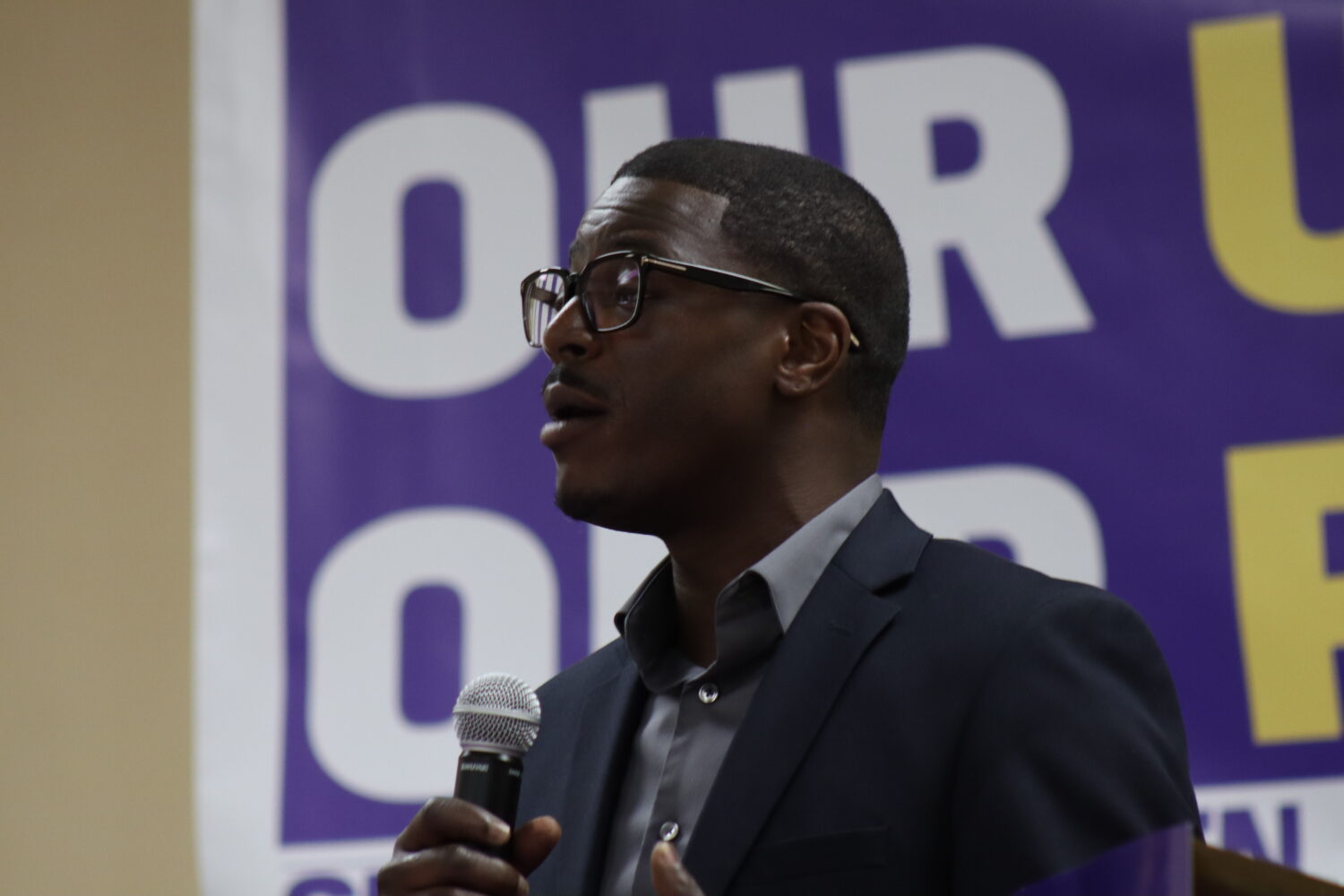
Representative Hong, Assembly District 76, believes policies that directly address costs are effective in making life more affordable. She notes a bill introduced in November 2025 that would cap utility costs at 2% of a household’s income.
“I am truly of the belief that when we address the issue that is impacting some of the most underserved folks first, that is actually the way that we help everyone, and so lowering those utility costs,” Hong said.
Barnes wants to address minimum wage and create a clearer path for workers who wish to join unions. He pointed to previous efforts for a minimum wage increase to $15, but it should now be $20 adjusted for the increased cost of living.
“I can’t think of how many people I run into these days who feel they’ll never get a chance to retire, or are now in retirement and can’t afford their basic necessities, and are at risk of losing their homes,” Barnes said. “We’re going to end that.”
Current Lt. Gov. Rodriguez pointed to multiple issues, but really only stated that her first move as governor would be to reverse Act 10, expand access to Medicaid as a public option and create a rural health stabilization fund to combat the closure of rural hospitals.
“I have been to all 72 counties every year. I have been lieutenant governor, and they are telling me the same thing, that they are doing everything right, but still feeling squeezed,” Rodriguez said.
Brennan, who formerly served as the secretary of the Wisconsin Department of Administration and is the current president of the Greater Milwaukee Committee, believes that addressing housing supply will yield positive changes in affordability.
“The average age for a first-time home buyer is … now 41. When I was 20, it was 28,” Brennan said. “Five years ago, it was 33. It’s only in the last several years that we have put this out of reach for a whole generation.”
His plan is to build 100,000 affordable new homes over the next four years if elected governor and make sure that “Wall Street’s not buying up” homes around the state.
Senator Roys, Senate District 26, wants to increase the minimum wage to $20 and increase union power. She plans to repeal Act 10, increase access to public health options and crack down on both public and private sectors for wage suppression and price gouging consumers.
“A strong middle class is built by two things,” Roys said. “It was built by the minimum wage and by union power, because when more workers have a voice in the workplace and can bargain for their wages and benefits and working conditions, it benefits all of us.”
(Photo by Omar Waheed)
Protecting unions and fighting against union-busting
All candidates are in favor of reversing Act 10. All are in favor of creating stronger protections for unions against union-busting activities and ending “Right to Work” laws.
However, Barnes, Hong and Roys were the only ones who proposed taking further steps.
“Companies that don’t pay a living wage, they don’t deserve tax breaks. Those companies that interfere with union organizing or make it more difficult for union people, or excuse me, any working person, whether you’re in a union or not, to be paid a fair wage and receive benefits that you deserve for that hard work, they don’t deserve tax breaks and incentives either,” Barnes said.
Hong wants to enshrine laws in Wisconsin’s Constitution that would make it impossible for anything like Act 10 to ever happen again.
“I think the state cannot be afraid to regulate,” Hong said. “I think it’s been a word that often gets weaponized, but it’s actually one that I think for workers can be powerful.”
Roys would like to expand Wisconsin’s own ability to go after companies engaged in union-busting activity and not solely rely on the National Labor Relations Board.
“We are going to vest power with our attorney general to go after union-busting tactics so that they can’t get away with the kinds of abusive, illegal practices that were par for the course,” Roys said.