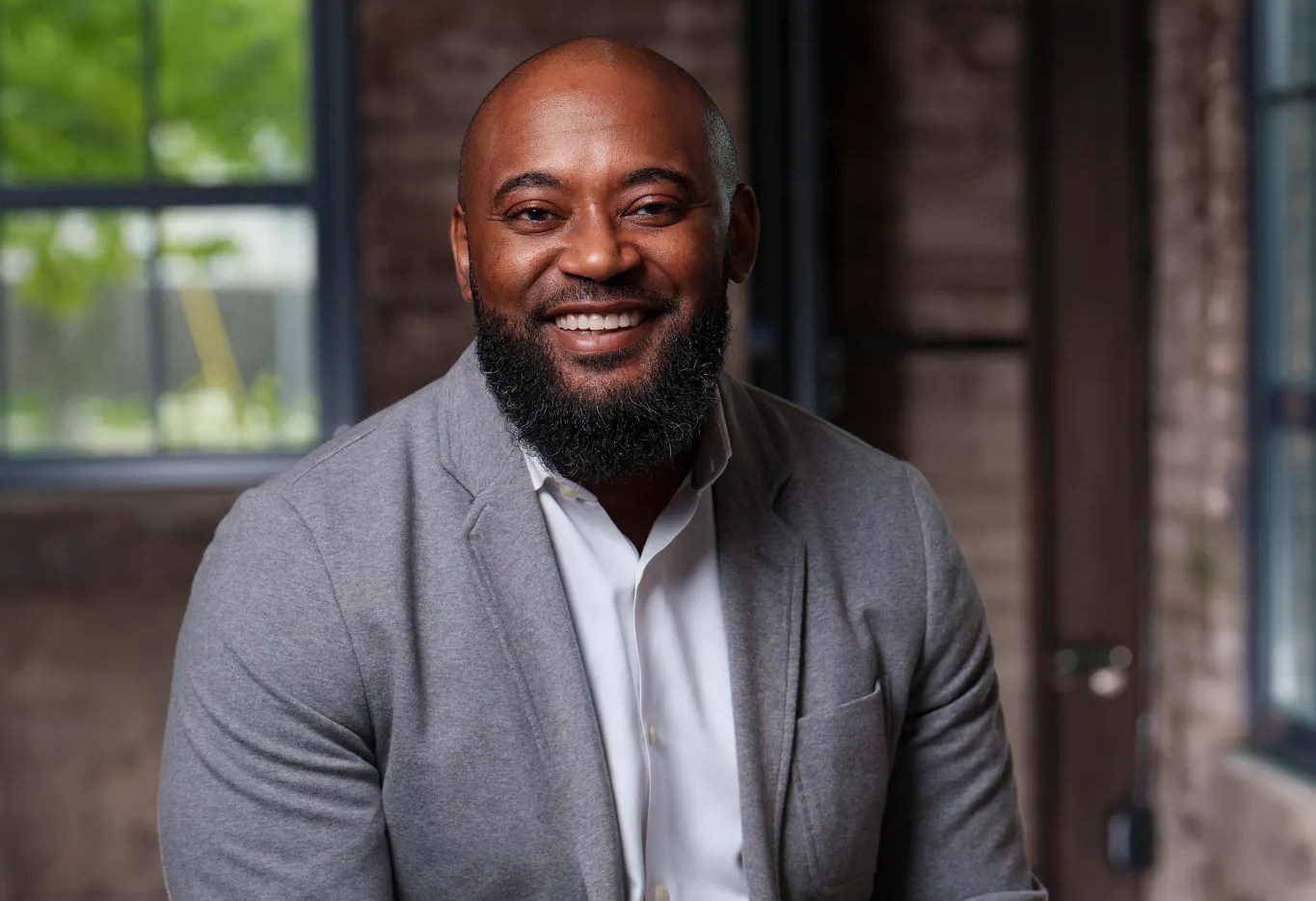
The new president and CEO of the Goodman Community Center is settling into one of Madison’s most beloved institutions, and into a community he says has already made an impression on him.
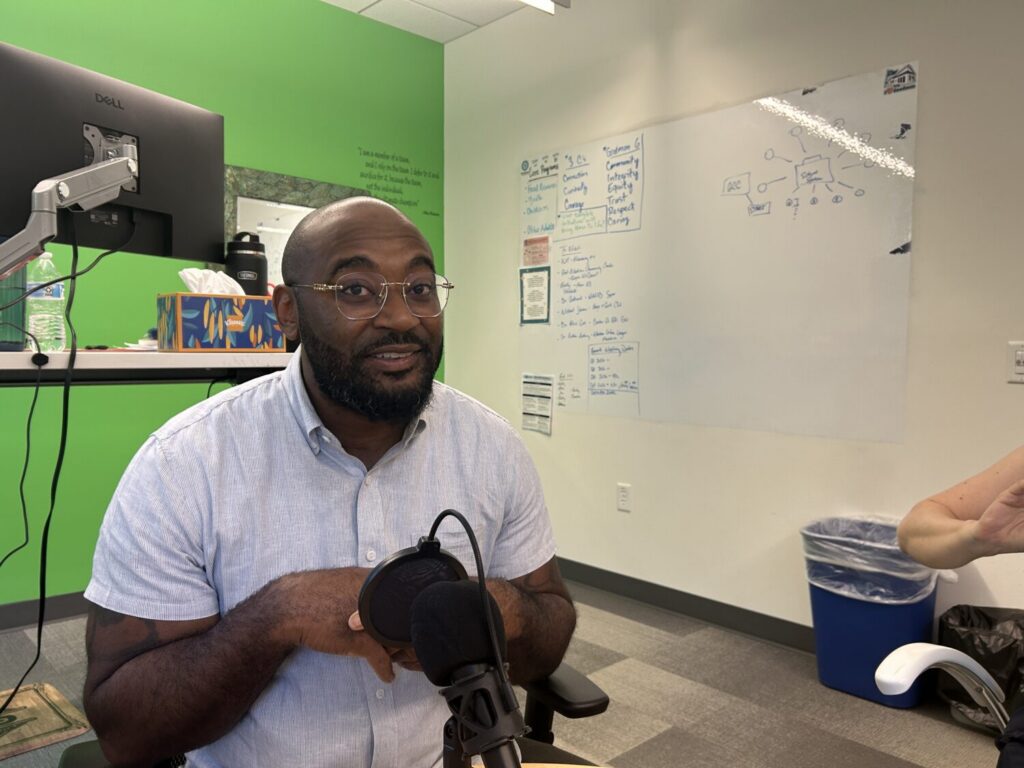
Christopher Talton, who has been on the job for about two months, is still commuting from Menomonee Falls but says the drive hasn’t fazed him. “I’ve been commuting for years. This is the shortest commute I’ve had in a while,” he said in an interview for the 365 Amplified podcast.
Listen to the full interview:
His early read on the city has been positive. “Madison is such a complex city in a positive way,” he said. “Madison is a city of the people (and) everybody’s been super nice.” What’s stood out most, he said, is the depth of feeling for the organization he now leads: “I think the thing that has been a really awesome learning discovery for me is what Goodman Community Center has meant to the community for 73 years.”
Talton has spent his first weeks meeting community leaders, funders and volunteers, and touring peer organizations, including Operation Fresh Start and Mentoring Positives.
“Just kind of meeting them, understanding what they do, touring their facilities, seeing how either some of them we already have interactions with, or kind of intersections in service, and some we don’t formally, but could,” he said. “What could that potentially look like in the future? So that’s been good stuff.”
A path he didn’t plan
Talton didn’t set out to work in the nonprofit sector.
“No, I kind of fell into it,” he said. He started in traditional retail and a first post-college job brought him to Racine and to Wisconsin. The turn came when he went back to school for a teaching certification, intending to teach and coach.
“I took the job thinking I’d be there until I finished and go on to be a teacher, and ended up being there for almost 15 years in a variety of roles,” he said of Goodwill of Milwaukee and Chicago, which he joined in 2009. He went on to lead workforce development programming there and, most recently, served at Goodwill of North Central Wisconsin out of the Menasha-Appleton area, covering the entire northern part of the state.
“When this role came available, I had a couple of conversations, and I consider myself very fortunate to have been chosen,” he said.
Talton, who played football and ran track for Iowa Wesleyan College, also draws a personal connection to the work. “I grew up in community centers very much like this,” he said, citing that and organized sports as “pivotal in my early life.”

Running a center for “age 3 to 103”
Talton describes Goodman as a sprawling operation. “We do a lot here,” he said. “We like to say (we serve) age 3 to 103.” That spans early childhood education beginning at age three, a 4K site for the Madison Metropolitan School District, after-school programming for elementary, middle and high school students, and an experiential learning program for teens.
“Our teens will actually perform the catering and hospitality services,” he said of the center’s event rentals, “and so they’re getting this really important developmental work around a lot of them, it’s their first jobs, and they’re paid a decent, a decent wage, and getting all of that experience.”
The center also runs older-adult programming, including a daily senior lunch, plus a food pantry and a fitness center. Talton sees that multi-unit structure as familiar ground.
“This organization is structured very similarly” to Goodwill, he said, which offers a wide variety of programs and services beyond the well-known retail secondhand stores.
The challenge, as he frames it: “How do you, as the leader of the organization, ensure that what your overall mission is, all of the decisions that you’re making in all of these diverse units, are rolling up to the to drive the same mission?”
Rebuilding in the wake of a betrayal
Talton arrives at a center still recovering from a serious blow. In early 2025, the Dane County District Attorney’s office charged Dewayne Powell, a former member of Goodman’s finance office, with nine felonies for forgery and theft; authorities estimated he stole over $600,000 from the organization in actions dating back to 2021. Then-CEO Letesha Nelson, who helped bring the case to authorities, described the personal toll at the time: “I can’t tell you all the ways my heart is broken.”
Asked whether trust still has to be rebuilt, Talton credited the work done before his arrival.
“I think there’s been a lot of work that has been done to rebuild trust. That’s not done,” he said. “It takes years to build(trust), and in the blink of an eye, (losing it) can destroy everything you’ve built. So it’ll take years to rebuild it again.”
He pointed to the transparency of the response.
“I think the team did a really good job of figuring out what happened, explaining and being very transparent about what happened, and what the steps were that we took to correct it, and that all happened before I got here,” he said.
His own contribution, he said, is operational discipline.
“I’ll go nerdy business on you, but just the way you run a business is through systems and processes that are repeatable, that are scalable, that are transparent, that everybody understands.” He added: “If we’re following generally accepted accounting principles from a finance standpoint … I didn’t create those, they’ve been around for decades, and so following those kind of prevents … what happened.”
He’s untroubled by the structure that requires.
“There’s an acceptable level of bureaucracy,” he said. “When I had small kids, they couldn’t just come downstairs and go in the freezer and get ice cream and start eating it at 9 o’clock in the morning, right? There’s an acceptable level of, ‘here’s how we do things.’”
A philosophy of leadership
Asked what leadership means to him, Talton describes two competing instincts. “It would be kind of the visionary side, and then the, in American colloquialism, ‘get ‘er done,’” he said, invoking Stephen Covey’s image of “feverishly climbing a ladder only to realize it was leaning against the wrong wall.”
He counts himself in the first camp. “I am a more natural kind of visionary leader. Idea guy. I kind of live in the future,” he said, but added that past roles have taught him to “make sure the trains run on time today.” His job, as he sees it, “is to remove roadblocks for the team and to make sure we’re structured in a way that can deliver every day.”
He reaches for a road-trip metaphor: “I don’t think on a road trip to Florida anybody wants every single stop to have to check all of their fluids and tire pressures,” he said. “So let’s have a sustainable mechanism that’s kind of running itself, which allows everybody to kind of tap into the future vision.”
Looking ahead
In the current political environment, Talton sees nonprofits shouldering more than they should.
“Community centers and nonprofit agencies in general are probably picking up a heavier triage burden than should be even in existence,” he said, pointing to a food pantry whose “numbers are growing on a regular monthly basis, because people need food.”
He wants elected officials held to account. “How can we demand from our elected officials more sustainable solutions?” he asked, expressing hope that “over the course of the next half decade or so” some of that triage work shifts to local and state government, freeing nonprofits “to get to the business of prepping our babies for the future.”
As for how he’ll measure his own success in five years, Talton points to partnership over duplication.
“I’m a believer in synergy, the idea that two organizations, or two people, or whatever, can together accomplish more than they could individually,” he said. “In five years, I would imagine that we’re maximizing how we can serve East Madison, if not greater Madison, in the things that we already have competency in.”