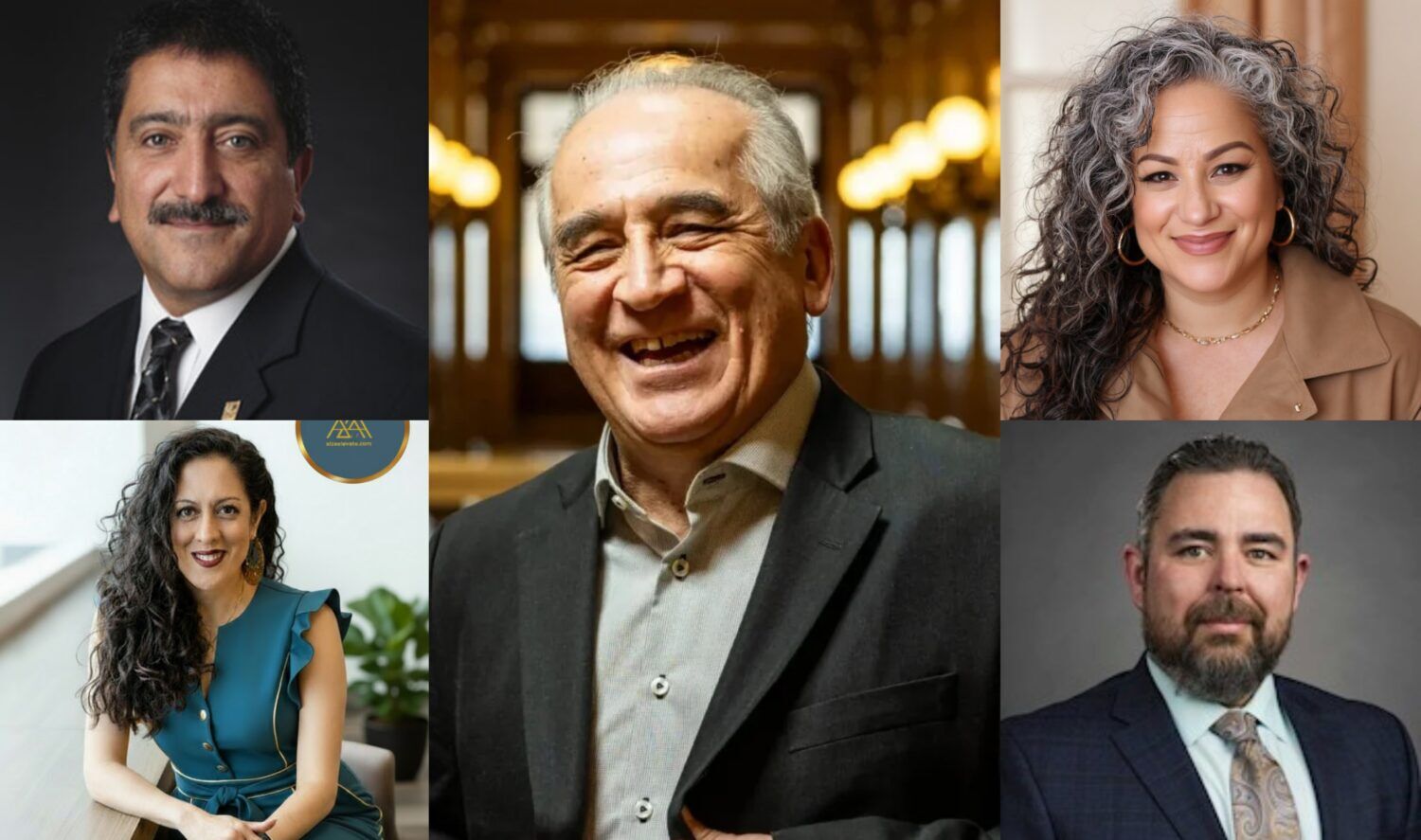
“We want to eat what everyone else is eating,” said Faatima Khan, one of the people bringing Milwaukee’s Halal Restaurant Week to Madison this September.
Halal Restaurant Week is an initiative that started in Milwaukee four years ago to give Muslims across Wisconsin a chance to eat the same food as everyone else. For many Muslims, a significant amount of food and restaurants cannot be eaten due to religious practice. Bushra Zaibak, visionary behind Eat Halal Milwaukee, wanted to bring more opportunities for Muslims to eat what everyone else eats while they honor religious practices. Now, Zaibak pushes to bring it to Madison after its success and increased interest.
“One day, I was picking up my son from God knows where, and he’s hungry. I’m like, ‘Hey, do you want to stop to get a shawarma?’ He’s like, ‘I really don’t.’ He just wants food, and he said, ‘I just want a proper burger,’” Zaibak said. “I said, ‘Well, why not? Why can’t we have that? It’s 2022. Every single vendor now has access to halal.’”
The issue present for Muslims is whether food is halal. Halal isn’t exclusive to food — the word simply means “allowed” or “permissible” in Arabic — but it is often known in the context of meat and dietary restrictions for Muslims. It is what someone who practices Islam can do in business, finance, daily life, and dietary restrictions that are tied to ethical considerations.
For food to be halal, it must meet specific requirements, including a prescribed method of ritual slaughter. The animal must be alive, healthy and well cared for before being slaughtered with a single, uninterrupted stroke of a blade, accompanied by the recitation of the Tasmiya, or “Bismillah.” The animal must then bleed out and die before any part of it can be processed. The process must be performed manually for each animal and cannot take place in the same area as non-halal animals.
The infrastructure for this in the United States has been weak for quite some time. Modern allowances in halal dietary practices have allowed Muslims to instead consume kosher meats. Kosher is similar to halal, but is far stricter. If something is kosher, then it is technically halal. If something is halal, it isn’t necessarily kosher.
However, more and more vendors and restaurants stock halal foods now as the Muslim population in the United States has continued to grow. There are multiple agencies like the Halal Certification Center and the American Halal Foundation that evaluate food systems and products to see if it is permissible for Muslims to use or consume.
“Accessibility is significantly easier than it was the last decade or so. Every vendor is carrying it,” Zaibak said.
At the beginning of Halal Restaurant Week, Zaibak made cold calls to restaurants around Milwaukee. It was a mix of educating, getting to the decision-makers, and bargaining, but they were happy to give it a chance.
“We just had this idea and we said, ‘Who is the best Steakhouse in Milwaukee? The best burgers? The best wings? The best Thai Mexican, all of that,’” Zaibak said. “We said, “This is what we’d like you to do. Talk to your vendor, get us halal beef, chicken, whatever for the week and we’ll do the rest.’”
A lot of restaurants agreed to do it for a day or two. Price-wise, the cost is generally the same, but to sweeten the deal, Zaibak told restaurants that if they want to upcharge them a bit, they won’t be mad. They just really want to eat there.
On the education side, some restaurants didn’t particularly understand what halal meant. One Mexican restaurant in Milwaukee responded, “You know we’re Mexican right?” The restaurant thought they wanted it to serve Middle Eastern foods.
“People assume halal, immediately you’re thinking about kebab and curries, but you have to explain that it’s the product,” Zaibak said.
“We created this chart because they have questions about red wine vinegar and all these things. So we created the chart and said, “Here’s what halal. Here’s what we’re avoiding. Cheeses, dairy, we’re all good. We don’t have a problem with eggs. We don’t have a problem with this and that.’ It made it so much easier,” Zaibak said.
Restaurants were very willing to participate when they understood that they really didn’t need to change anything.
“We really had to clarify in the beginning: keep your menu exactly the way it is and just switch the product. Don’t change your recipes. Don’t add chickpeas,” Zaibak said. “It bothers me so much when they just slap some hummus on there and they think that’s what we want. I don’t want hummus.”
Some misinterpretations have popped up. Some try to go the extra mile and cater towards Middle Eastern palettes, Zaibak said.
“One of the restaurants, she was making this veggie platter, and she, because we were in the back and she was showing me all the things that she does, and then she’s like, ‘And instead of like the cilantro lime dip, we’re gonna put hummus,’ ” Zaibak said. “I’m like, ‘No, put the cilantro lime dip. I don’t want hummus.”
Now it wants to come to Madison, which is home to Wisconsin’s second-largest Muslim population. The idea was planted in Zaibak’s head by Khan in the first year of Halal Restaurant Week, but it needed time to figure out how to approach Milwaukee first before it could expand.
“I know the population here is not as big as Milwaukee is, but Madison is growing,” Khan said. “People are moving here, and we’ve got to make sure that we are creating a diverse dining and culinary scene that people can have access to.”
Restaurants in Madison are still being worked out, but Zaibak and Khan did reach out to Food Fight, a restaurant group in Madison, and they were “100% on board,” Zaibak said. Food Fight has agreed to use three of its restaurants: Bassett Street Brunch Club, Everly and HWY1.
Halal Restaurant Week will be held Sept. 4-13. The website for Eat Halal Milwaukee will be updated to include Madison and will show what restaurants will be included.