
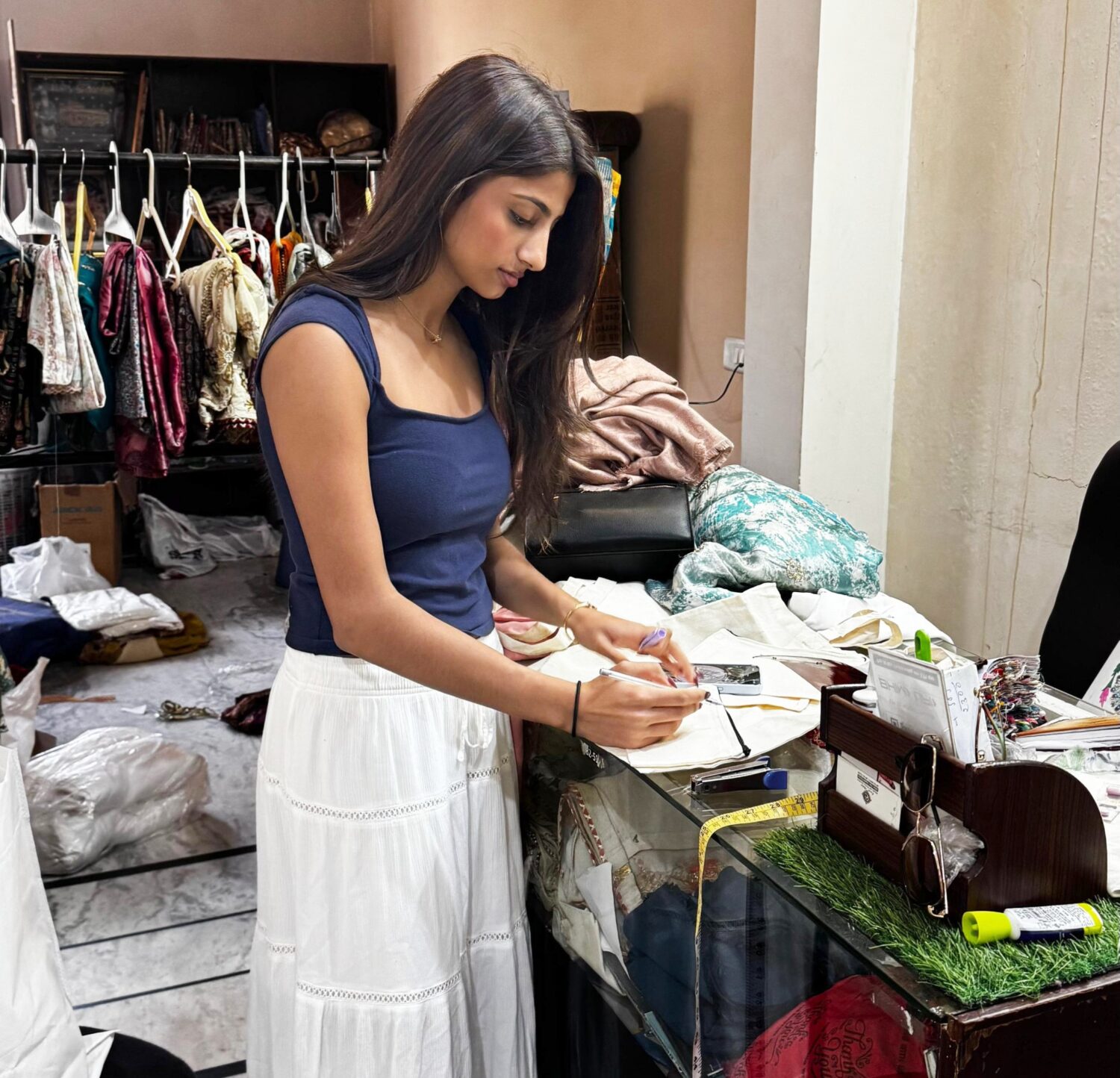
A fun thing to do with friends later became a push to give back to the community as an 11th-grade student at Waunakee aims to battle economic disparities and sustainability.
Aikam Aulakh started Project Tote after a trip to India in November 2025. When she was there, she noticed plastic bags everywhere, but knew that this wasn’t an issue completely unique to the country. Aulakh was already making tote bags with friends, and thought she could instead couple it with a mission where she could donate to local charities and work with artisans from marginalized communities.
Aulakh didn’t initially start making tote bags with sustainability in mind. In fact, she was inspired to make totes near the end of her sophomore year with a few friends.
“I’m not even gonna lie, I saw a few TikToks of people making these really cute tote bags… and you can buy them,” Aulakh said. “It was just kind of a little artsy elective that I started, and me and my friends were like, ‘Oh yeah. We can make these and then carry them around in the summertime.’”
Aulakh and her friends really just wanted cute bags for the summer, she said. Projects like making tote bags aren’t too unfamiliar for Aulakh. During COVID, she would do little crochet and embroidery projects. But when an opportunity arose, she wanted to bring her skill set to make an impact.
Visit to India
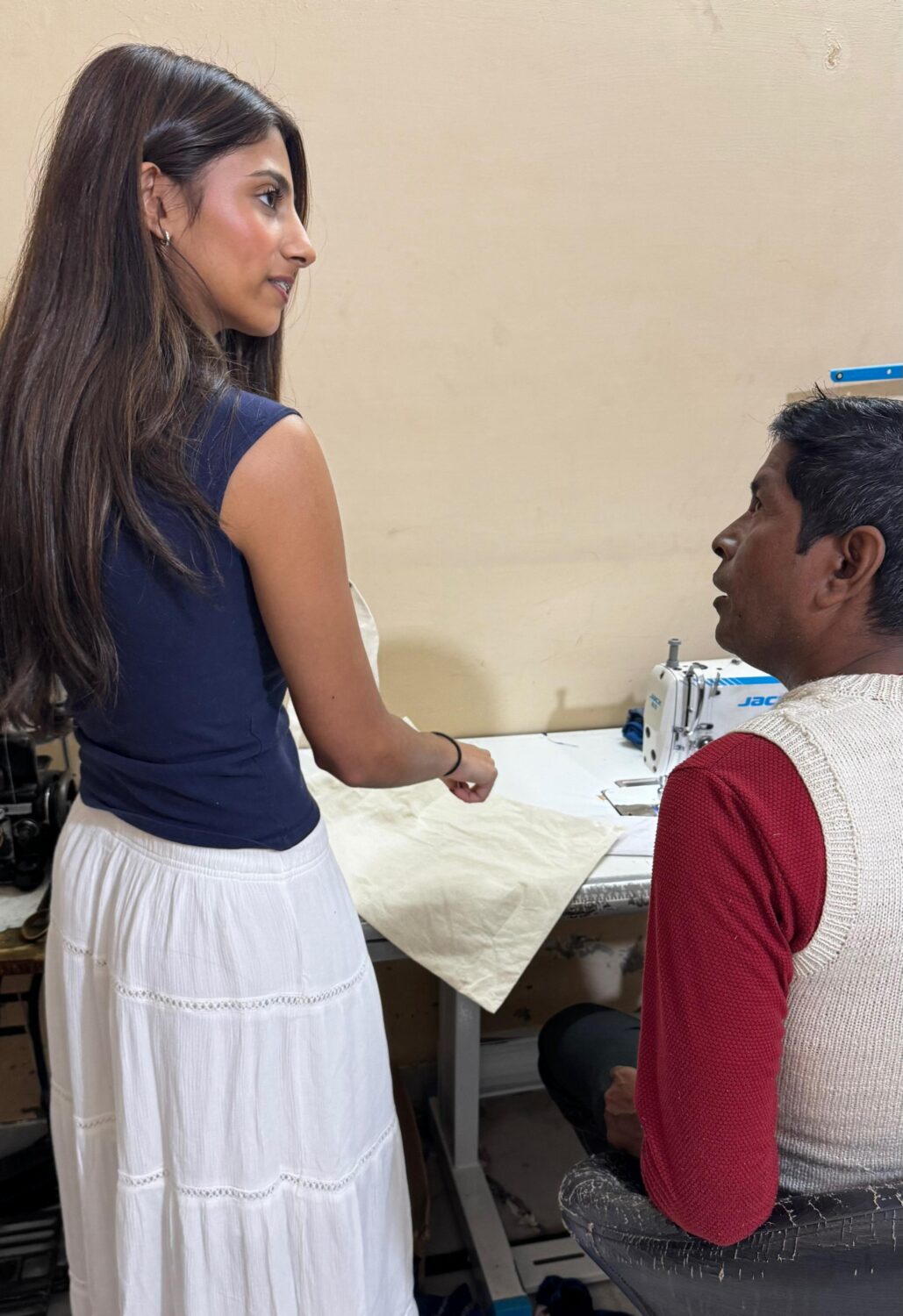
Project Tote was inspired by a recent trip to India. Aulakh and her family went to visit her grandparents in Punjab. When walking around the village and a few other places, she noticed the pollution.
“If you’ve ever been to India, you’ve probably seen or heard about it. It’s extremely polluted,” Aulakh said. “There’s plastic bags everywhere, but the other thing is that in India there are some very talented artisans. Their culture is known for beautiful embroidery.”
In her travels, Aulakh was hurt by the sight of stray dogs and them getting stuck in all the plastic bags littered on the street. She thought that, with her skills and inspiration from local artisans, a difference could be made.
Aulakh spoke with her mother about how she could figure out a way to help. Her mother knew some people local to the area who could help if she wanted to make a bigger effort.
“To see the dogs and to see the people and the environment, and how much it was affected, it was different from here in Madison,” Aulakh said. “It triggered me in a way, and I was like, ‘This is not okay. Sustainability should be accessible everywhere, not just in Madison, but also in my country of origin.’”
Project Tote works with a few local artisans from impoverished communities. Aulakh also wanted to use the work and her platform to bring attention to their work. The work they put into their craft is exemplary of their talents, but they don’t get much in return for it, she said.
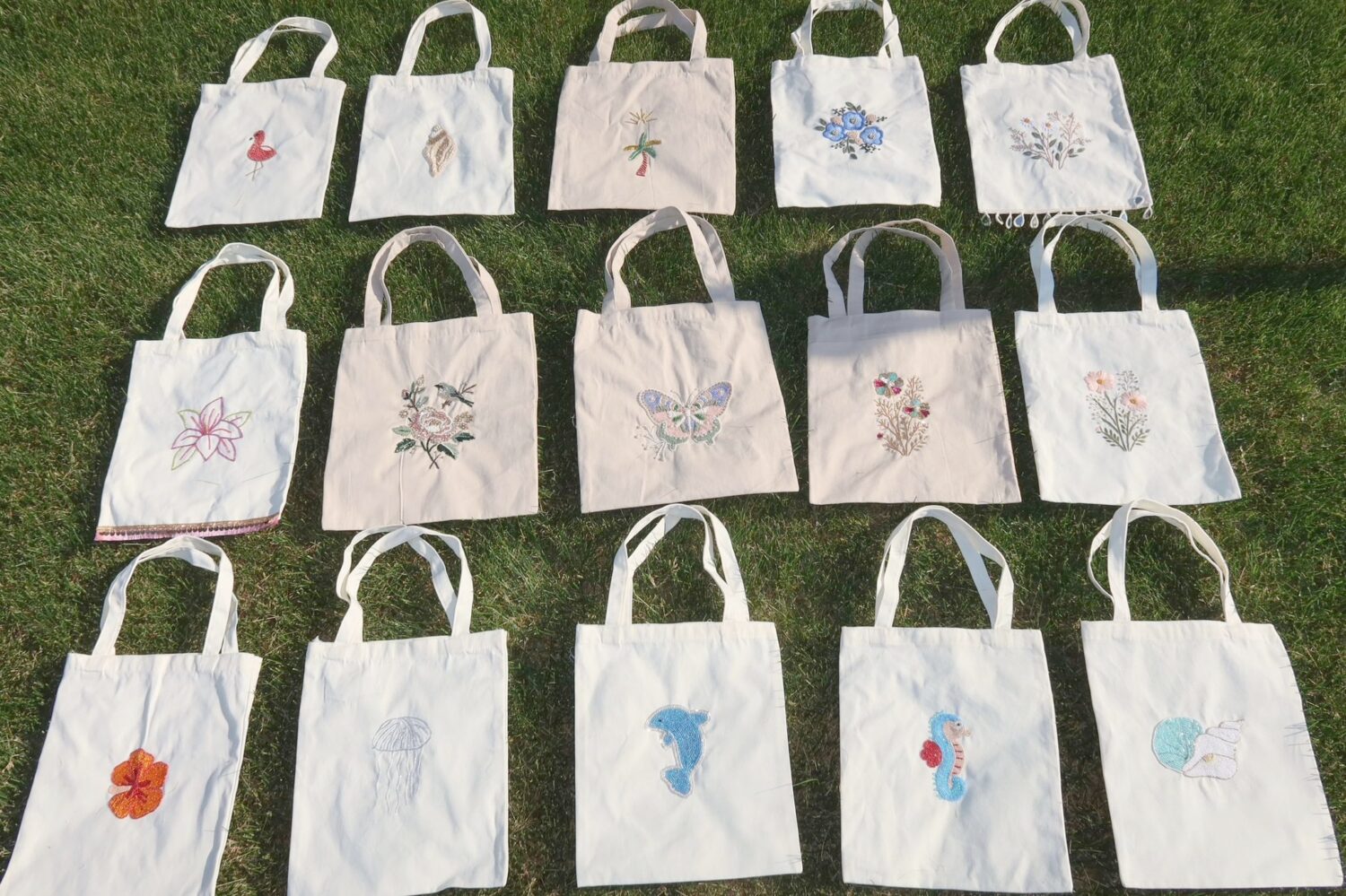
Still, Aulakh wanted to focus on sustainability to provide an option away from plastics. The bags are made from hand-spun, woven cotton. She initially purchased bags in bulk via Amazon when she started making them on her own, but the trip to India found different local sustainable fabrics.
The fabrics and the style used are called “khadi.” The fabrics used in khadi typically consist of cotton, silk or wool and do not use electricity in their production. The method is regarded as highly sustainable and breathable — which is essential for hot summers in India.
Bags featured use khadi fabrics and are paired with embroidery. Designs are made by both Aulakh and local artisans Project Tote is partnered with.
The venture has been going well for Aulakh so far. She’s partnered with Sustain Dane, where funds go to, and to the artisans who make the totes. She has her eyes set on a few goals.
She wants to get into the local Madison farmers market and is exploring options with that, which Sustain Dane is helping her with. Aulakh has a fundraising goal of $1,000 by the end of summer — and is steadily on a path to hit that.
So far, around $450 has been made. The largest sales surge came when an official website for Project Tote was launched. In just three days, $300 was made after the website’s launch. Previously, Aulakh mostly sold bags directly on Instagram, to friends and family or just walking down the street.
While it is a high school project she’s working on, Project Tote has opened up Aulakh to other potential sustainable ventures. She thinks clothing might be a great addition to its lineup down the line, possibly in college.
“I was thinking I would go to school, probably to major in economics,” Aulakh said. “With this whole project, I’ve realized that with sustainability, how equitable it is. I’ve realized that it all comes down to what is accessible, and the opportunity cost families face when going to buy sustainable items.”
She points to additional environmental concerns like fast fashion. The rising trend quickly produces cheap, generally low-quality clothes that use fossil fuel-based synthetic materials and toxic chemicals that end up in landfills and water.