In my first piece, I wrote about what it feels like to be Black in Madison. I wrote about the quiet loneliness of being the only Black person in the room, the discomfort of spaces that were never built with you in mind, and the exhaustion of living in a city that calls itself progressive while producing outcomes that tell a much uglier story.
There is another part of that story we need to confront.
Madison has Black people in visible positions of authority. A Black sheriff. A Black district attorney. A Black president of the Common Council. Black elected officials, Black department heads, Black nonprofit executives, Black equity professionals, Black people sitting on boards, commissions, committees, and task forces all over this city.
That representation matters.
But it has not saved us.
If representation were enough, Madison would already be one of the best places in America for Black people to live. It would not still be a place where Black residents make up a small share of the population but a wildly disproportionate share of the jail. It would not still be a place where Black homeownership remains painfully low, where Black children are disciplined more harshly, where Black cultural spaces are scarce, and where Black families are pushed farther away from the neighborhoods where the signs say our lives matter.
The faces have changed.
The outcomes have not.
That should force us to ask a harder question. Not whether Black people can rise inside Madison’s institutions. Clearly, some of us can. The question is what those institutions require from us once we get there.
I know this because I have adapted too.
I wear the suits. I speak the King’s English when the room requires it. I know how to sit across from elected officials, executives, prosecutors, police, funders, and department heads without making them wonder who let me in. I know how to translate pain into policy language. I know how to make anger sound like analysis. I know how to make a demand sound like a recommendation so people with power do not immediately reject it.
That is a skill.
It is also a warning.
Once you learn how to move comfortably through rooms built by power, you have to constantly ask what that comfort is costing you. Am I softening this truth because it is strategic, or because I want to remain welcome? Am I speaking carefully so I can be heard, or because I am afraid of what will happen if I say the thing plainly? Am I still carrying the people with me, or have I learned to visit the struggle only when I need moral authority?
I ask myself those questions because I have seen what happens when people stop asking.
The room changes them.
Not all at once. Not dramatically. Nobody sends a memo announcing your assimilation. It happens quietly. You start saying “stakeholders” when you mean people. You start saying “public safety” when you mean police. You start saying “housing challenges” when you mean Black people being priced out of the city. You start calling harm “complexity” because complexity sounds more responsible than cowardice.
Before long, the institution has not become more accountable to the people.
You have become more useful to the institution.
That is where representation becomes dangerous. Oppressive systems do not always survive by excluding Black people. Sometimes they survive by absorbing us. They give us titles. They put us on panels. They quote us in press releases. They ask us to stand behind policies we did not design, defend compromises that hurt our people, and call it progress because our faces are attached to it.
That is not liberation.
That is white supremacy in Blackface.
Some people will think that phrase is too harsh. Good. It should be harsh. There is nothing gentle about a system that can produce Black suffering, place Black leaders in front of it, and then use their presence as evidence that the system itself cannot be racist.
It is sinister because it looks like progress.
It is insidious because it teaches us to defend the very systems hurting us.
And it is especially dangerous when Black women are used this way.
Black women have carried movements this country did not deserve. They have organized voters, protected families, built institutions, told the truth, buried the dead, fed the children, defended the vulnerable, and saved America from itself more times than America has ever been willing to repay. When people say we should follow Black women, I understand where that comes from. There is wisdom in that. There is history in that. There is truth in that.
But Madison has learned how to twist that truth into a shield.
Too often, institutions do not follow Black women.
They hide behind them.
They elevate a Black woman just long enough to soften the harm. They place her close enough to the microphone that the policy sounds less violent. They attach her face, her name, her credibility, and the moral weight of Black womanhood to decisions that still leave Black people poorer, more policed, more displaced, or more ignored.
Then, when the community pushes back, the institution does not defend the policy.
It defends itself with her.
How dare you question this?
How dare you criticize her?
How dare you challenge Black women?
That is not reverence.
That is cover.
And it works because nobody wants to be seen disrespecting Black women, especially not Black people who know exactly how much Black women have sacrificed for our communities. But honoring Black women cannot mean suspending our political judgment. It cannot mean pretending every policy attached to a Black woman is automatically good for Black people. It cannot mean confusing representation with accountability.
A budget does not become just because a Black woman explains it. A jail does not become less violent because a Black official manages it. A development does not become equitable because the press release uses the right language. A harmful policy does not become liberatory because someone Black was sent out to sell it.
The question is not who is standing at the podium.
The question is who still gets harmed after the applause ends.
That is the metric. Not the title. Not the appointment. Not the historic first. Not the photograph. Not the quote about equity. The metric is whether Black people can afford to live here, raise children here, build businesses here, gather safely here, grow old here, and pass something on here besides trauma.
Everything else is branding.
This is not an indictment of every Black person in leadership. It is not a claim that every Black official is compromised, every Black woman is being used, or every Black professional has forgotten where they came from. That would be lazy, and it would let the institutions themselves off the hook.
The indictment is of a system that rewards Black people when we make oppression easier to manage.
Madison wants our presence, our credentials, our stories, and our legitimacy. It wants us in the room, but too often only after the room has already been designed. It wants our feedback, but too often only after the decision has already been made. It wants our pain translated into language polite enough not to offend the people who caused it.
Then it calls that inclusion.
It isn’t.
Inclusion without power is decoration. Equity without consequences is public relations. Representation without structural change is a costume change, not a transformation.
The system does not need to defeat us when it can teach us to defend it.
That is why Black leaders in Madison, myself included, have to make a choice. We can be grateful to be in the room, or we can remember who is still locked outside of it. We can protect our access, or we can use it. We can become fluent in the language of institutions, or we can force institutions to become accountable to the language of our communities.
There is no neutral position.
If your title does not help Black people live freer, safer, healthier, and more powerful lives, then what is it for? If your seat at the table cannot move resources, challenge punishment, confront displacement, protect Black culture, or make white comfort uncomfortable, then what exactly are you preserving?
Because Black leadership that cannot make white supremacy uncomfortable is not leadership.
It is decoration.
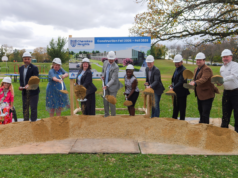
Madison does not need more decoration. It does not need another symbolic appointment, another carefully staged photograph, another equity statement, or another committee formed to discuss the findings of the last committee. It needs Black leaders willing to buck the system that has become so comfortable using them. It needs people willing to risk access, titles, invitations, funding, and polite applause in order to tell the truth.
The truth is simple.
Representation can open a door.
Assimilation teaches us to be grateful for the invitation.
Liberation requires us to change who owns the building.