Students who cannot name how they learn and what support they need are at a profound disadvantage in the classroom and in life, says Dr. Jamaal Eubanks. With that in mind, Eubanks has created a self-advocacy framework, the Eubanks Learner Language (ELL), a structured, research-grounded tool that gives every student, from upper elementary through higher education, the language to understand how they learn and how they feel most supported, and the confidence to communicate those needs to every adult in their life.
“The Eubanks Learner Language is a self-assessment tool to identify each individual as a learner, but also the support style that they need, and it also teaches the students different strategies for that support style and that learning style,” Eubanks says. “It gives prompts, as well, to be able to communicate it, because a lot of people may not understand how they learn or how they need to be supported … they can’t articulate how. So learning the prompts to be able to start that process, I think it’s huge.”
Dr. Eubanks is a former special education teacher, a senior student support advisor at Madison College, and the founder of the Ignite from a Spark Mentoring Program.
What was the impetus for creating this educational tool?
“I was just thinking about how impactful I thought love language was by Dr. Gary Chapman [author of The Five Love Languages series regarding human relationships], and then thinking of it from the standpoint of relationships and how education is relational,” Eubanks tells Madison365. “So I started to visualize it in a different lane and lens, since I did a lot of mentoring and working with the most vulnerable populations that don’t necessarily get the support that they need.
“So I wanted to create a tool that young people can use to help themselves become better students, but also to be able to advocate for themselves and to help their parents advocate for them, as well.”
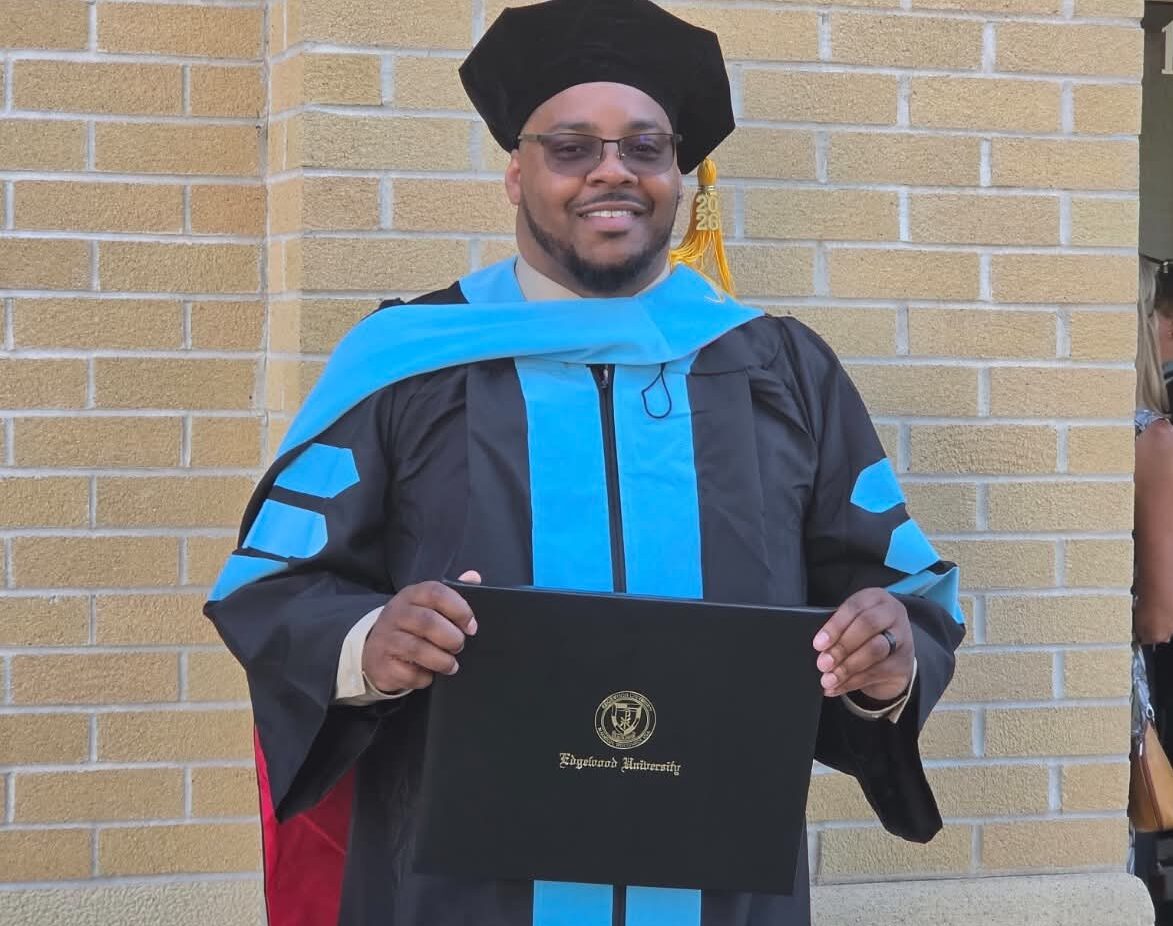
Eubanks recently walked the stage at Edgewood University, completing his doctoral program (Ed.D) in educational leadership. His dissertation work centered on mentoring and its impact on middle school students, specifically those students who don’t see themselves as welcomed, valuable, or advocated for in their school communities.
His dissertation examined the influence of the Ignite from a Spark Mentoring Program on academic success and self-efficacy among middle school students. The study used phenomenological research methodology — a qualitative approach designed to understand the lived experiences of participants — and was grounded in anti-deficit achievement framing, which centers student strengths and assets rather than deficits or gaps.
“This all was embedded in the research that I was doing, and I think it really came out in the dissertation, and [with] one of the pre- and post-interviews I did with a participant in the study,” Eubanks says.
ELL is not just for students; it’s also for helping parents help their own children succeed in the classroom.
“So the first person who typically advocates for a child is the parent, and the first person who coaches that child into advocating for themselves is typically the parent,” Eubanks says. “But if the parent doesn’t know their child in that capacity, how can you advocate for them? How can you coach them into advocating for themselves, as well?
“I think that this new tool helps to knock down some of those barriers. I know that I’ve also seen that there are parents who truly care about their kids’ learning, and things of that nature, but might struggle to communicate or articulate it appropriately to the schools to get the support they need,” Eubanks continues. “So they might come across as combative or hostile, or even aggressive. But this is also going to teach them the prompts to communicate effectively and the strategies, as well.”

(Photo by 21 Images)
The Eubanks Learner Language emerged directly from Eubanks’ personal and professional journey, and is the practical application of everything he has studied, observed, and concluded through years of mentoring work and formal doctoral research.
“It was one of those things that became an eye opener for me,” he says. “And then I really realized that this could be a game-changer in education. It can also be a game-changer in relationships with parents and their children, but also potentially a cheat code in relationship building from teacher to student.”
Eubanks believes that the ELL can help a young person not only survive in an educational system, but also thrive in it.
“There’s gonna be students that this works for,” he says. “There are also students who we understand have already been labeled at risk, and this becomes a tool that I believe will help them to be able to get certain supports that they need.
“We know that teachers are overworked and underpaid, and because of that, the majority of teachers are not going out of their way to identify that student and go get them the extra support that they need,” Eubanks continues. “But I will say that [for] most teachers that I know, if a student came to them and said, ‘Hey, I need support in this. Can we try this? This is my learning style.’ The majority of teachers that I’ve come across will go out of their way to help and support their students, especially if they’ve got strategies that are going to work for them.”
Although it is brand new, Eubanks says that he has already tried it out with a couple of students and their families.
“They have found it extremely helpful,” Eubanks says, “and then I had a couple of people who know themselves pretty well as a learner, who also have their doctorate as well, who took the assessment and were like, ‘Man, Jamaal, this is crazy accurate knowing myself as a learner, and the way that I need to be supported.’
“I’ve been sharing this information with different school leaders, families, and district administrators,” he adds. “The response has been great. I had a principal down in Enterprise, Alabama, that I pitched this to, and he said, ‘Man, in 25 years of education, I’ve never thought about it this way. It makes so much sense, but it’s something that hasn’t been.'”
Eubanks believes it can be a game-changer. Traditional education has historically been a one-size-fits-all undertaking, and unfortunately, many young people have gotten lost in that. Not anymore, Eubanks says. “We’re in a preferred educational system that was never designed for all,” he says. “So this gives all the language to support themselves as a learner for the style of learner they are, but also for the support that they need to be successful.”
Eubanks says that if you are interested in learning more about the Eubanks Learner Language, reach out to him via email at [email protected].
On top of launching the ELL, Eubanks will be hosting the 3rd annual The Determination to Succeed Back2School Summit on Aug. 22 at the Black Businesses Hub.