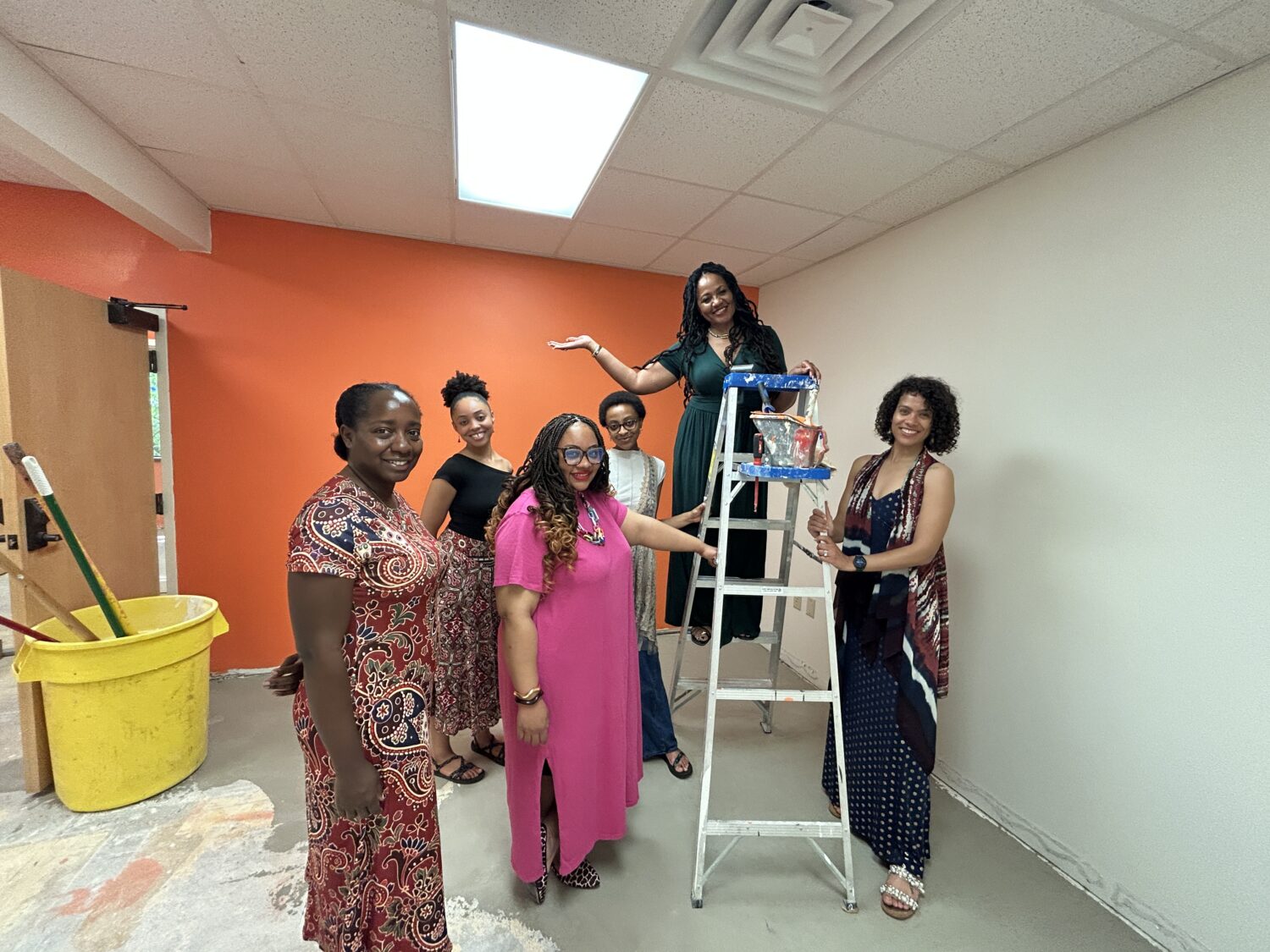
The Foundation for Black Women’s Wellness (FFBWW) is moving to a new home on Madison’s South Side, and it’s asking the community that helped build its first wellness center to step up again.
The organization plans to move into the new space July 1, consolidating its staff offices and Black Women’s Wellness Center under one roof for the first time at 2801 Coho Street, Suite 301 (the former home of the Rape Crisis Center).
FFBWW started 15 years ago “in a cubicle at the Urban League,” said CEO Lisa Peyton, and opened its first real home in 2019, just before the COVID-19 pandemic took hold, through a community fundraising effort.
Peyton said the foundation is again turning to the community, this time to outfit and equip the new location.
“It will also be the new home of our Black Women’s Wellness Center, which the community helped us open in 2020 through crowdfunding, and we’re really calling on them again,” Peyton said.
The foundation hopes to raise $100,000 to set up the new space, the same amount the community contributed six years ago to open the original center.
She was careful to stress that the move is not a simple relocation.
“This is not simply a one-to-one move,” she said. “This is a complete overhaul of a space that we now have to fit ourselves into and recreate our whole wellness center, and it takes money to do that.” A new space requires new equipment, furniture and supplies, she said, costs that go beyond rent.
Peyton framed the move against a difficult moment for organizations doing equity-based work.
“Making this move right now is only made possible with community support, because it’s an interesting time for nonprofits that do equity-based work, that address disparities, in this climate that has become hostile to organizations like the foundation,” she said.
She expressed confidence in the foundation’s track record. “We’re taking a big leap of faith and expanding to slightly more square footage, because community need always outpaces resources,” she said. “But we know our work has, for 15 years, been sustained and continues to grow in its impact.”
A return to the South Side
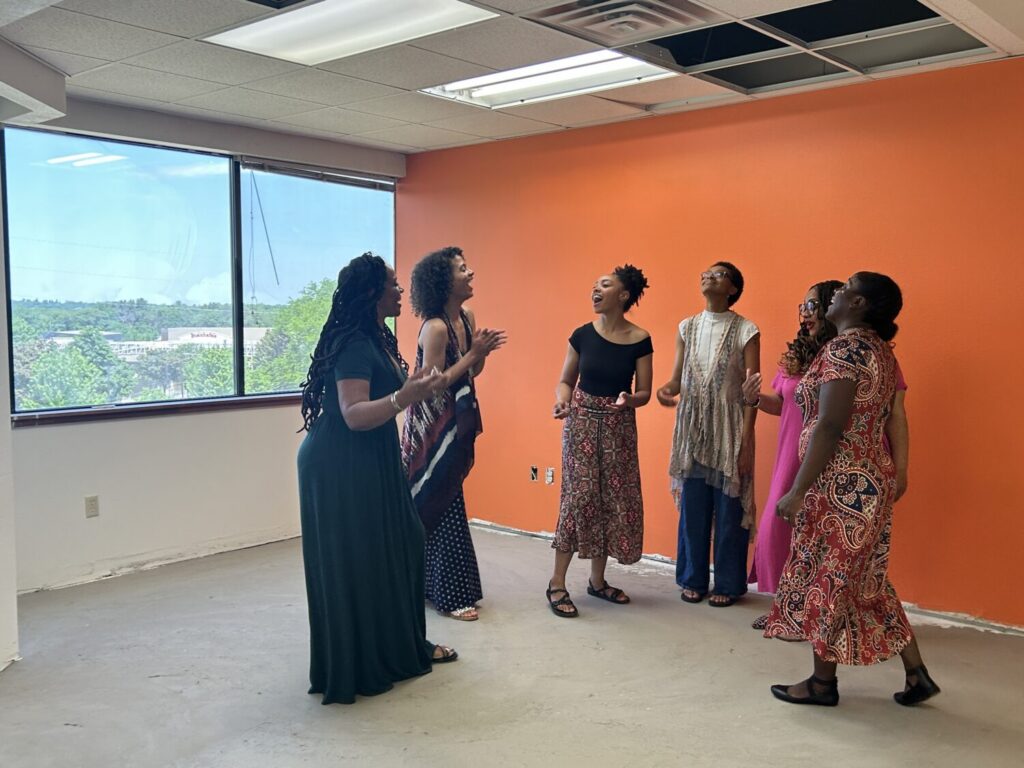
The new location marks a return to the part of Madison the foundation always wanted to call home.
“The South Side has always been the heart of the Black community in Madison,” Peyton said. “Being planted on the South Side at this time, where there is this renaissance, this new space of leadership — something has shifted in Madison that we’ve all contributed to and built, but most recently I felt that shift in a way that I hadn’t before.”
She noted the rise of infrastructure specifically intended to support Black and Latino communities on the South Side – the Urban League’s Black Business Hub, the Center for Black Excellence and Culture, Centro Hispano and the Madison College Goodman South Campus.
The location places FFBBW among that cluster of potential partner organizations.
“Freedom Inc. is right across the street, Urban League, the Black Center, Urban Triage, Park Street health system partners, (University of Wisconsin) campus,” Peyton said. “We’re moving back into the heart.” The proximity, she added, “extends an opportunity to delve deeper into those partnerships, to really align and deepen our collaboration in solving big problems together.”
The move has been relatively sudden and unexpected, as the owner of FFBBW’s current home on Grand Canyon Drive has changed plans for that building and didn’t renew the foundation’s lease. But Peyton sees a silver lining.
“Change comes through means that you sometimes don’t expect,” she said. “What may seem like a burden or an inconvenience then becomes an opportunity and a pathway to so much more. It’s a time of renewal, which we need — this work in the nonprofit arena is grueling, it’s all-consuming, it demands everything. This space feels like a new day.”
‘A haven’ for Black women
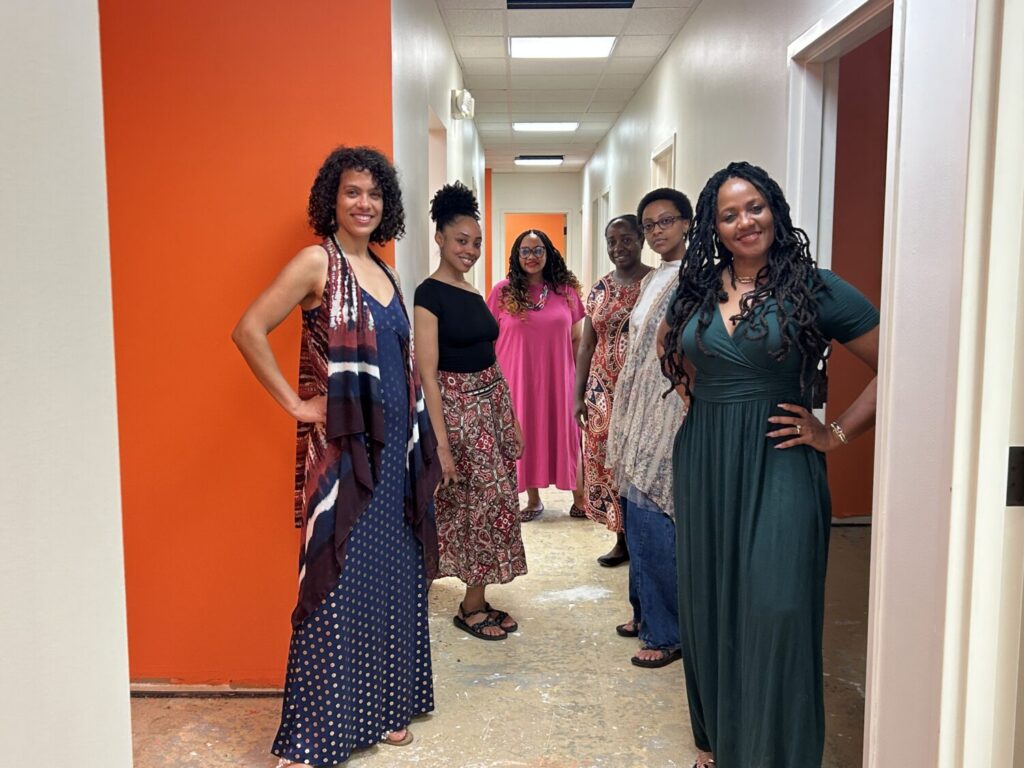
For Peyton, the new space carries the same promise as the one the foundation is leaving. “It’s a place that women know they can come and be fully who they are. It’s trusted,” she said. “That’s so valuable in this city, for Black women to feel like they have a space that is for them, reflects them, and is always an open door … Black women in the city deserve spaces that are really designed for them, and anyone who supports Black women — this space really is a haven.”
Staff said the move opens new possibilities for connecting with the community they serve.
“I’m excited for the new opportunities in how we can engage community,” said Christine Russell, director of health and wellness programs. “I think it’s going to allow us to be much more intentionally integrated than we’ve been on the far west side.”
Micaela Berry Smith, director of maternal and child health initiatives, said the location brings the foundation closer to the families it works with.
“A majority of our families are in this area, so just being able to be a little more tangible to them, allowing our doulas to meet them where they are, and having a beautiful space where they can come together and feel comfortable and build community in a safe space … that’s what I’m most looking forward to,” she said.
Natasha Watkins, community health services manager, put it simply: “This area is where our community is. I look out and I’m like, this is where we’re meant to be.”
Staff also pointed to the new space’s accessibility from the University of Wisconsin campus and its potential as a refuge for young Black women.
“There are a lot of young Black girls on campus who are going through a lot, who feel like they’re not close enough to a place where they can just exist and relax and sit,” said administrative and operations assistant Alana Caire. “It would be cool if they could just say, ‘Hey, can I come here and relax?'”
How to help
The foundation plans to expand programming, deepen its community engagement and open the space for community use once the move is complete. To reach its $100,000 goal and outfit the new center, the foundation is asking for community donations at FFBWW.org/donate.
“This is just a new chapter with the same commitment,” Peyton said, “to expand and deepen our relationship to community support.”