A new exhibit from Latinos Organizing for Understanding and Development (LOUD) that exclusively features Latina artists across Wisconsin comes to Madison College during Hispanic Heritage Month.
The exhibit has 26 different artists from across the state. “Las Curanderas: From Ashes, We Rise” is centered on the experiences of Latina artists and healing. While the exhibit is from LOUD, its founder, Oscar Mireles, has given the reins to local artists Isis Macias and Jessica Gutierrez to be its curators. Letting someone else take over the efforts has been a strong point of Mireles mission over the past few years after he technically retired in 2024. He aims to build the next generation to take over the arts scene and secure its future instead of them starting from scratch.
“Sometimes it looks easy … It’s one of those kinds of things, until you’ve done it,” Mireles said. “It’s an opportunity to build the next generation of curators. I mean, I’m still going to be doing this stuff, but there is a time limit because I’m in my 70s.”
Mireles has said frequently that there are enough artists and writers in the world, but not enough people who know how to create a platform for them. Without people who know how to create platforms for other artists, the opportunities are limited, he said. At that, he is using his own network and reputation to help others take his place one day.
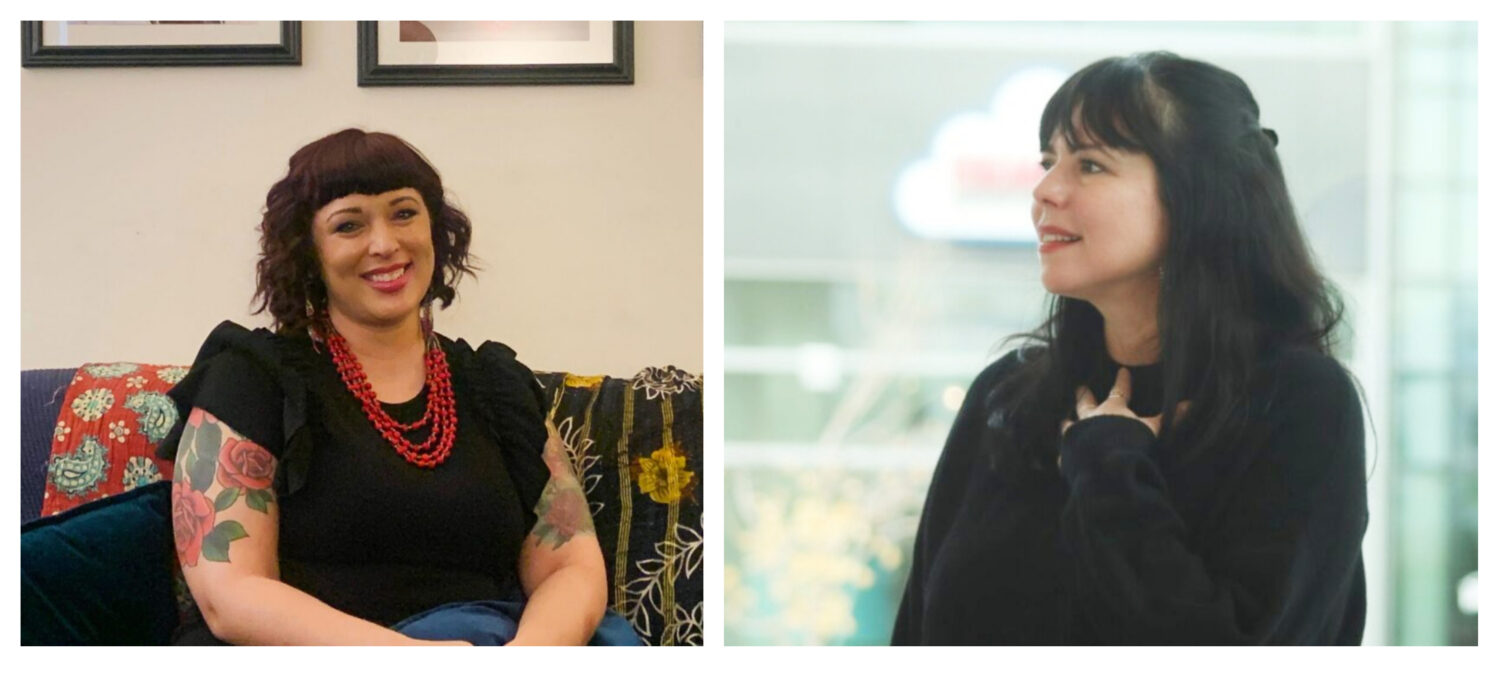
This will be Macias’ and Gutierrez’s first time curating an art exhibit. Both have been part of other exhibits and have had their own solo shows in the past.
The theme is inspired by the phrase from Natalia Lafourcade’s song “María la Curandera” that says, “Que los queme el fuego, que los queme el fuego, y vengan nuevas flores,” or “Let the fire burn, let the fire burn, and may new flowers emerge.”
Madison365 spoke with a couple artists at the exhibit to get an inside look at their work and how it relates to its theme on healing.
Longing for home
Gabi Rivero is originally from Venezuela. She worked as a graphic designer until she moved to the United States in 2017. She started working in restaurants as she worked her way up back into the arts and taking her craft seriously, she said.
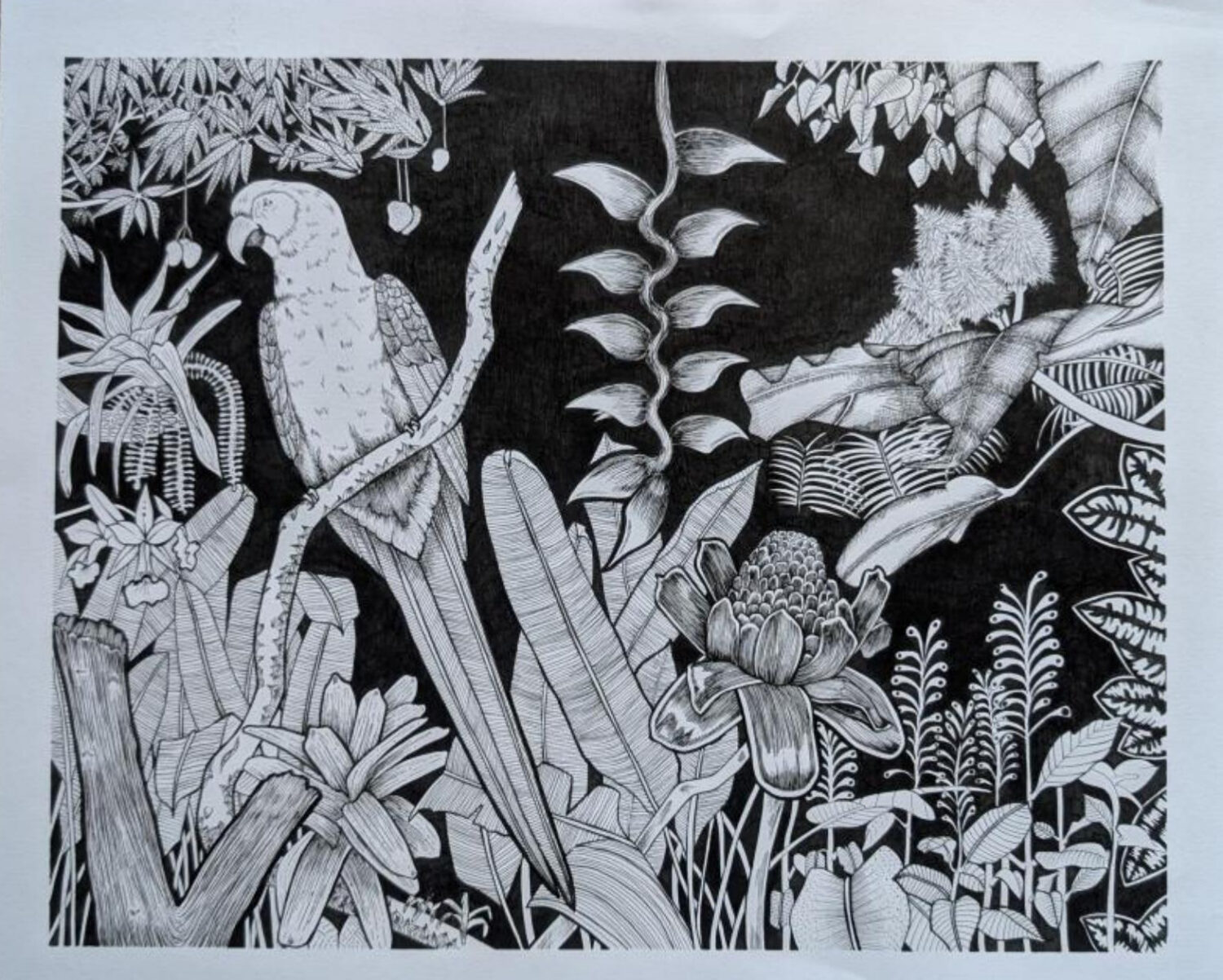
“Before it was more like survival mode,” Rivero said. “I was just focused on starting from scratch. I was 27, it’s an awkward age. Now that I have financial stability, or freedom with my time, I have more time to create and focus on my mental health too. I think I’m now more in the right headspace.”
Rivero likes to describe her work as pieces of her memory and representations of those feelings. The piece she’ll have on display, called “El Guardían,” features a macaw and fauna from her home of Venezuela — both common motifs in her work.
Macaws are very common in the area. Rivero recalled seeing them all over the city and people feeding the birds from their balcony.
“They’re always flying, and they make an amazing sound and they’re very friendly,” Rivero said. I needed that special connection to home. I needed the good memories.”
Flowers are also heavily featured in the piece. Her grandmother and aunts used to have amazing gardens filled with mango trees and a lot of different flowers, she said.
“I know about flowers and gardening, but I got into it when I moved here. I used to take it for granted when I was there,” Rivero said. “I realize now, when I moved, how much I miss the smells, like when they watered the plants, or the amount of greenery that is there year-round and how exotic it is. I didn’t realize that I lived in such an exotic place. I miss it.”
As it relates to the exhibit’s theme, Rivero reconnects with her past and her longing for her home. The piece on display expresses those memories and feelings as she looks towards her home to heal.
“I knew I wanted a macaw, and it turned out to be something so healing. The fact that I can take the good qualities of my country, because I had to leave in an emergency, it was hard when I came,” Rivero said. I was so depressed and mad, that when I created this, it was so personal and I was able to heal from it.”
Shining light on her heritage
Samantha Lezama is a local artist and graduate student at the University of Wisconsin-Madison in the arts administration program. She is originally from Chicago and came to Madison for her undergraduate degree in business management.
Lezama has been a strong pillar in the local arts community. She’s been at the Arts Literature Laboratory as an installation coordinator where she has worked with many artists — however, she is an artist herself and has a penchant for entrepreneurship.
“At a very young age, I became really fascinated by entrepreneurship, especially during the COVID pandemic,” Lezama said. “There was a lot of free time, so I took it upon myself to start really diving into my passion for the visual arts.”
She started selling her work on Instagram and opened an Etsy shop. She taught herself how to promote her work and create social media content.
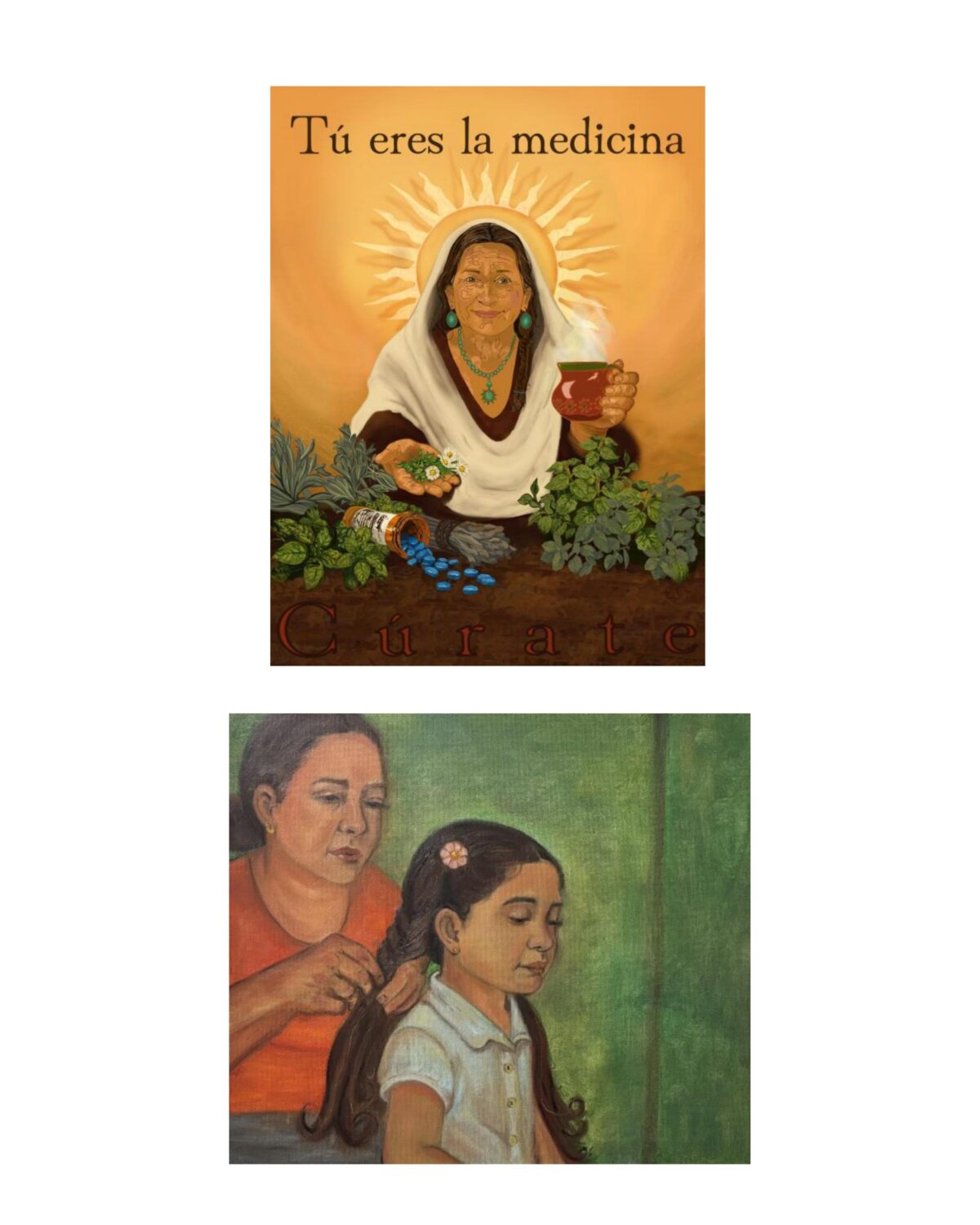
Before that, in Chicago, she was part of a community program for teenagers to get paid and learn making arts. She would paint murals in different neighborhoods like Back of the Yards, Brighton Park and Pilsen. Lezama transitioned more to portraits — her current main style of work — with an abstract touch to them.
“Some characters don’t have your normal skin color. Some are purple. Some are blue. And I play a lot with symbolism,” Lezama said. “I don’t always explain what it means. I really like the idea of having viewers come up with their own interpretations.”
Lezama also likes realism in her work partnered up with poetry, which she said is a way to keep her cultural heritage as a Mexican American alive.
Two of Lezama’s works will be on display at the exhibit. The first, “Maria,” is her first time doing a digital print of her artwork as she typically sticks to canvases. The piece is an homage to Maria Sabina Magdalena García, a Mazatec medicine woman and poet from Huautal de Jiménez in Oaxaca.
In the piece, Maria is surrounded by various herbs like spearmint, yerba buena, romero and chamomile, a spilled bottle of pills and the words “Eres la Medicina,” which translates to “You are the medicine.”
“I grew up having a lot of teas, or when I had a sick stomach, something that grandmother would do is have me go to the backyard and rip some leaves to make a tea,” Lezama said. “I wanted to bring some light to non-traditional Western medicine, not to discredit how far we’ve come with science and medicine and all these great tools that we have now, but I think we have moved away a little too far from our connection to nature and all these natural remedies that are out there and provided for us. Everything we need is already here.”
Healing, as it relates to the exhibit’s theme, is literal in the piece. Lezama noted that Indigenous and non-traditional medicines do historically have negative connotations, but are culturally important in healing.
Her second piece, “T.Q.M.,” or “Te Quiero Mucho,” depicts her mother braiding her hair and the love the simple act portrays.
“She was a single mother raising our siblings. You can see she doesn’t look necessarily too happy, but she’s very happy to be there braiding my hair and to take this time, even if she’s tired from coming from work, to still do this for me and be there for me,” Lezama said.
As it relates to the exhibit’s theme, Lezama believes that women often don’t share a lot of their trauma and challenges in life. Those get passed down to their children in some form, and it is up to them to navigate those inherited traumas and challenges to heal from them.
“When I break those challenges, or I navigate something, and I come across the other side in a positive and successful way, I think I’m also living her dream,” Lezama said. “And she wins when I win.”
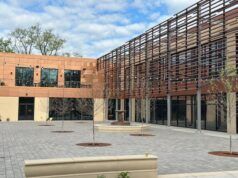
The exhibit will open tomorrow and remain up through Oct. 15 at Madison College’s Truax Campus, 1701 Wright St.
An opening reception will be held Tuesday night from 5-8 p.m. The gallery and reception are free and open to the public.