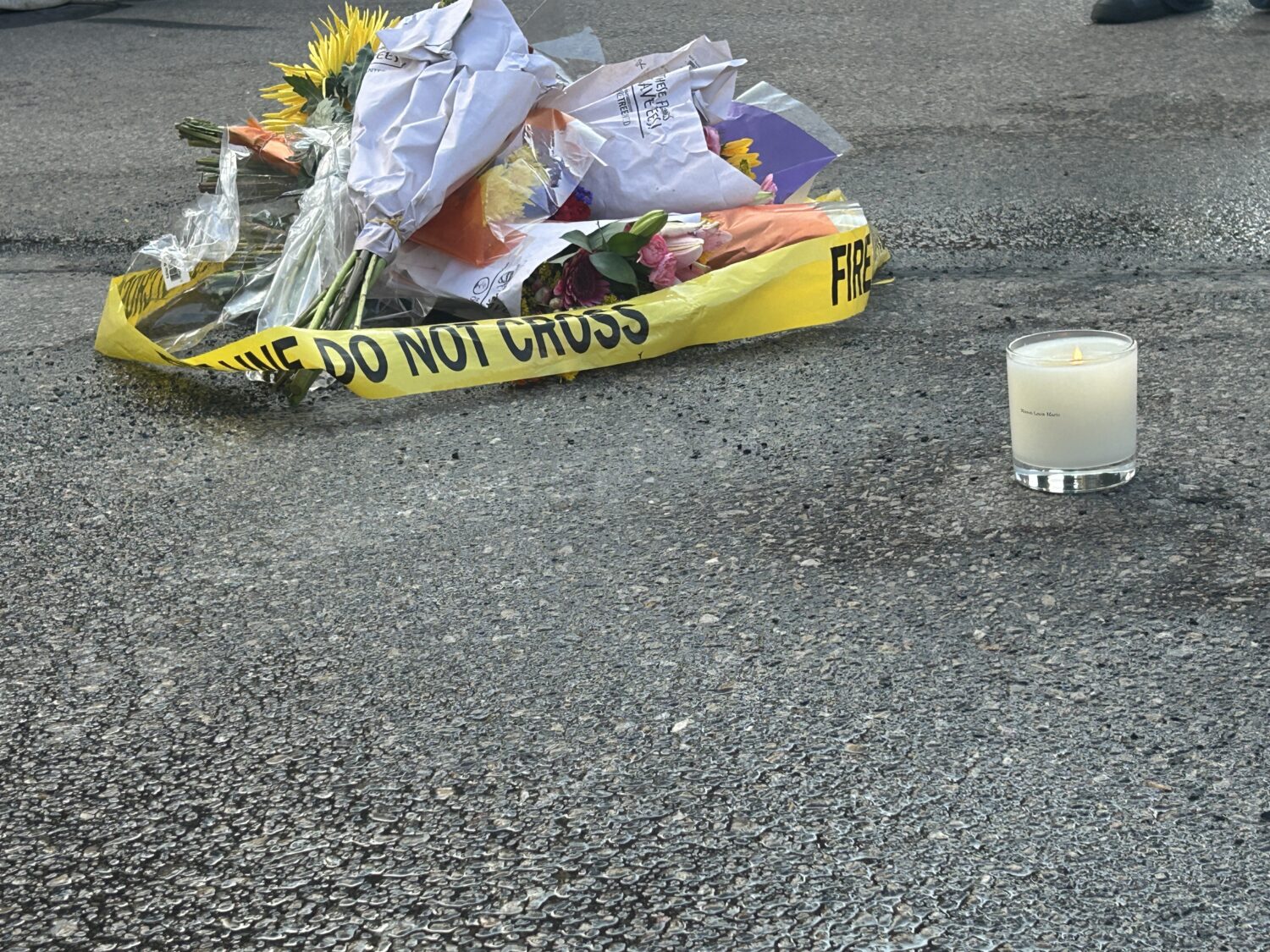
Willy Street cried. Cried like a mother watching her child go off to a foreign war zone knowing in her heart that she won’t see them again. Cried weary and familiar tears.
Yesterday afternoon, our city was shaken yet again by the familiar, devastating rhythm of a fatal police shooting. As a lifelong Madisonian, an attorney who has worked both sides of our criminal justice system as a prosecutor and a defense lawyer, and as a pastor called to care for the vulnerable, my heart breaks for the family of 38-year-old Corey Ruiz. Corey was a human being, a member of our community, a man who was unhoused, and a child of God whose life mattered.
But, as I watched the graphic bystander footage of his death spread across social media, I felt a heavy, deeply rooted familiarity. This tragedy unfolded at the intersection of South Baldwin and Williamson Street—a mere block and a half from where a Madison officer shot and killed 19-year-old Tony Robinson in 2015. It sits in the shadow of where Paul Heenan was killed by police in 2012. The geographic clustering of these deaths is not a coincidence; it is a painful monument to our systemic failures.
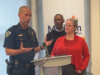
To look at this incident solely through the cold lexicon of bureaucracy or the standard political calculus of city press conferences—which we saw dissolve into chaotic disruption today—is to completely miss the spiritual rot at the center of our community. True, the police chief has noted that Corey had a complex history with the law, was under community supervision, and allegedly wielded a knife.
Yes, we must acknowledge that an officer was injured and that a Taser deployment failed. But as someone who has spent years in the courtrooms of Dane County, I know that a person’s rap sheet does not dictate the value of their soul, nor should it serve as a retrospective justification for a fatal outcome.
The Black church tradition has long carried a radical prophetic voice—a tradition that blends righteous rage with a capacity for radical grace. It is a tradition that teaches us to stand resolutely on the side of the oppressed, the forgotten, the unheard, and the overlooked.
When we look at Corey Ruiz, we must see a man whose deep, unmet needs left him on the absolute fringes of our society before he ever crossed paths with those four officers on Wednesday.
We are told by our leaders to wait, to remain calm, and to let the Wisconsin Department of Justice’s Division of Criminal Investigation complete its review. We are told the process can take months.
But patience is an expensive luxury for a community that is actively bleeding. How can we ask for calm when our city still refuses to implement the basic infrastructure of accountability, like standard body-worn cameras, leaving us to rely on the traumatizing cell phone footage of civilian bystanders to piece together the truth?
Our modern progressive politics in Madison often suffers from an ideological paralysis. We pride ourselves on being a beacon of forward-thinking policy, yet we continually default to a system where escalation outpaces de-escalation, and where lethal force becomes a standard response rather than a rare, horrifying exception.
As the community gathers for the vigil on Willy Street, my prayer for Madison remains what it has always been: that we become a city profoundly more compassionate to the poor and the unhoused, more genuinely welcoming to people of color, and radically courageous in dismantling the institutional privileges that protect systems over people.
We cannot defeat deeply entrenched institutional violence with bureaucratic scripts. We need a moral reckoning. We must hold space for the anger boiling over on our streets while channeling it into an unyielding demand for legislative and structural change.
Let us use this dark moment to do the heavy work of justice, so that we may eventually build a city where every single life is treated as sacred.